Skyline

By |2010-11-16T21:37:17-06:00Nov 16, 2010|General|

20101112nw00751NEW YORK –– There's a single fascinating moment in "Skyline" (Universal), an otherwise forgettable (but with sequels to come!) apocalyptic yarn about aliens who invade Los Angeles with the munchies for humans.

A giant insectlike spaceship sucks thousands of computer-generated sticklike people into the sky like a giant vacuum. This being a low-budget production, it's a brief special effect. But it's one of those rare New Testament moments in a horror film.

Fundamentalist Christians, especially, as well as Catholics, will instantly recognize it as looking like the rapture described in Chapter 4, Verses 14-17 of the First Letter to the Thessalonians, in which the dead in Christ will rise.
Author explores how religion can be source of both violence, morality

By |2010-11-16T21:04:21-06:00Nov 16, 2010|General|

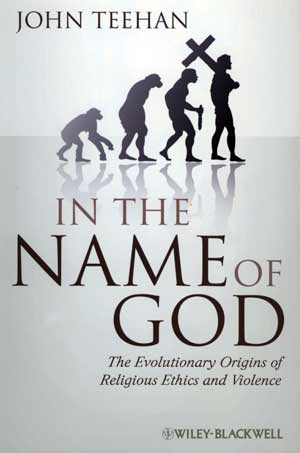
20101111cnsbr03417"In the Name of God: The Evolutionary Origins of Religious Ethics and Violence" by John Teehan. Wiley-Blackwell (Hoboken, N.J., 2010). 272 pp., $24.95.

How anyone anywhere could undertake devastating violence in religion's name remains a huge mystery to countless believers and nonbelievers alike. Isn't religion supposed to be a force of peace and goodness?

How can a group claim divine support for large-scale killing and destruction? When they assert a religious identity, 21st-century terrorists serve to keep this question alive.

Political leaders and theologians answer that violence conducted in a religion's name represents a perversion of the religion. But John Teehan's "In the Name of God" judges this answer wide of the mark.

Teehan, a religion professor at Hofstra University in Hempstead, N.Y., specializes in studies of evolution and morality. Thus, his new book's apt subtitle is "The Evolutionary Origins of Religious Ethics and Violence."

In moving book, artist-psychologist brings hurt of Holocaust to life

By |2010-11-16T19:53:11-06:00Nov 16, 2010|General|

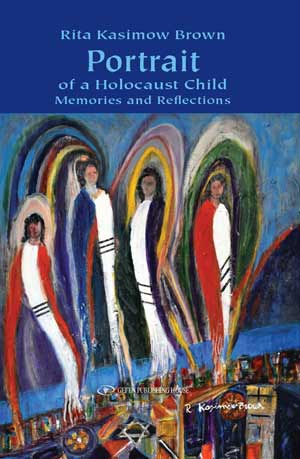
Portrait-of-a-Holocaust-Chi"Portrait of a Holocaust Child: Memories and Reflections" by Rita Kasimow Brown. Gefen Publishing (Jerusalem and New York, 2010). 79 pp., $14.95.

Rita Kasimow Brown describes herself as a psychologist, art therapist and artist. All three of these skills are used to great effect in "Portrait of a Holocaust Child: Memories and Reflections."

Kasimow Brown tells her story both in words and in the dozen or so paintings and an equal number of family photographs included in the book. It is the narrative of a 10-year-old girl who hid with her family for 20 months on a farm in Poland, in a pit that they called "the Grub," hidden by a Catholic farmer who fed them meagerly.

The story is told from the point of view of the mature woman playing with her grandchildren in a sunny apartment in Tel Aviv, Israel, writing in her diary, remembering the past, enjoying the beauty of the world around her, analyzing her dreams and exchanging letters with a dream friend. She utilizes the method of active imagination developed by Carl Jung, a powerful method of coping with profound personal trauma.

Morning Glory

By |2010-11-12T18:41:14-06:00Nov 12, 2010|General|

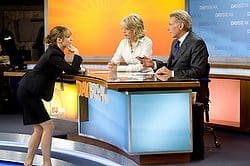
20101109cnsbr03376_webRachel McAdams, Diane Keaton and Harrison Ford star in a scene from the movie "Morning Glory." The Catholic News Service classification is A-III - adults. The Motion Picture Association of America rating is PG-13 - parents strongly cautioned. Some mate rial may be inappropriate for children under 13.(CNS photo/Paramount)NEW YORK - It's no surprise that the newsroom comedy "Morning Glory" (Paramount) brings to mind the classic sitcom "The Mary Tyler Moore Show" and the 1987 feature film "Broadcast News." Both were created by James L. Brooks, who wasn't involved in this project but whose influence is keenly felt.

While "Morning Glory" lacks the sharp wit of "Broadcast News," the modest success of this screwball, working-girl comedy can be attributed to the portrayal of the central character, Becky Fuller, by Canadian actress Rachel McAdams. Miss Fuller sparkles as a worthy big-screen successor to that iconic Twin Cities' newswoman, Ms. Mary Richards.

Two books offer valuable insights on saints, but another disappoints

By |2010-11-08T17:35:33-06:00Nov 8, 2010|General|

"The Four Teresas" by Gina Loehr. Servant Books (Cincinnati, 2010). 128 pp., $13.99.

"39 New Saints You Should Know" by Brian O'Neel. Servant Books (Cincinnati, 2010). 156 pp., $13.99.

"Mystics in Spite of Themselves: Four Saints and the Worlds They Didn't Leave" by R.A. Herrera. Wm. B. Eerdmans (Grand Rapids, Mich., 2010). 124 pp., $12.99.

Books about saints, especially those written with a pastoral, edifying or apologetic intent, are always informed by their authors' theological, social or ecclesiological agenda. The best books help the reader understand the political and social context in which the saint lived, because the lens through which we read another's suffering, sanctity and piety is always changing.

Unfortunately, "39 New Saints You Should Know" is not one of those books. Brian O'Neel writes with the admirable hope that wider knowledge of these new saints – "witnesses of the courage we need to stand firm in the face of secularism, the culture of death and other evil forces" and many of them martyrs – will inspire contemporary Catholics by their examples of fortitude, faith and fidelity.

Instead, the brief entries (most are three to four pages) end up disappointing because of flippant sarcasm, smug triumphalism and the choice of code words over charity.

Go to Top