At St. Camillus in Wauwatosa, a religious vocation can take the form of nursing, comforting a resident, providing spiritual care or working in accounting.
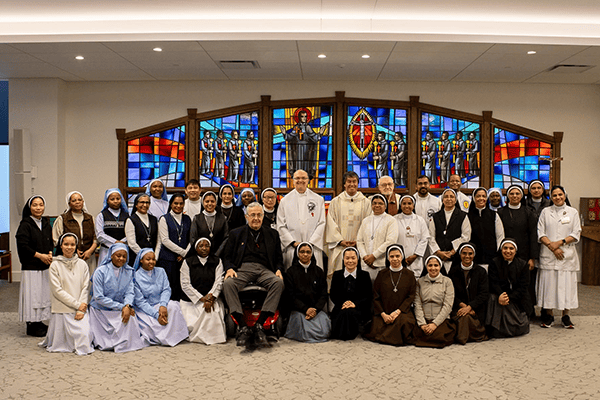
Sisters serving at St. Camillus represent seven congregations from India, Vietnam, Kenya and Tanzania, bringing diverse traditions and professional skills to a shared ministry of care. (Submitted photo)
The 34 sisters serving there belong to seven congregations and come from four countries: India, Vietnam, Kenya and Tanzania. Their work supports residents in Wisconsin while also helping sustain ministries in the communities they left behind.
For Fr. Agustin “JoJo” Orosa, MI, president of St. Camillus Health System, their presence offers a daily lesson in religious life.
“I personally consider them as a role model,” he said.
Their simplicity and personal attention to residents remind him of dimensions of ministry that can become less immediate when administrative responsibilities demand his attention. He also recognizes what it takes to leave one’s home country and begin again.
The sisters, he said, bring enthusiasm and a willingness to serve.
The international community began developing in 2016, partly in response to employee retention concerns and a desire to support St. Camillus’ Catholic identity. The life plan community provides independent living, assisted living and skilled nursing.
Sisters were already working there, and conversations began about whether others from their congregations might come. Early connections included sisters from Kenya and Tanzania, followed by Carmelites from India who had been working in Kenosha. Sisters from Vietnam serving in St. Louis also expressed interest.
Word spread, and other congregations began asking about the program.
Today, the sisters serve as registered nurses, caregivers, certified nursing assistants and chaplains, among other responsibilities. One works in accounting.
Many residents grew up attending schools run by sisters, Fr. Orosa said, making their presence a familiar connection. He calls the program “our secret sauce in our care for the residents.”
He believes the sisters have helped address staffing concerns, although challenges remain. Their coordination with one another, particularly in memory care, has also strengthened care.
“The quality of care really was elevated because of their presence,” he said.
Coming to Wisconsin involves preparation. Provincial superiors identify potential sisters, followed by video conversations about responsibilities and expectations. St. Camillus works with an immigration attorney and covers travel expenses.
Once sisters arrive, the organization and sisters already here help them navigate practical matters, including Social Security numbers, driver’s licenses and cultural differences.
Professional transitions can take time, too. A sister trained as a registered nurse in India might begin as a caregiver while adjusting to serving residents in the United States, Fr. Orosa said.
The campus also becomes a community. Daily Mass supports the sisters’ spiritual lives, while outings introduce them to Wisconsin. Residents have helped fund those experiences as a way of giving back.
The sisters’ service also reaches beyond the campus. Some send part of their salaries to support their congregations’ projects back home. St. Camillus’ foundation has extended support to ministries associated with the sisters, including a water project in Tanzania.
Fr. Orosa hopes to help the congregations establish themselves here, potentially developing ministries beyond St. Camillus.
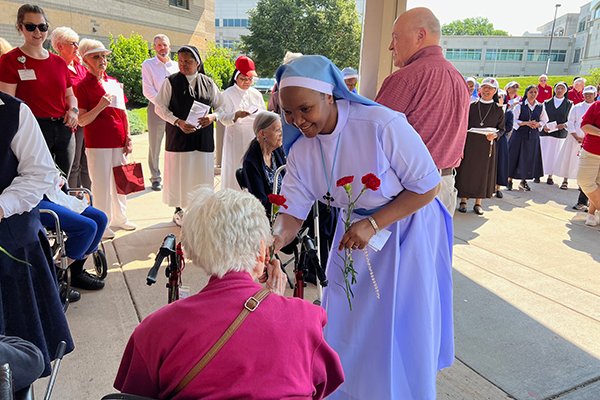
Sr. Editha Lushino, a member of the Congregation of Our Lady of Usambara Sisters (COLU) from Tanzania, is among the religious sisters whose vocations have brought them to St. Camillus, Wauwatosa. Sisters from seven congregations share their gifts through ministries of faith and service. (Submitted Photo)
For Sr. Lincy Augusthy, SJT, a member of the Sisters of St. Joseph of Tarbes, arriving in Wisconsin in 2024 was another step in a vocation that had already taken her far from home. She entered religious life at 16, inspired by sisters in her parish and a desire to serve people who were poor. She did not yet understand everything that commitment would involve.
“And then step by step, as I surrendered myself to God’s plan, I found that God is taking me forward,” she said.
She spent 21 years serving in Uganda before joining her congregation’s new mission in Wisconsin. Four sisters came together, she said. It was her first experience in the United States.
Now program coordinator in the foundation and mission office, she helps connect residents and employees with opportunities to serve others, including community outreach projects.
Living and working among several congregations has brought its own learning.
Most sisters live with members of their congregations, although three congregations share one house. They maintain their own spiritual traditions while coming together for celebrations, cooking and singing in different languages.
“In the beginning, it was a bit different, difficult because we have not lived that way,” Sr. Lincy said.
Patience and understanding have helped them navigate cultural differences. Each congregation brings its own charism and ways of living religious life, requiring respect for one another’s practices.
Lay employees are also partners in ministry, she said, helping the sisters understand American culture and professional expectations.
Fr. Orosa sees the sisters’ work as something they approach as ministry, extending beyond the boundaries of a workday.
For Sr. Lincy, caring for residents has brought fulfillment even while living far from her homeland. The relationships help make a new place feel like family.
“In working here, we also feel a kind of fulfillment away from the country, away from our homeland, but making the residents our own family members,” she said.
“So, it gives us that fulfillment in our vocation.”