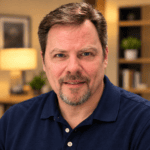
Deacon Scott Zarling had a good-paying job, a condominium in Pewaukee and a career he could imagine continuing for years. After more than a decade in information technology at Fiserv, he was comfortable in desktop support, with management a possibility down the road.
Then, in January 2021, his acceptance into seminary made another future tangible. Preparing to become a priest would mean leaving his job and selling his home.
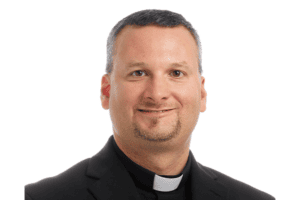
Deacon Scott Zarling is preparing for priestly ordination May 22, 2027, for the Archdiocese of Milwaukee. (Submitted photo)
“Then the real shock really hits me,” he said.
His older brother, David, asked whether he had a plan B. Deacon Zarling did not — an unusual position for someone who preferred having the next step lined up.
“But this just felt right. And I was going to be going all in on this,” he said.
Now a transitional deacon preparing for priestly ordination May 22, 2027, Deacon Zarling expects to be ordained at 42, shortly before his 43rd birthday. His path began with a suggestion he heard as a teenager, followed years later by a pandemic disruption that prompted him to reconsider what God wanted of him.
Growing up, he attended St. Peter Parish in Slinger and became involved as a lector, choir member and Knight of Columbus. His mother, Rita, is Catholic; his father, Dale, is Protestant. His mother also worked as an organist at his father’s church, so the family’s Sundays included both Catholic Mass and Protestant services.
When he was about 16 or 17, parishioner Ann Hayden told him he would make a great priest. He appreciated the encouragement but was not considering priesthood.
Instead, an interest in computers led him to Waukesha County Technical College, where he earned associate degrees in computer programming and help desk work. After job shadowing convinced him programming was not the right fit, he pursued technical support.
He joined Fiserv in November 2005. Three years on the help desk led to a desktop support position, where he could spend more time troubleshooting computer problems.
He enjoyed the work. But during Holy Week in 2020, the pandemic brought an assignment supporting another company’s help desk, with about two hours of training before he began working from home.
On his first morning, he handled 21 calls in four hours. The experience left him deeply distressed. His supervisor helped him develop a plan to manage the assignment, but the disruption raised questions about his future.
At the same time, being unable to receive the sacraments as he had before the pandemic affected him spiritually.
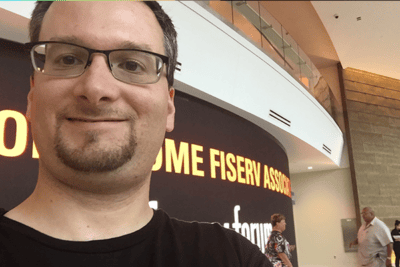
Deacon Scott Zarling worked in information technology at Fiserv from 2005 to 2021 before entering seminary. (Submitted photo)
“So, it gives a person like me time to reflect on what God really wants of me,” he said.
Hayden’s suggestion returned to the forefront of his mind. He described feeling drawn toward priesthood, rather than hearing a voice.
On July 1, 2020, he spoke with Fr. Dennis Saran, his pastor at St. Dominic Parish in Brookfield, where he had belonged since moving to Pewaukee in 2011.
Fr. Saran’s own later vocation helped Deacon Zarling recognize that priesthood was not limited to men entering formation directly after high school or college.
Fr. Saran connected him with Fr. Luke Strand, then vocation director. Conversations continued throughout the year. Deacon Zarling also joined a men’s discernment group associated with Cor Jesu at St. Robert Parish in Shorewood.
The seminary application became another step in discernment, with personal questions requiring honest reflection. Acceptance followed in January 2021, along with preparations to leave his established life.
His parents supported the decision, although it surprised them. Friends provided encouragement and a foundation as he questioned whether he was making the right choice.
He left Fiserv in 2021 and entered seminary that fall. Although roughly a decade older than other seminarians, he found a welcoming community.
His preparation has since brought him into parish life in ways far removed from technical support. At his teaching parish assignment, a cluster of five South Shore parishes, he has preached, brought Communion to homebound parishioners and learned about parish administration.
Accompanying the pastor on hospital visits showed him the importance of a priest’s presence near the end of life. He recalled visiting a 99-year-old woman who had fallen, then attending her funeral a week or two later.
Visits with homebound parishioners have also helped clarify the ministry he hopes to offer.
“So, yeah, being a priest of the people is what I’m really looking forward to,” he said.
For someone considering priesthood after building another life, his advice begins with prayer and conversations with family, friends, a parish priest and the Vocation Office.
Entering seminary, he emphasized, does not end discernment. Formation provides opportunities to examine the call with spiritual directors, formation advisors and fellow seminarians.
“So just because you’re accepted and you’re in the seminary doesn’t necessarily mean you’ll be a priest,” he said. “It means you’re just seriously discerning this call to God.”
That process asks for an openness he describes as surrender.
“Give it all to the Lord and just don’t hold anything back.”