
Every day on her elevator ride to the newsroom at the Milwaukee Journal Sentinel, Meg Kissinger would say the prayer attributed to St. Francis of Assisi: “Lord, make me an instrument of your peace.”
The words gave Kissinger “a framework” and “call to action” amidst the “chaos” of the mental health crises that had for decades plagued her family, ultimately claiming the lives of two of her siblings.
As a journalist, Kissinger sought answers by exploring the societal and systemic problems that contribute to suicide, winning awards for her reporting on mental health care in the United States. Her 2023 memoir, “While You Were Out: An Intimate Portrait of Mental Illness in an Era of Silence,” published by Celadon, was likewise critically acclaimed.
As a devout Catholic, she sought solace in the sacraments, bearing witness to the Church’s unique ability to be an instrument of peace in times of emotional chaos.
So when Kissinger was invited to lead two live virtual training sessions sponsored by the Archdiocese of Milwaukee Department for Catholic Social Responsibility and focusing on the role that the Catholic Church can play in providing healing to those grieving a loss by suicide, it was only natural that she began each session with those same words from her elevator ride: “Lord, make me an instrument of your peace.”
“What really helped me in that time was going to Mass, was the sacraments … I craved it, I couldn’t get enough of it,” said Kissinger, recalling the period following her brother Danny’s death in 1997. “What I really needed was two things: I needed community. I wanted to be in a room with other people in prayer, because it calmed me down. And I needed the sacraments — I needed Communion, I needed to be reminded of what Christ suffered … oddly enough, that kind of put me at peace.”
She also drew on her experiences as a journalist to provide attendees with resources and advice to aid in their ministry.
“We, as Catholics, have an opportunity in our parish life to be with people who are suffering and to help them know how loved and appreciated they are,” she said to attendees — including priests, parish leaders and archdiocesan staff members — of an early November session. “We are not professional mental health providers; I’m not suggesting that we offer our own form of treatment. But I think it’s important for us to acknowledge that some people that we know may be in that dark place. And it’s good for us to train ourselves in how to have those conversations.”
Suicide and grief: What helps (and what doesn’t)
Kissinger provided perspective on what can be helpful to family members who are dealing with the aftermath of a loved one losing his or her life by suicide.
The most important thing on the “to-do” list of anyone hoping to provide comfort?
Listen.
She shared a memory of how important that was when her sister died by suicide in 1978.
“The night Nancy died, the house just filled up,” she said. “(Our Catholic) parish was our whole world. Word got out quickly, and the house just swelled with people … It’s always in my heart when I think about that night, just how people streamed over there, wanting to hug us, to give us a chance to talk about Nancy.”
Other crucial components of support include being well-informed on the reality of mental health, what leads to suicide and what exactly the Catholic Church teaches about it.
Kissinger shared a video from the Association of Catholic Mental Health Ministers, which highlighted this passage from the Catechism of the Catholic Church: “Grave psychological disturbances, anguish, or grave fear of hardship, suffering, or torture can diminish the responsibility of the one committing suicide. We should not despair of the eternal salvation of persons who have taken their own lives. By ways known to him alone, God can provide the opportunity for salutary repentance. The Church prays for persons who have taken their own lives.” (CCC 2282-83)
Kissinger provided statistics about suicide drawn from research conducted by the Centers for Disease Control (https://www.cdc.gov/suicide/facts/data.html), which showed that more than 12 million Americans acknowledge considering suicide at one point in their life. Men aged 85 years and older had the highest rate of suicide in 2023, contrary to stereotypes.
“You just never know who’s sitting next to you at Mass or who you see walking down the street — what’s in their heart and how close they might be to ending their life,” Kissinger said.
Kissinger also provided feedback on what had not been helpful to her family, and to families she had interviewed as a journalist, following the suicide of a loved one.
Shame was at the top of that list.
Kissinger recalled how her family had tried to keep the true cause of Nancy’s death a secret, fearing judgment and the denial of a Catholic funeral. She now believes that the shame indicated in that decision made her brother Danny feel isolated and unable to seek help when his own mental health began to deteriorate.
“Secrets are very scary, and shame is very toxic,” she said. “It really starts with shattering that shame and realizing that we need to attend to our mental health just as much as we need to any other body part. And there’s no shame in that.”
Learn More:
Kissinger recommends these resources to learn more about suicide prevention and pastoral care for those impacted by suicide.
Association of Catholic Mental Health Ministers
National Alliance on Mental Illness
nami.org/stigma/5-common-myths-about-suicide-debunked/
REDgen
American Foundation for Suicide Prevention
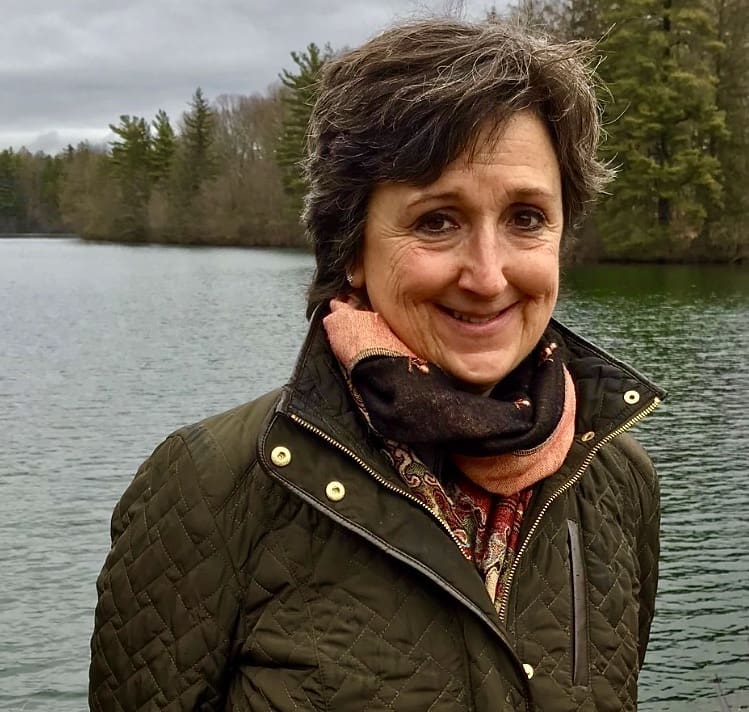
Meg Kissinger, an award-winning journalist and author who belongs to St. Francis of Assisi, Milwaukee, has written about mental health for decades. (Submitted photo)
