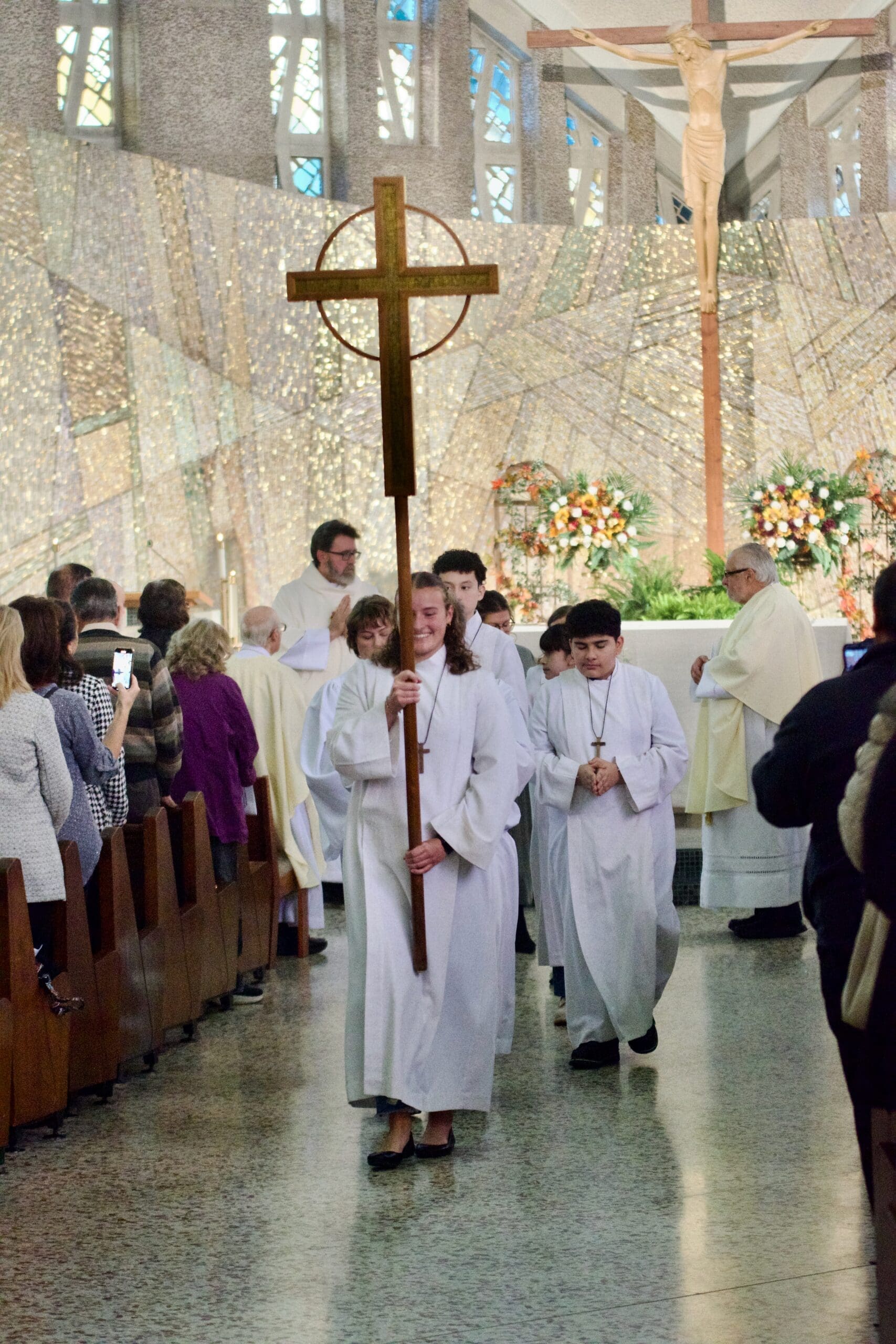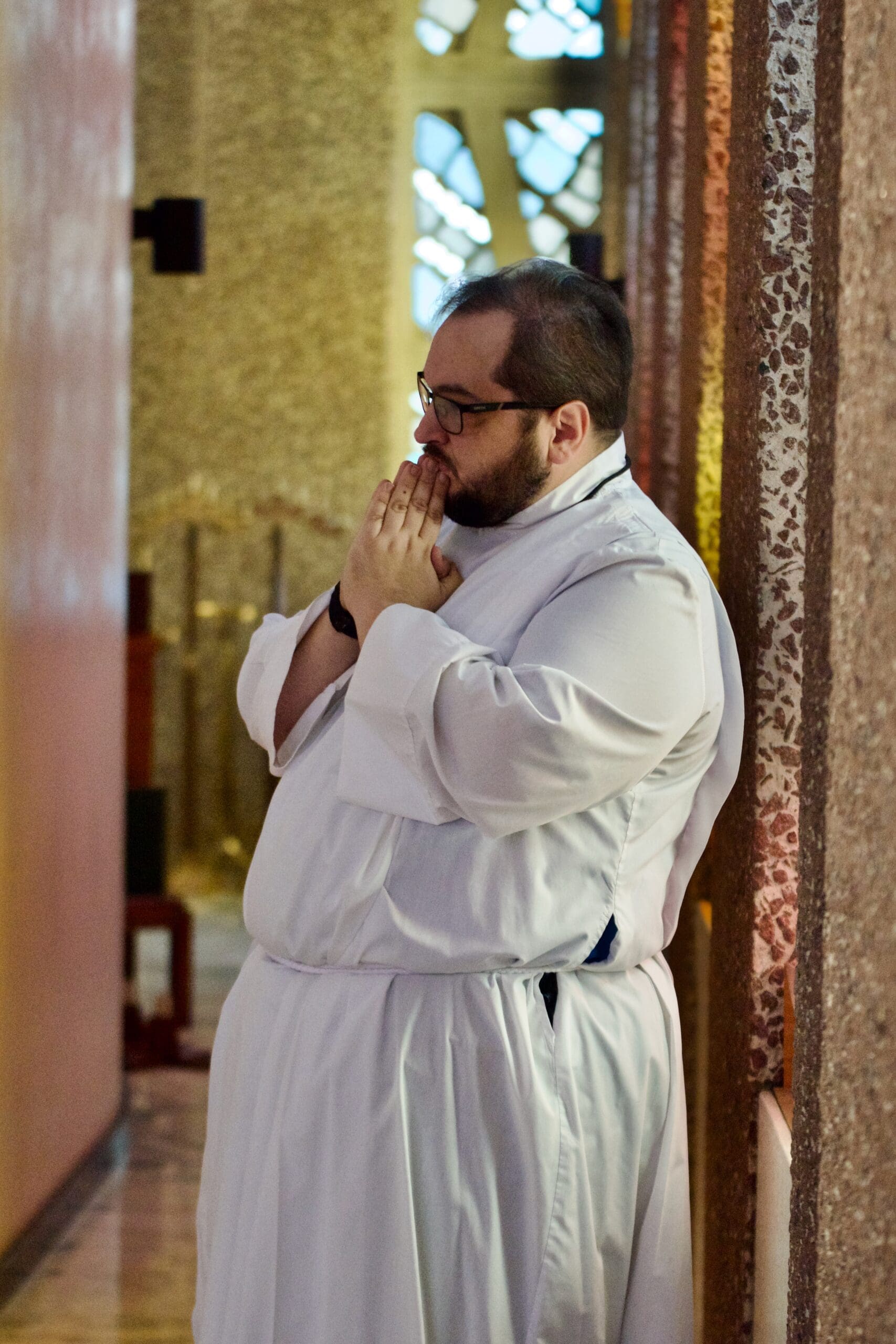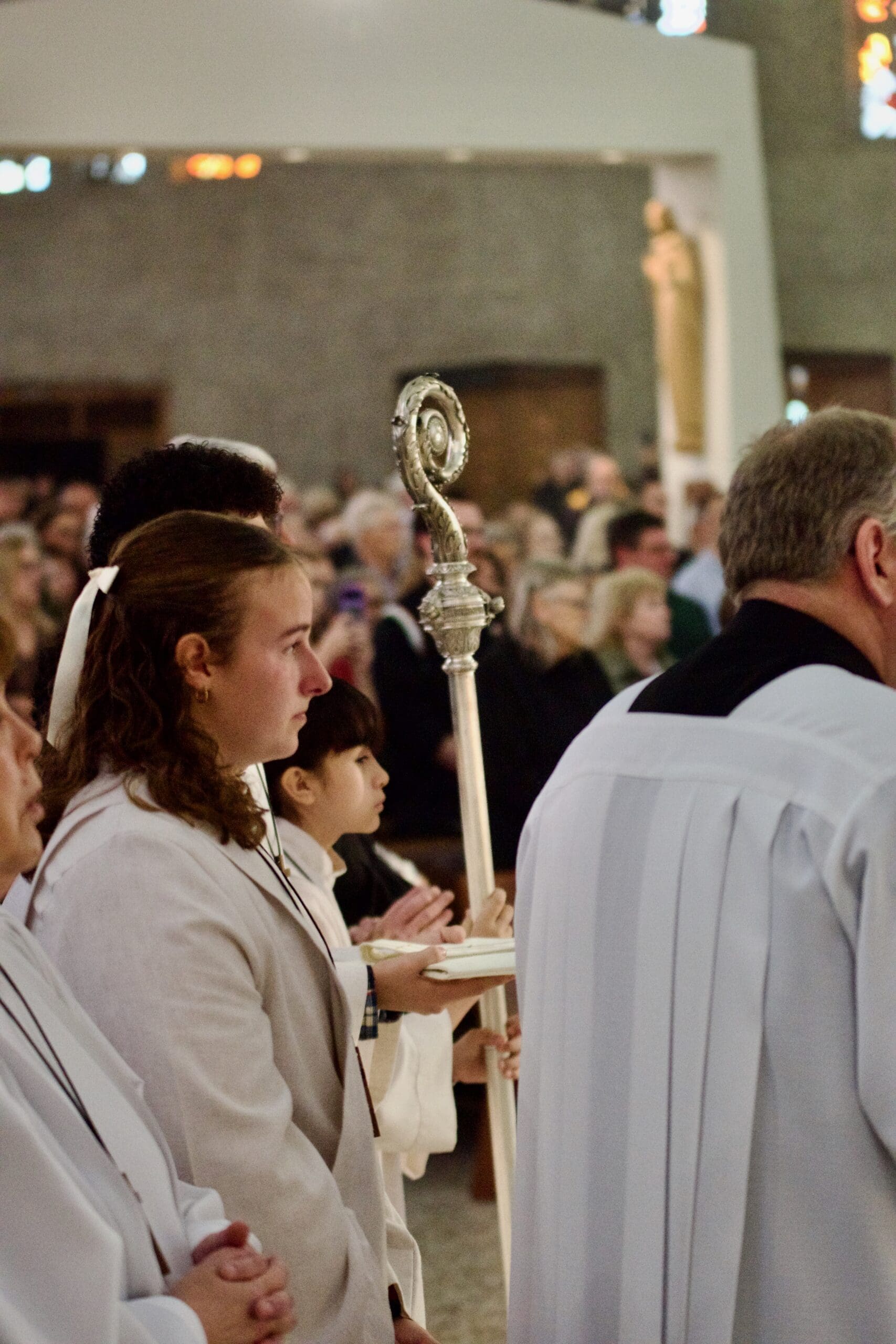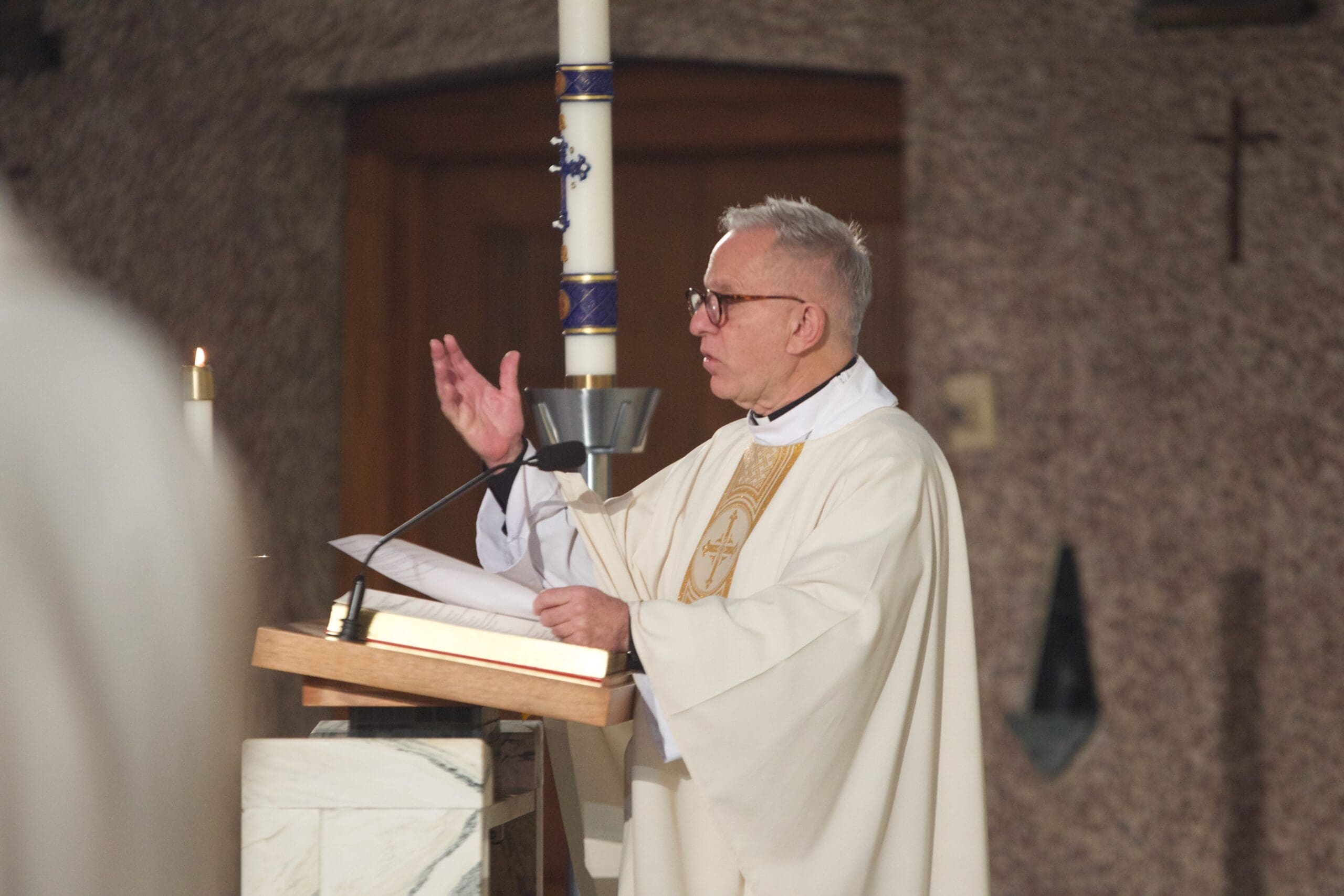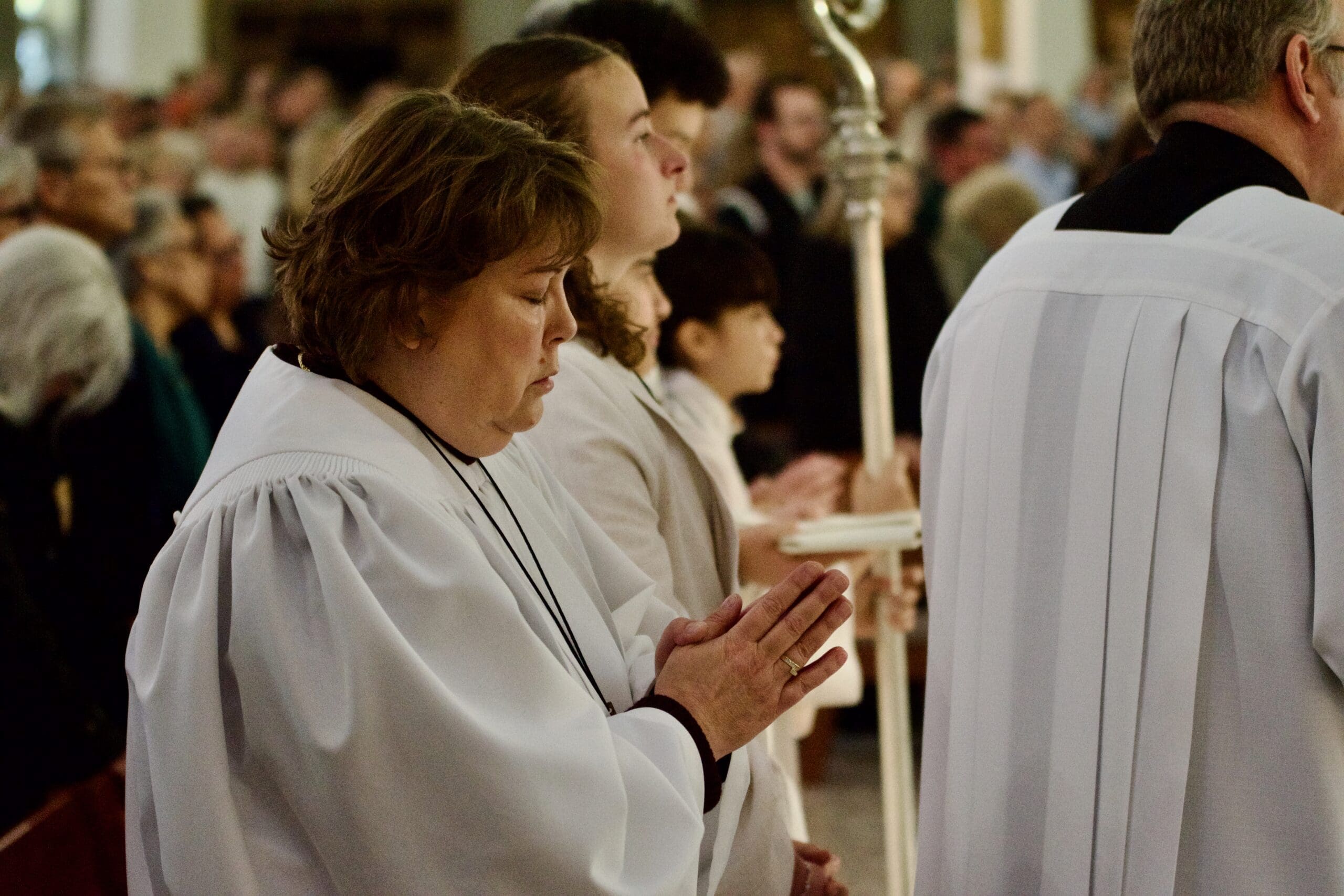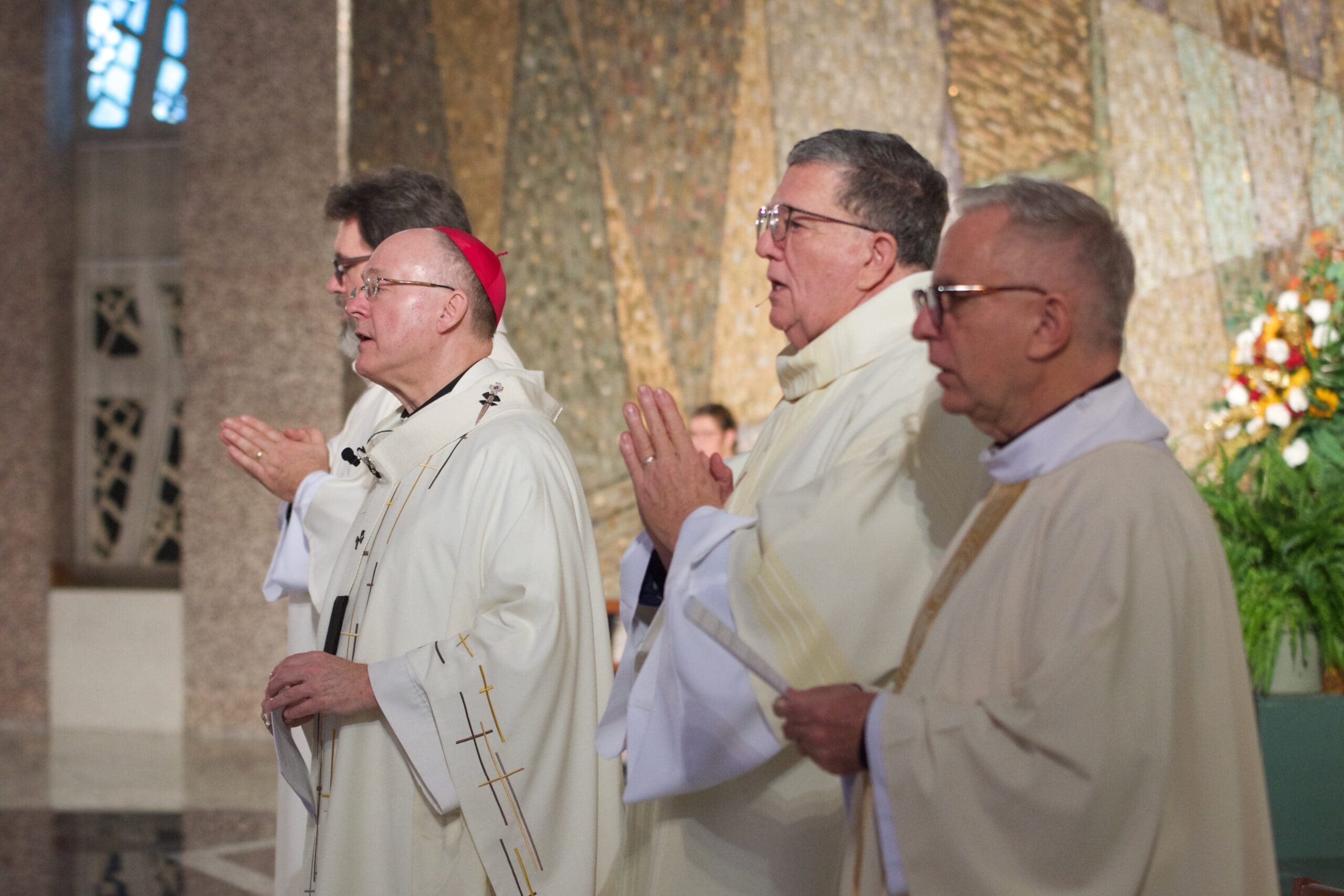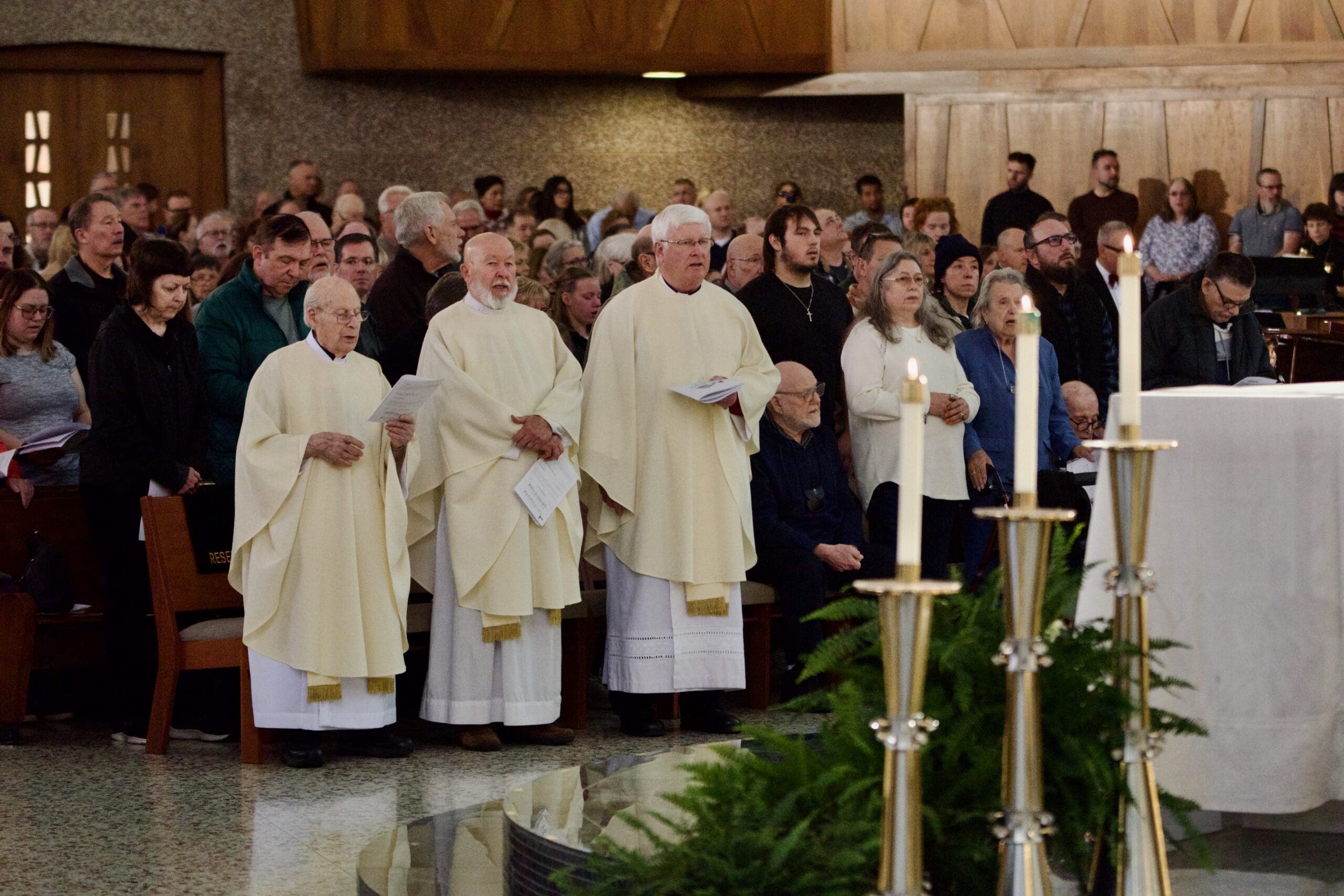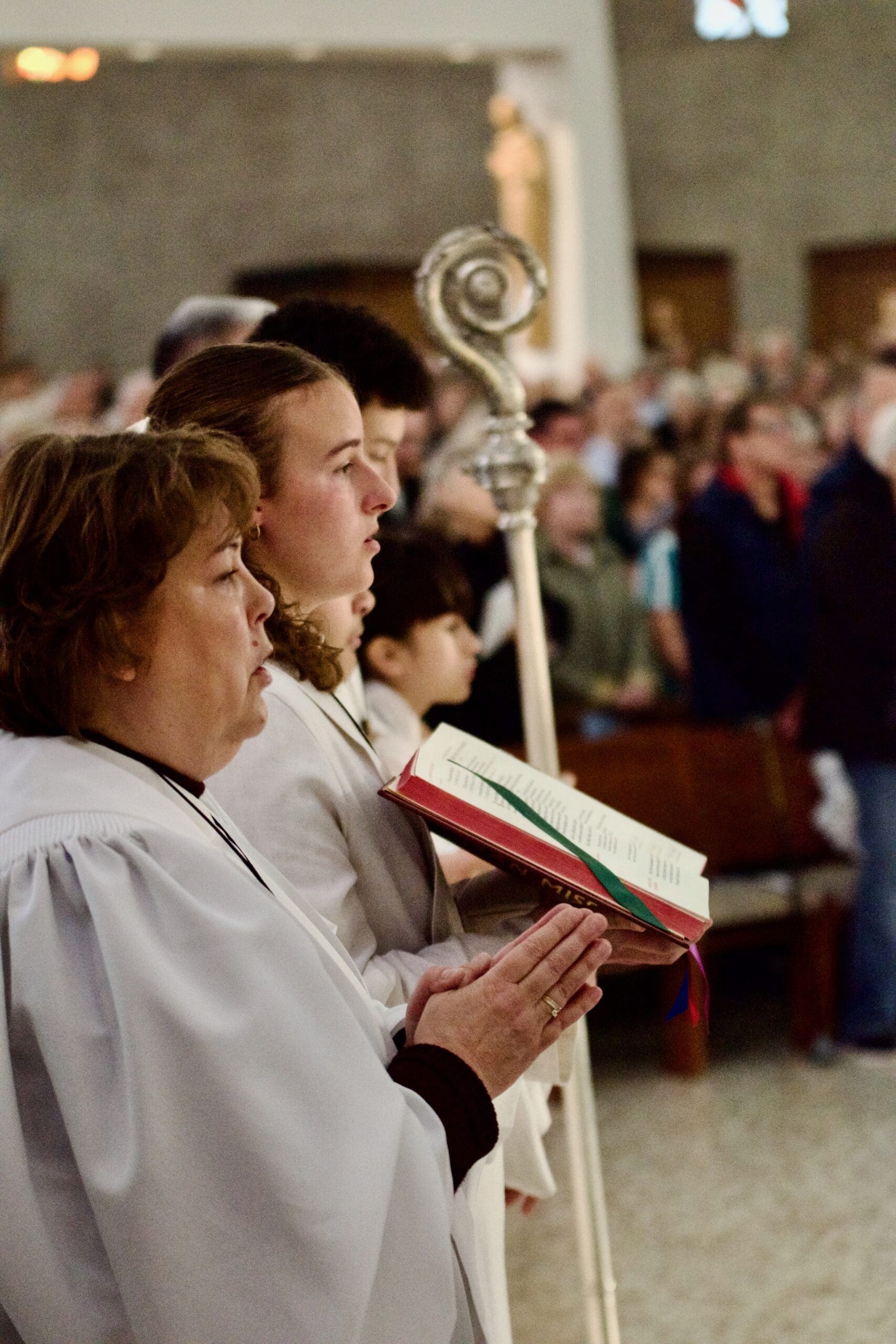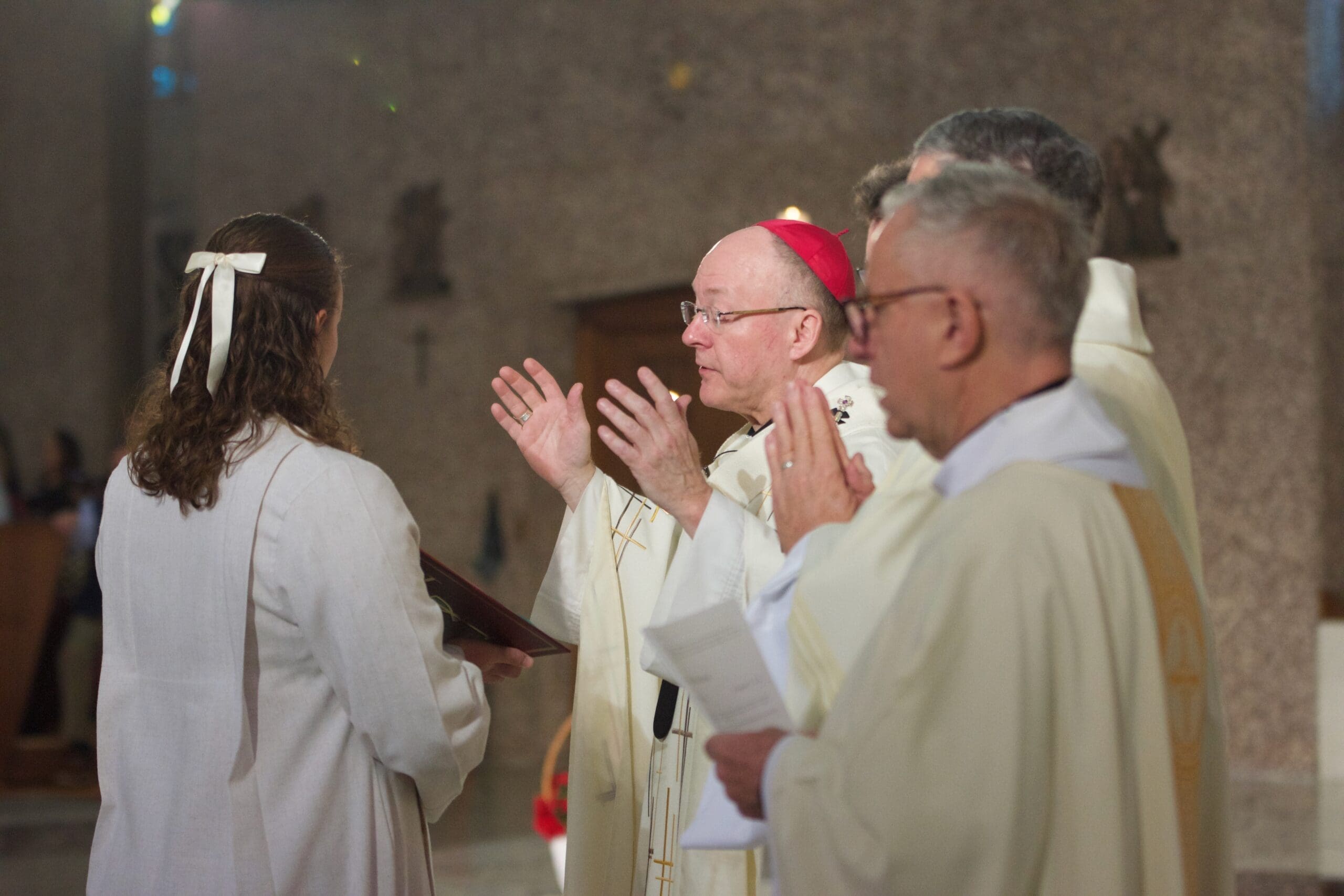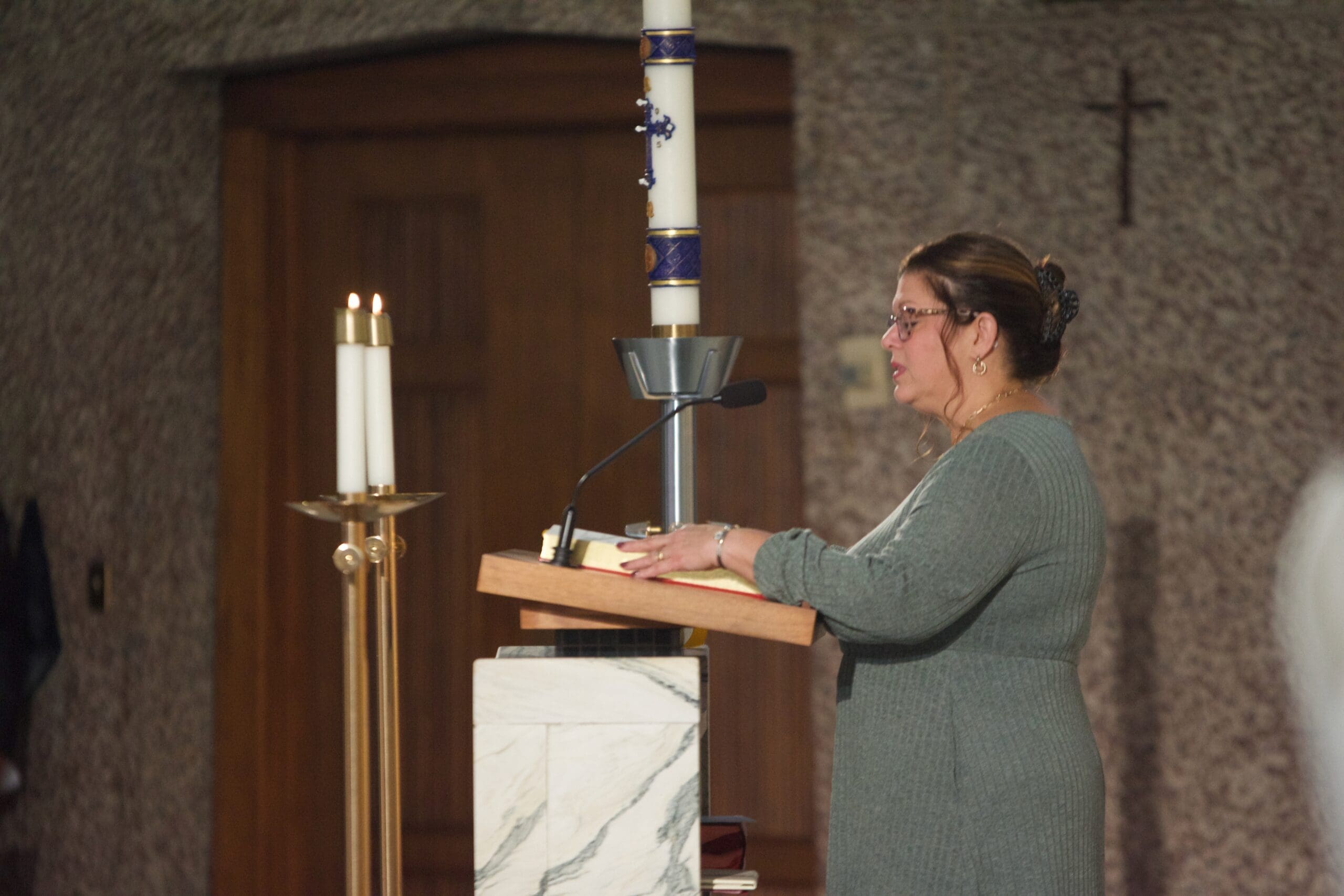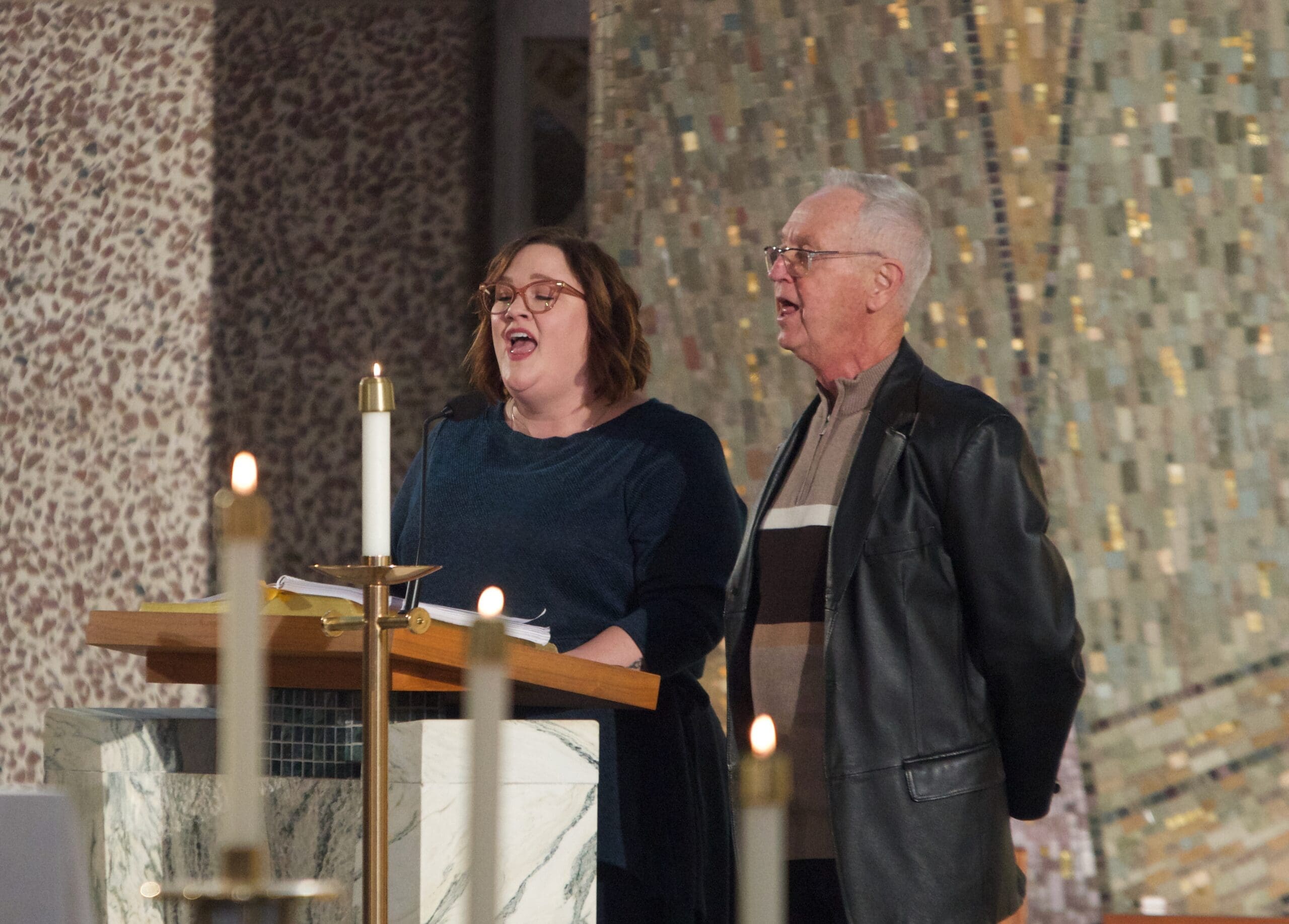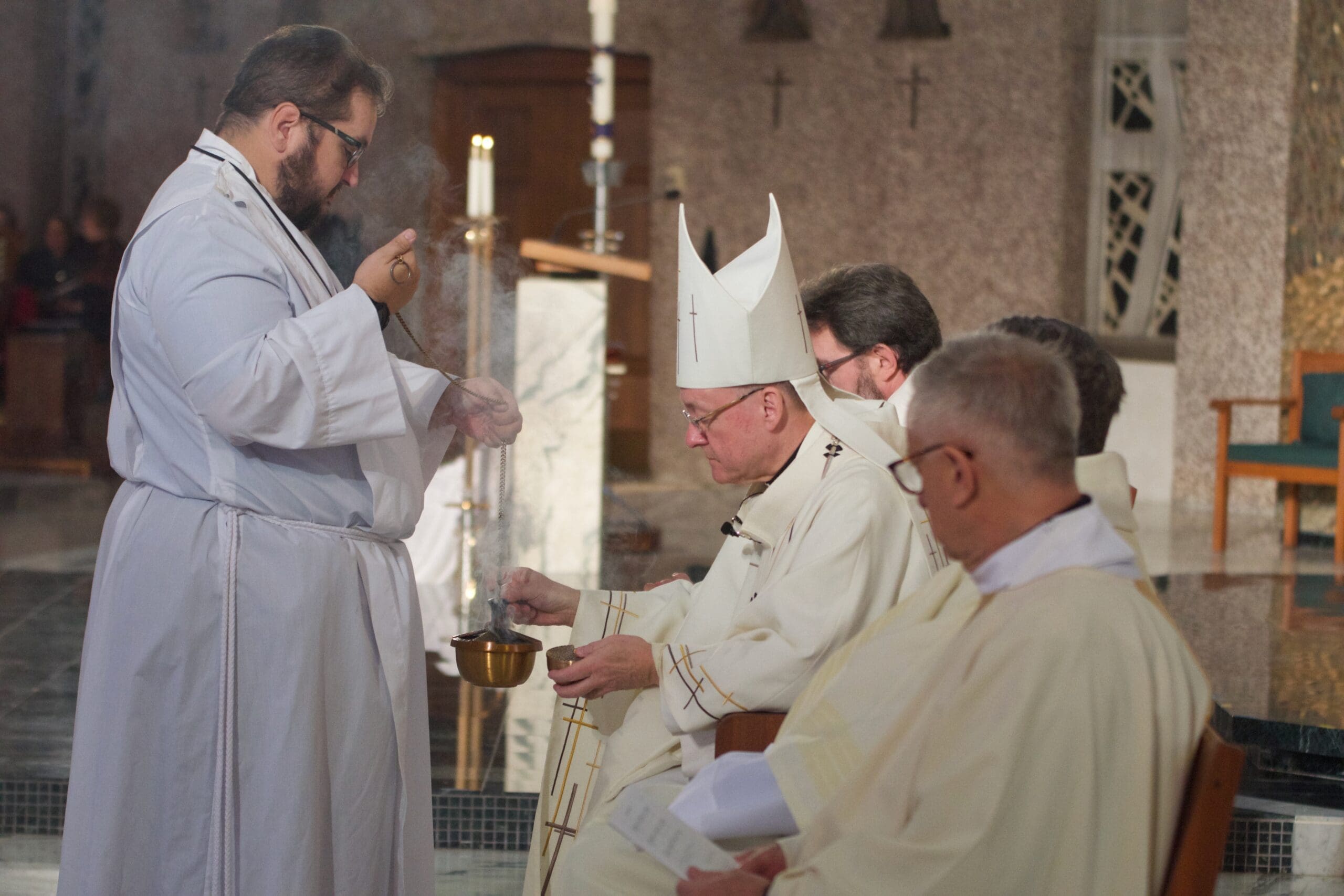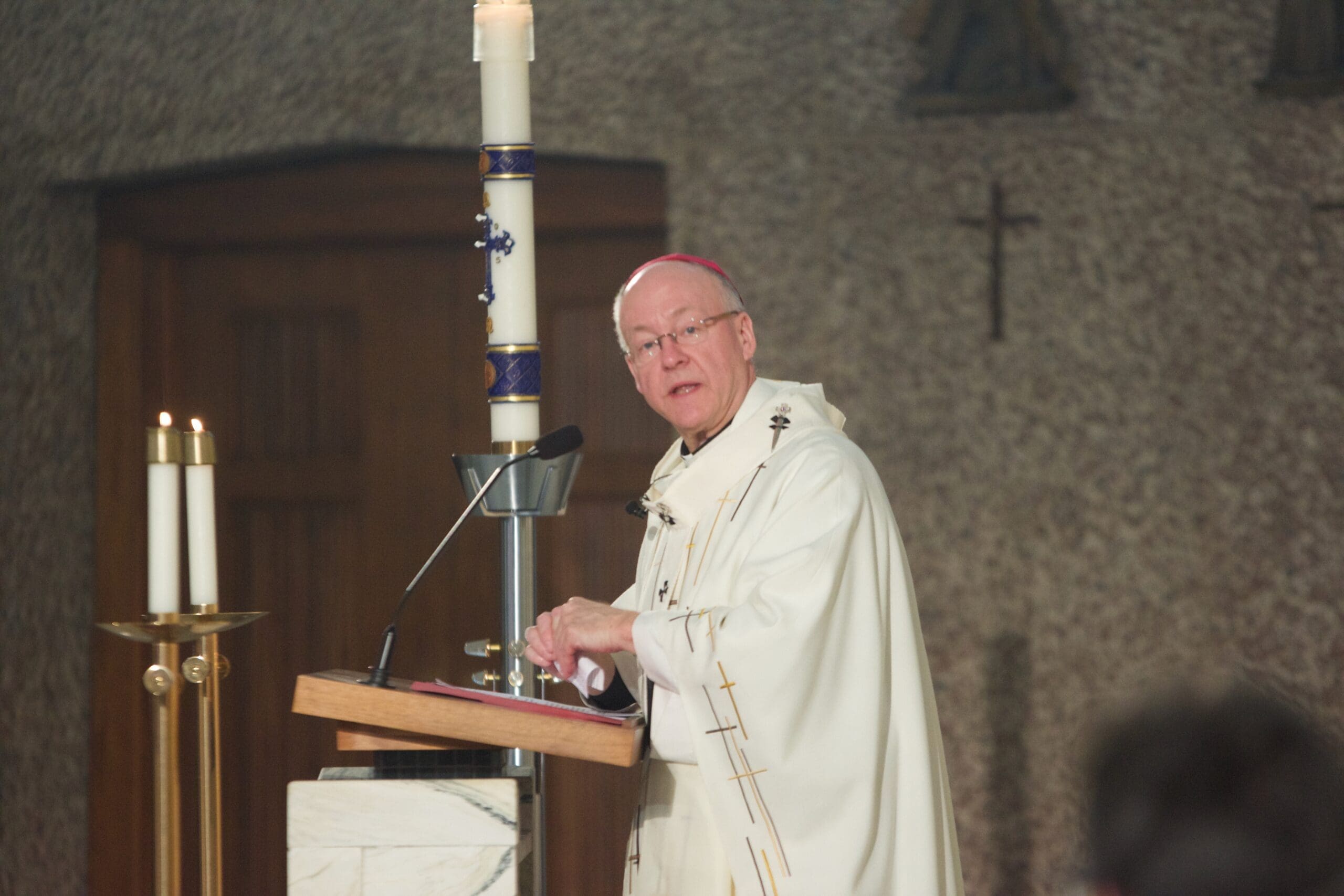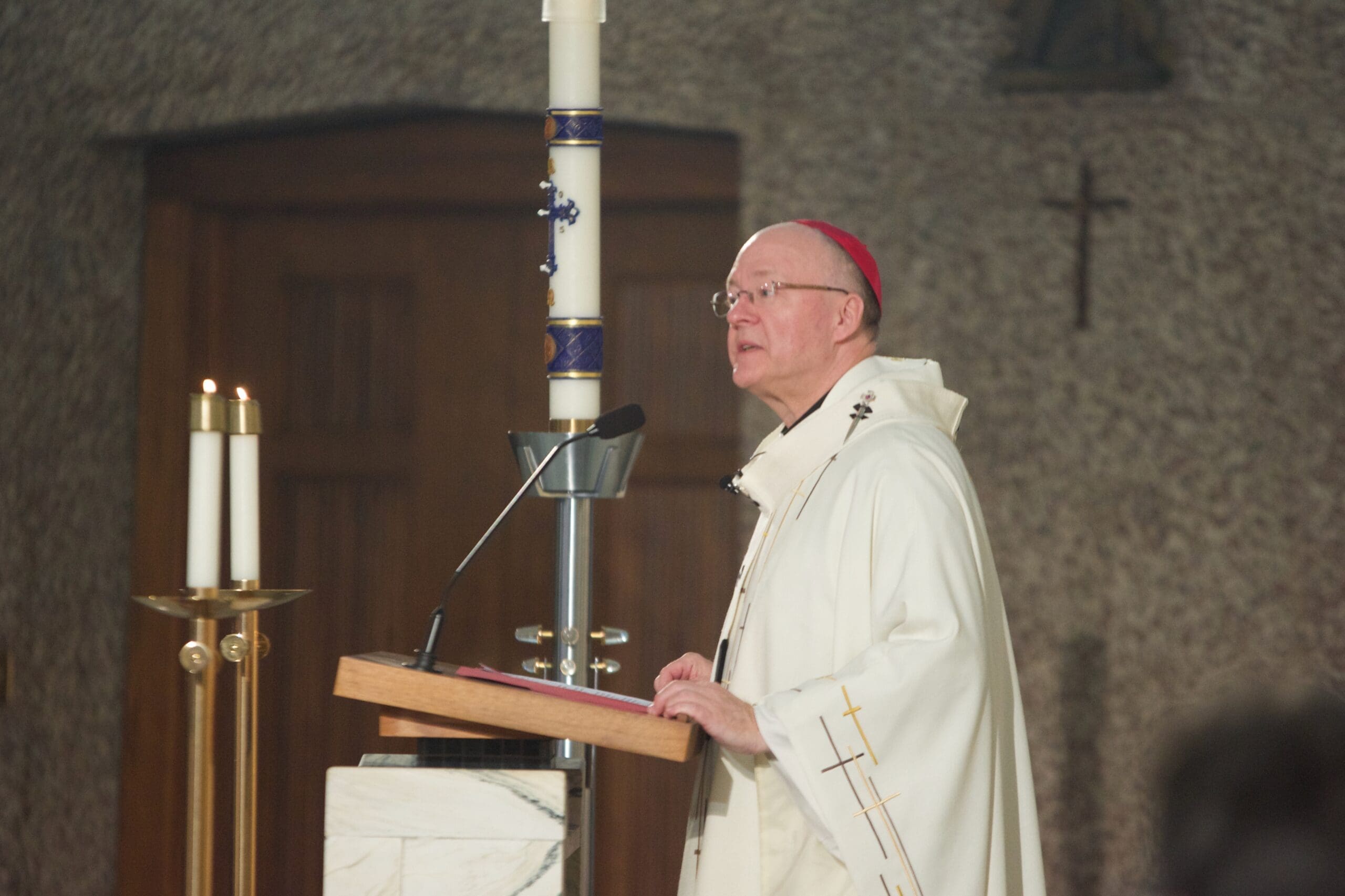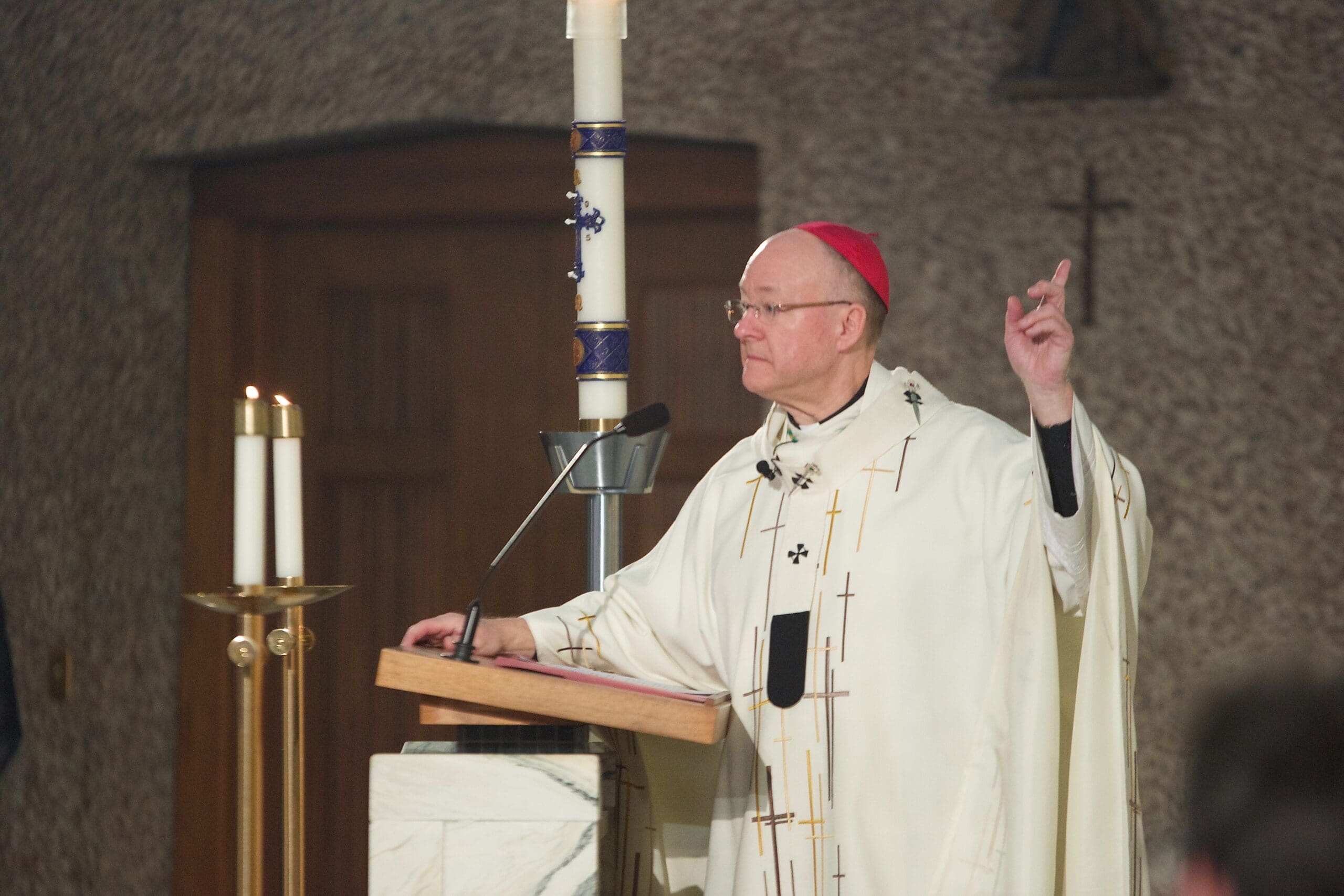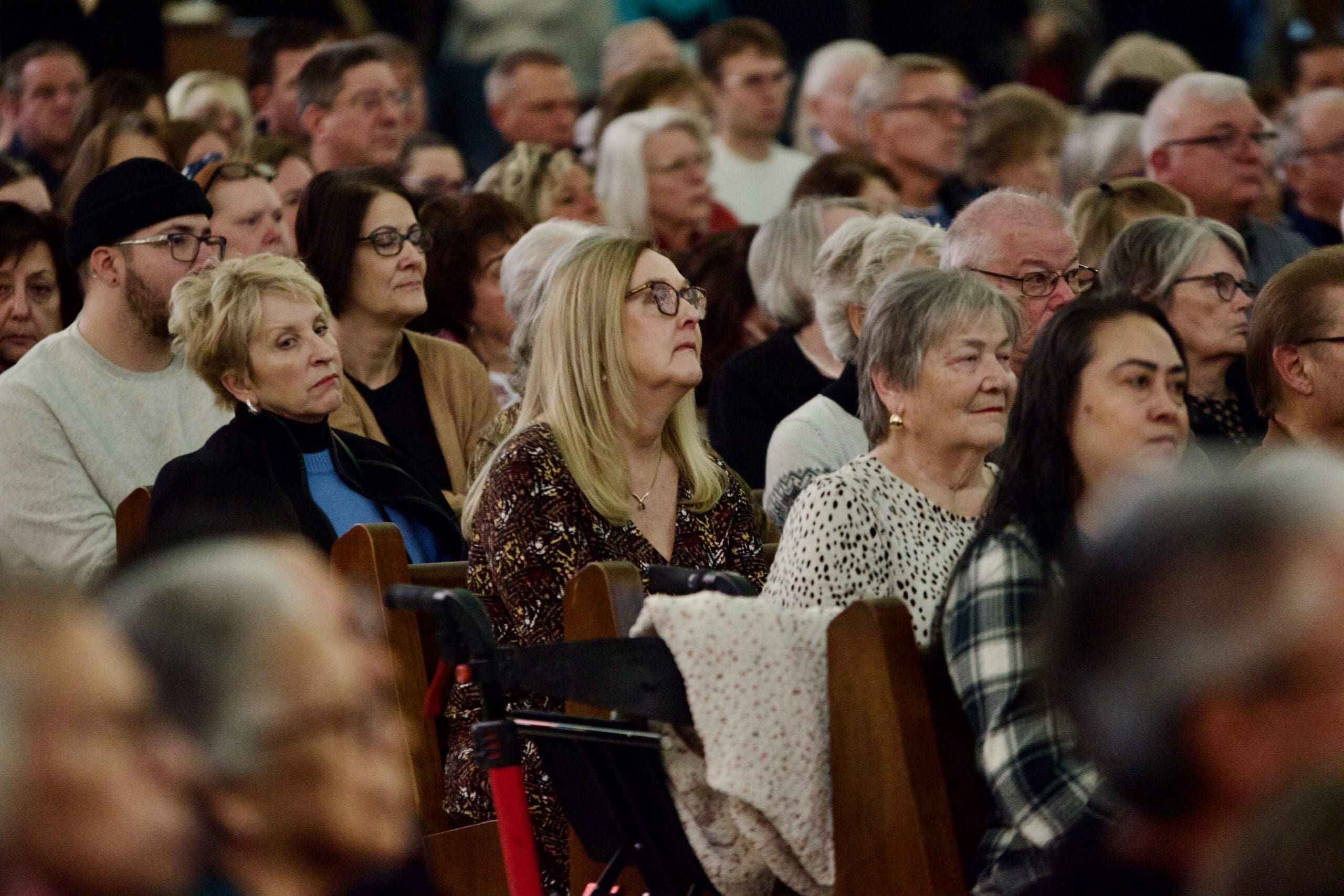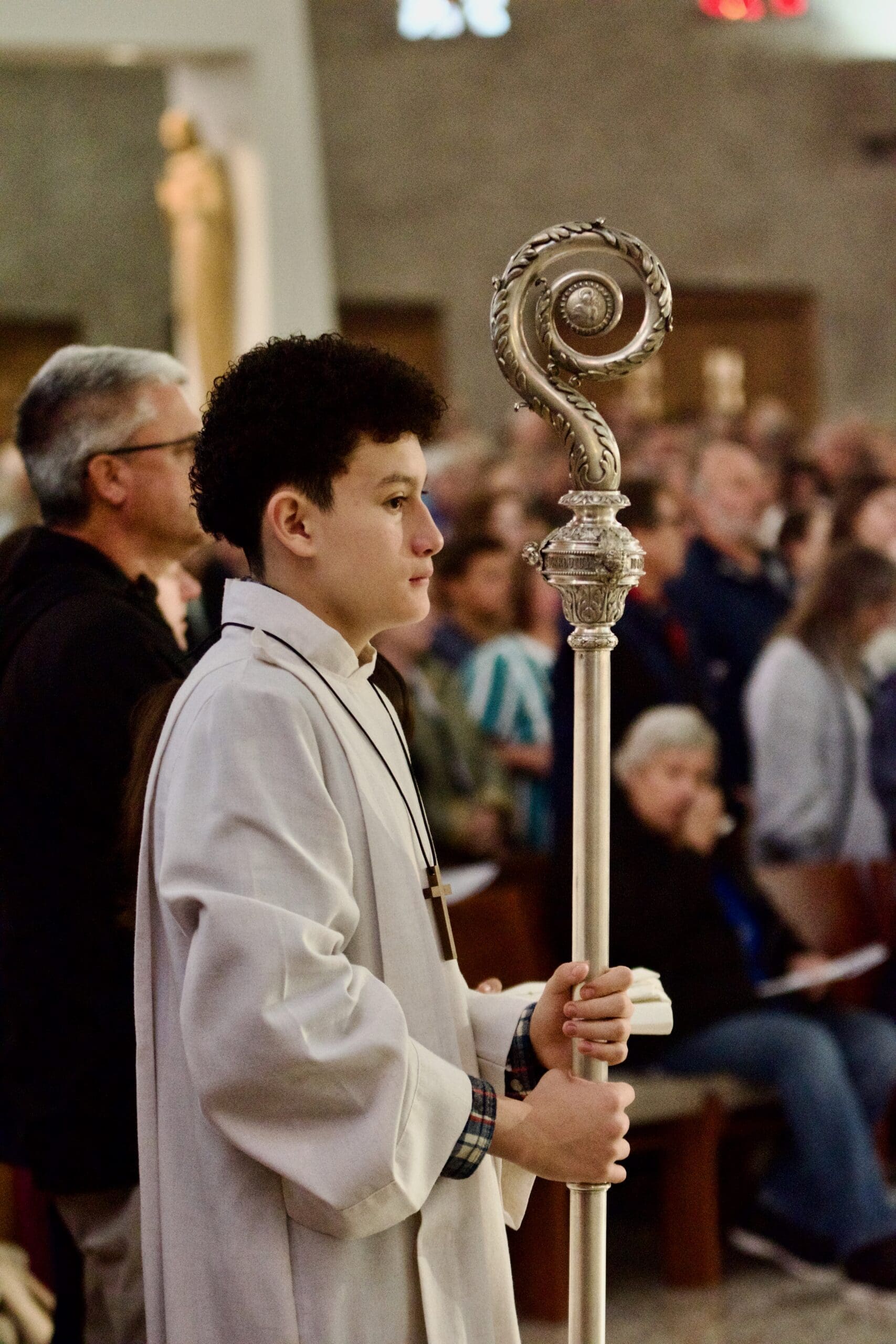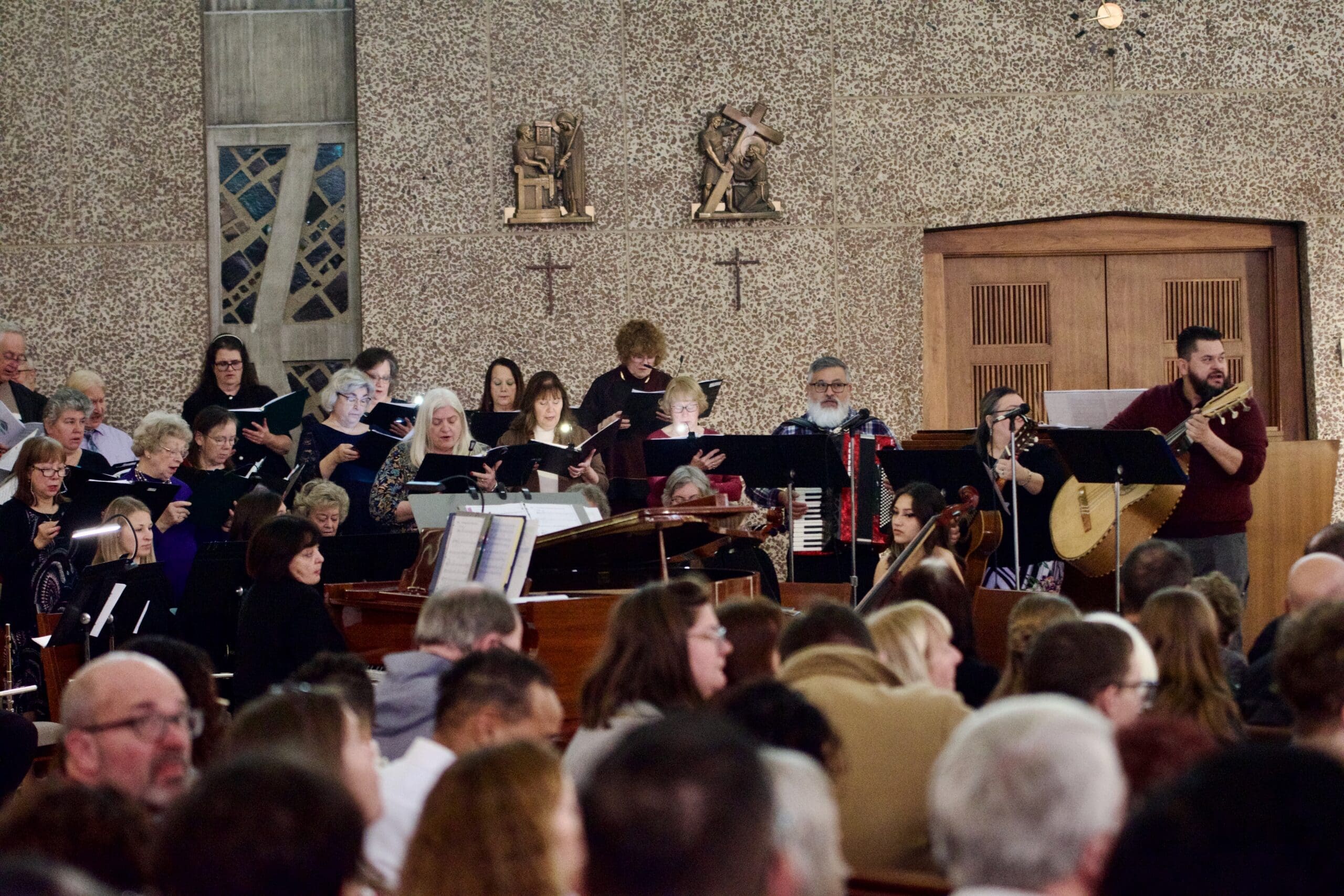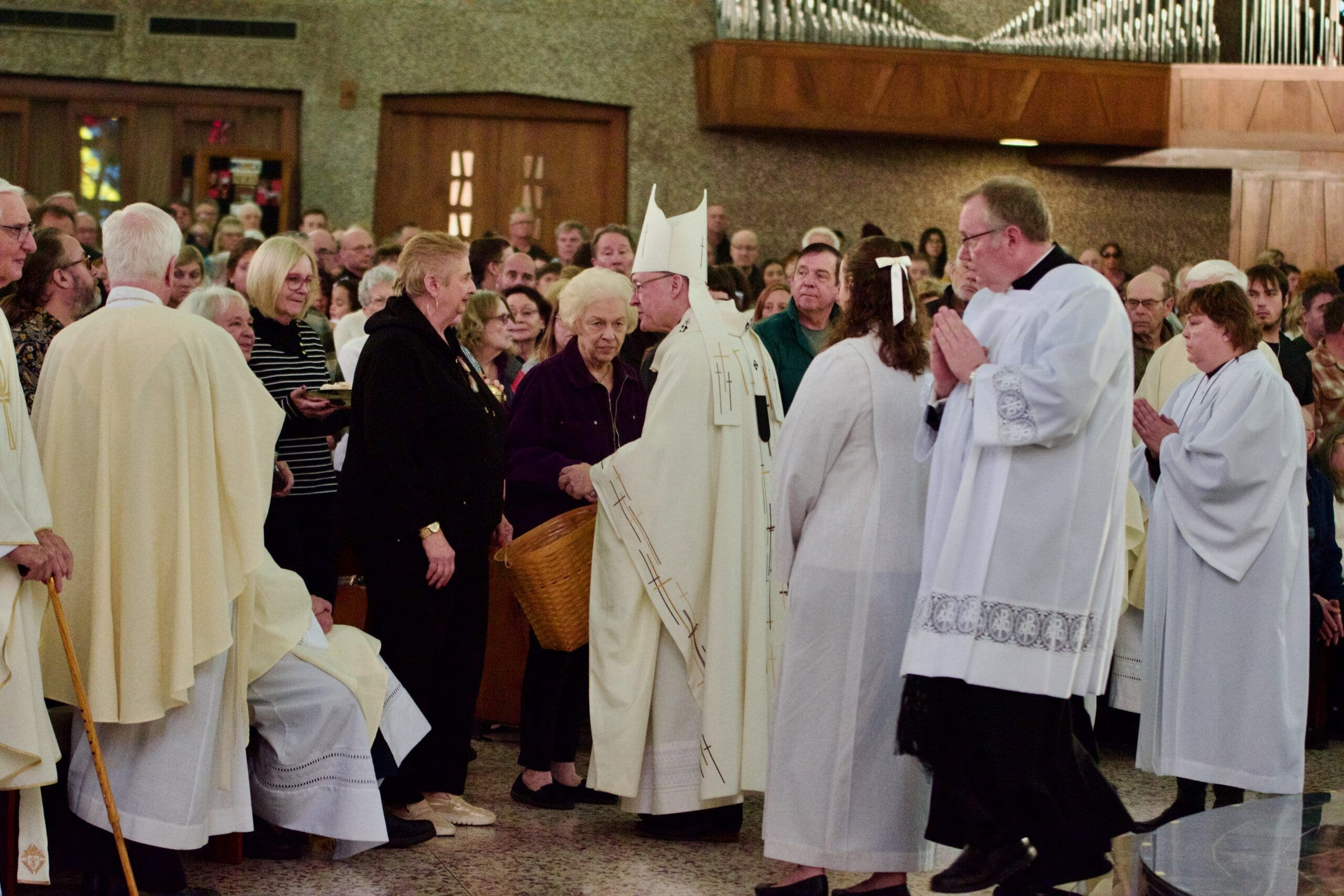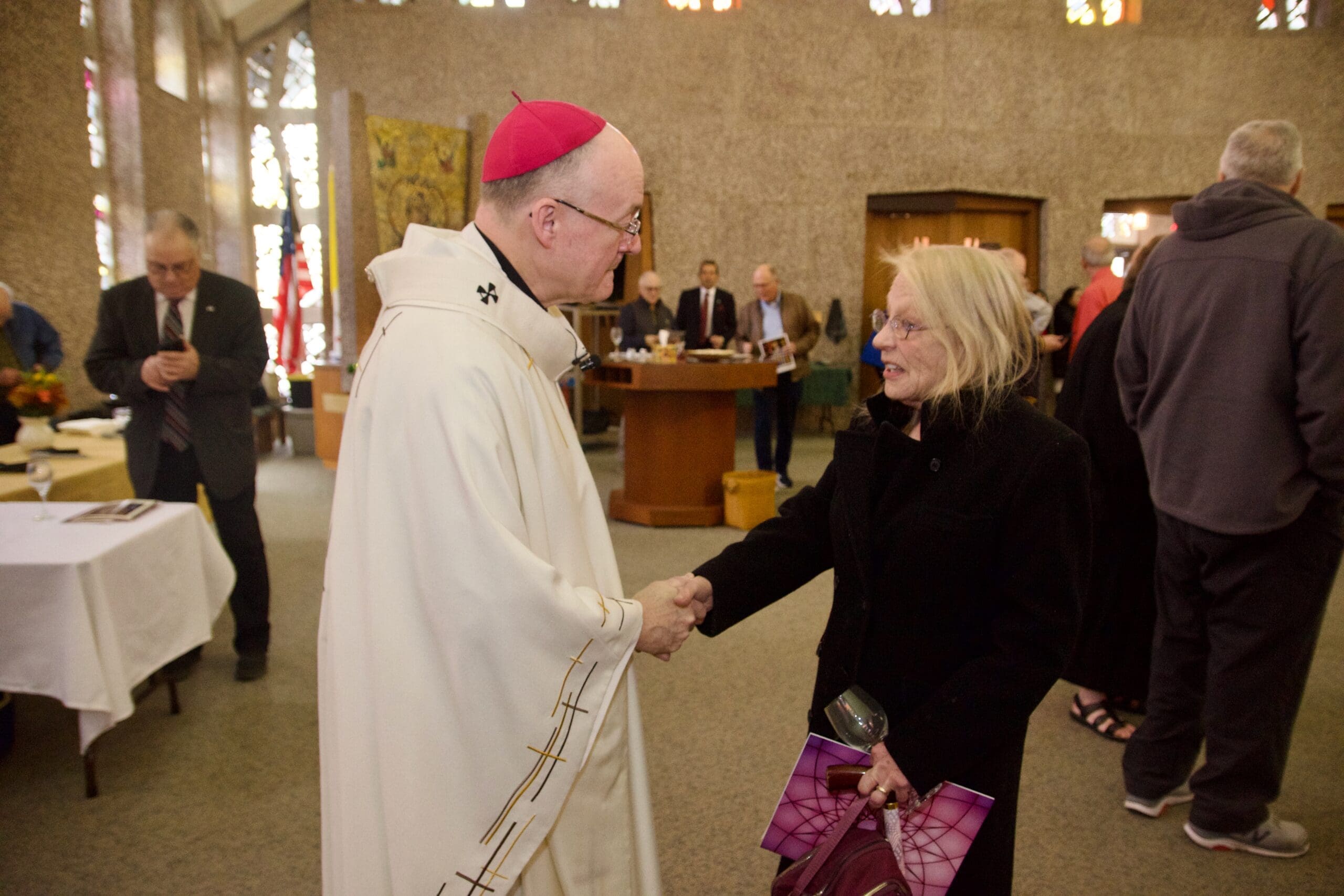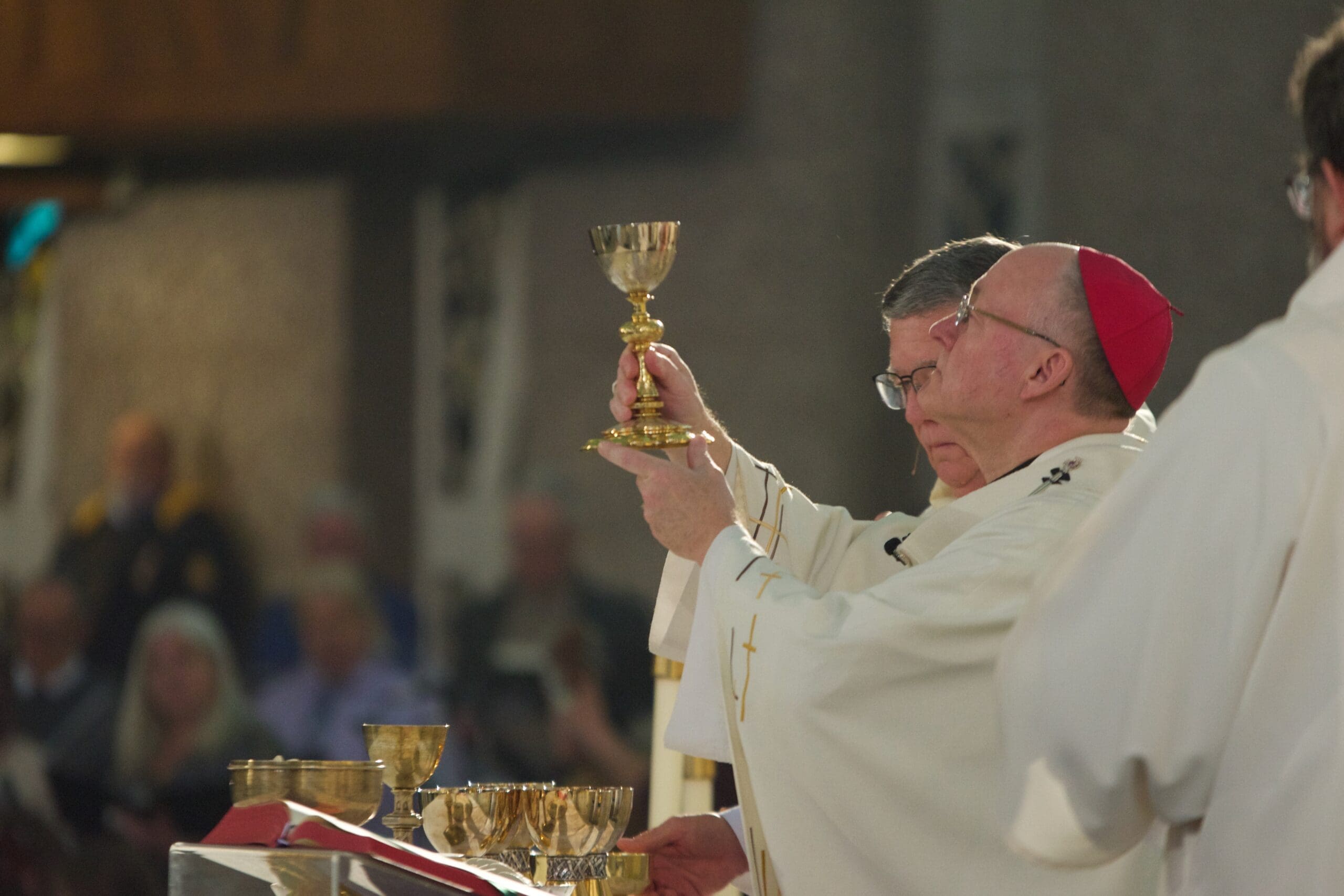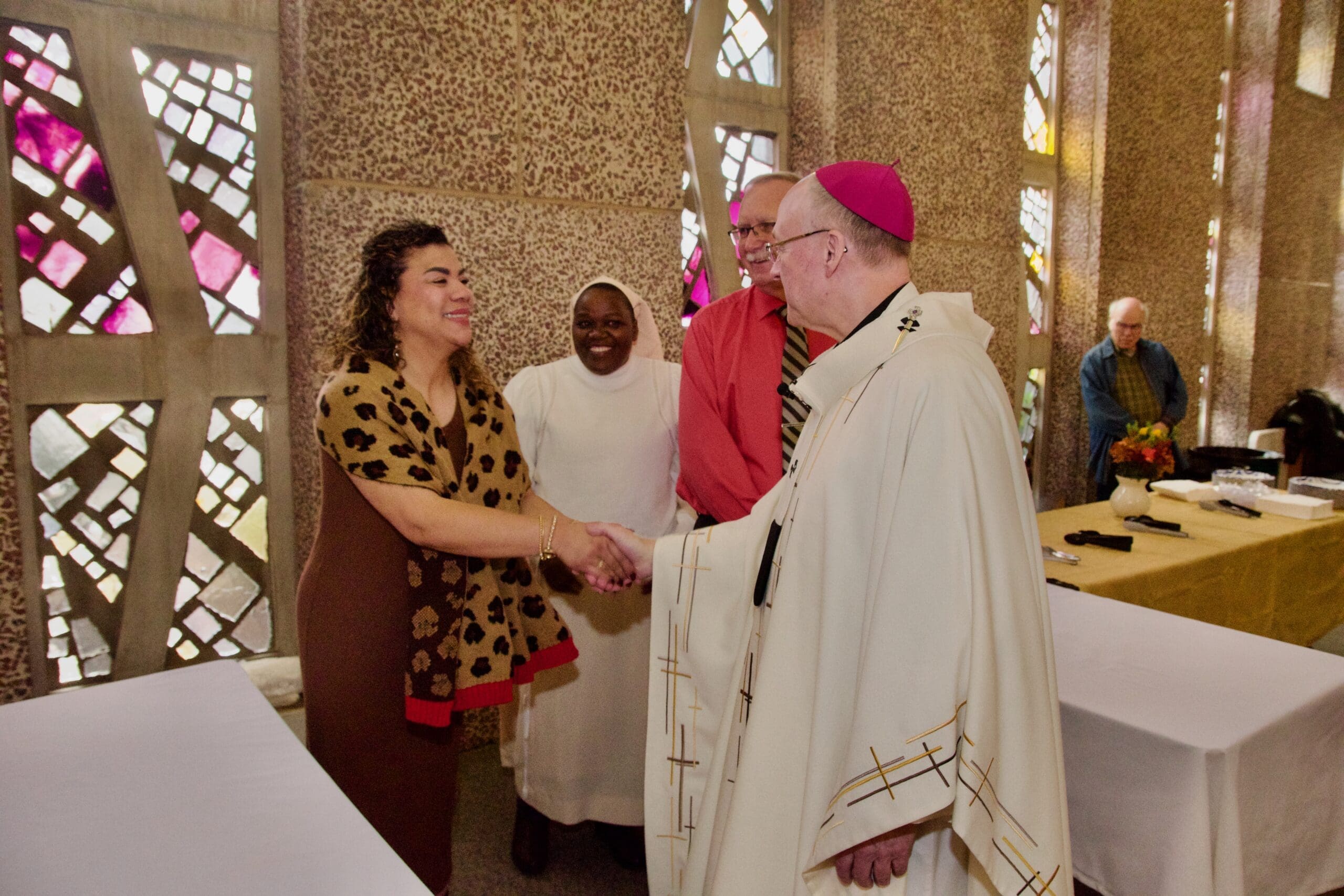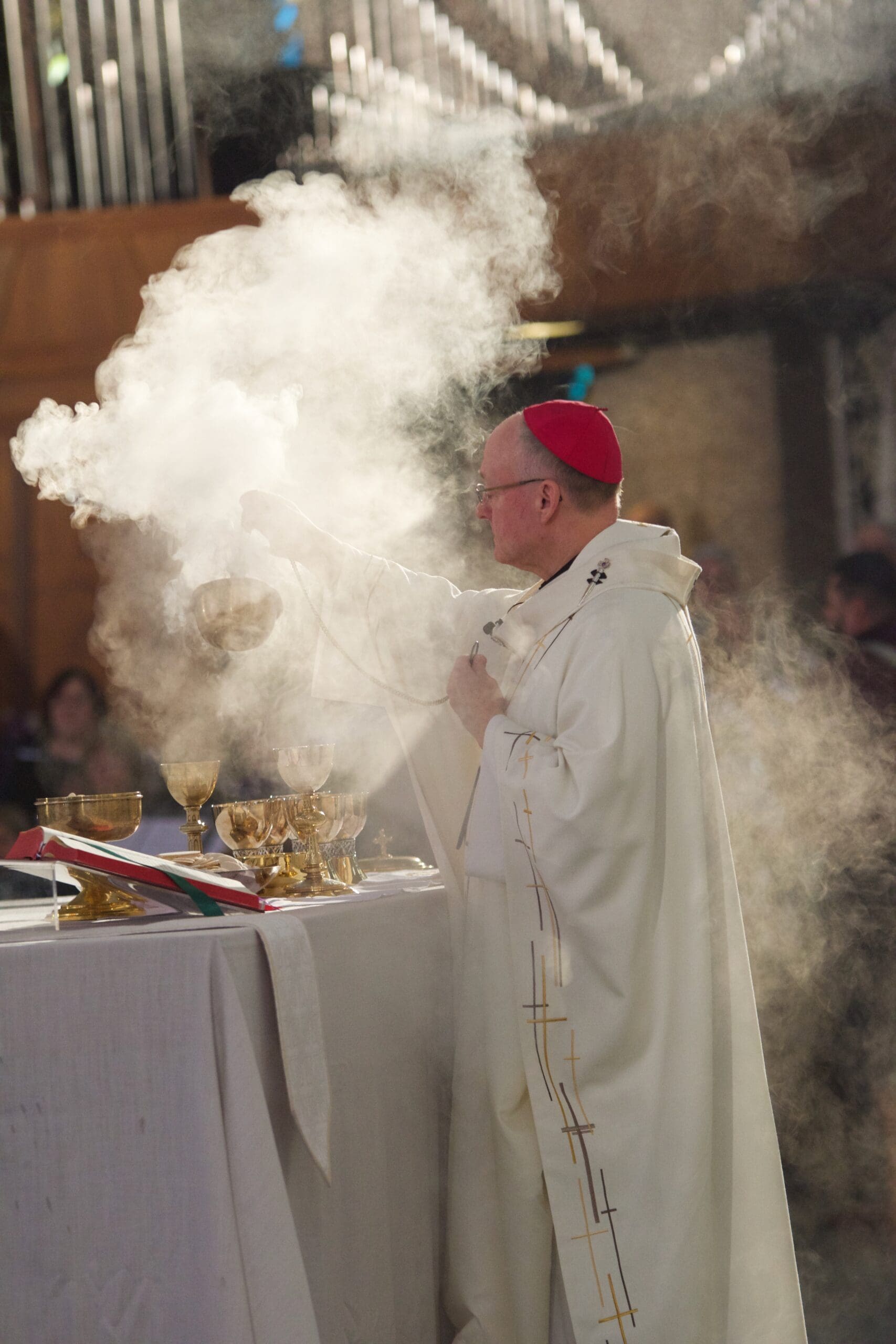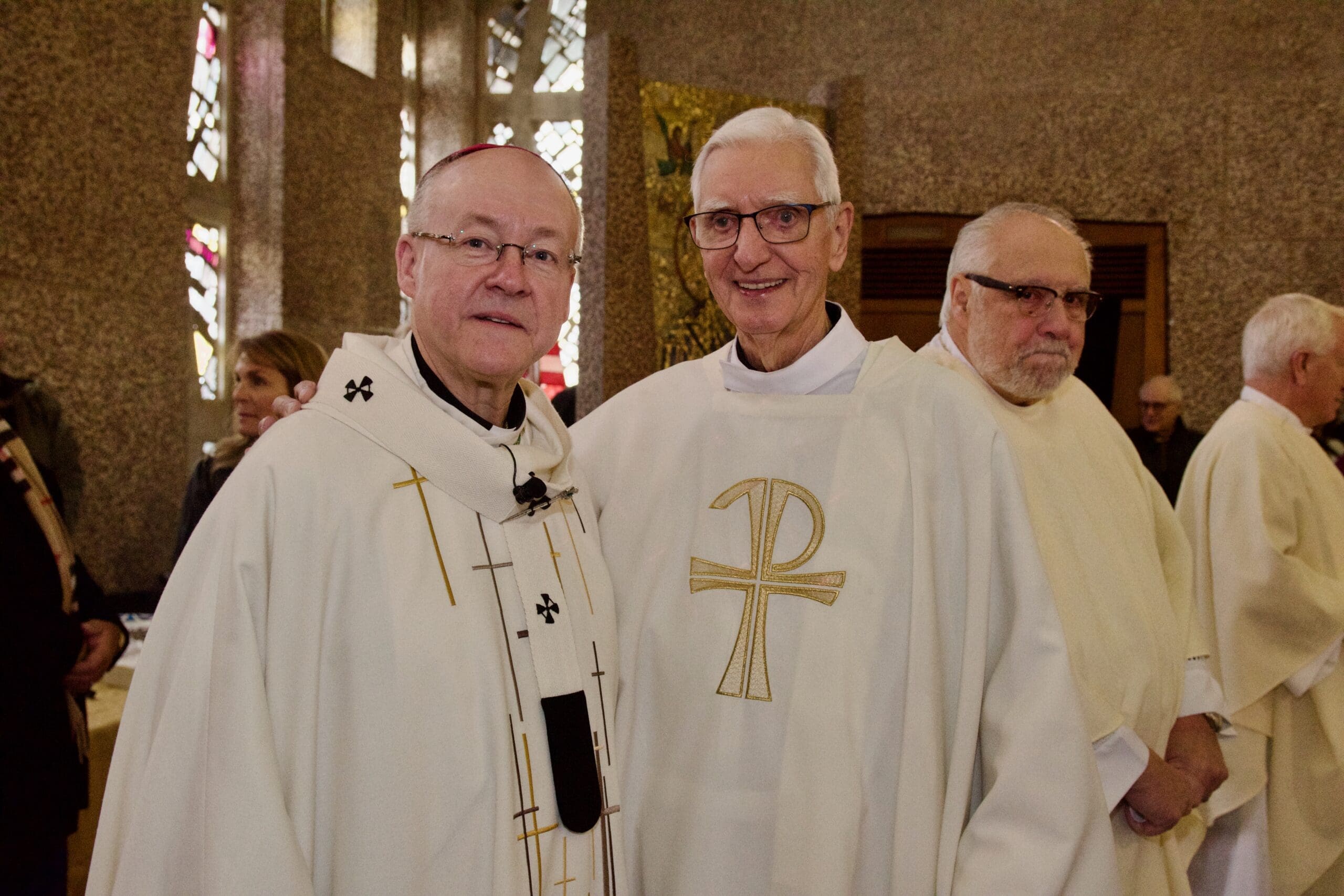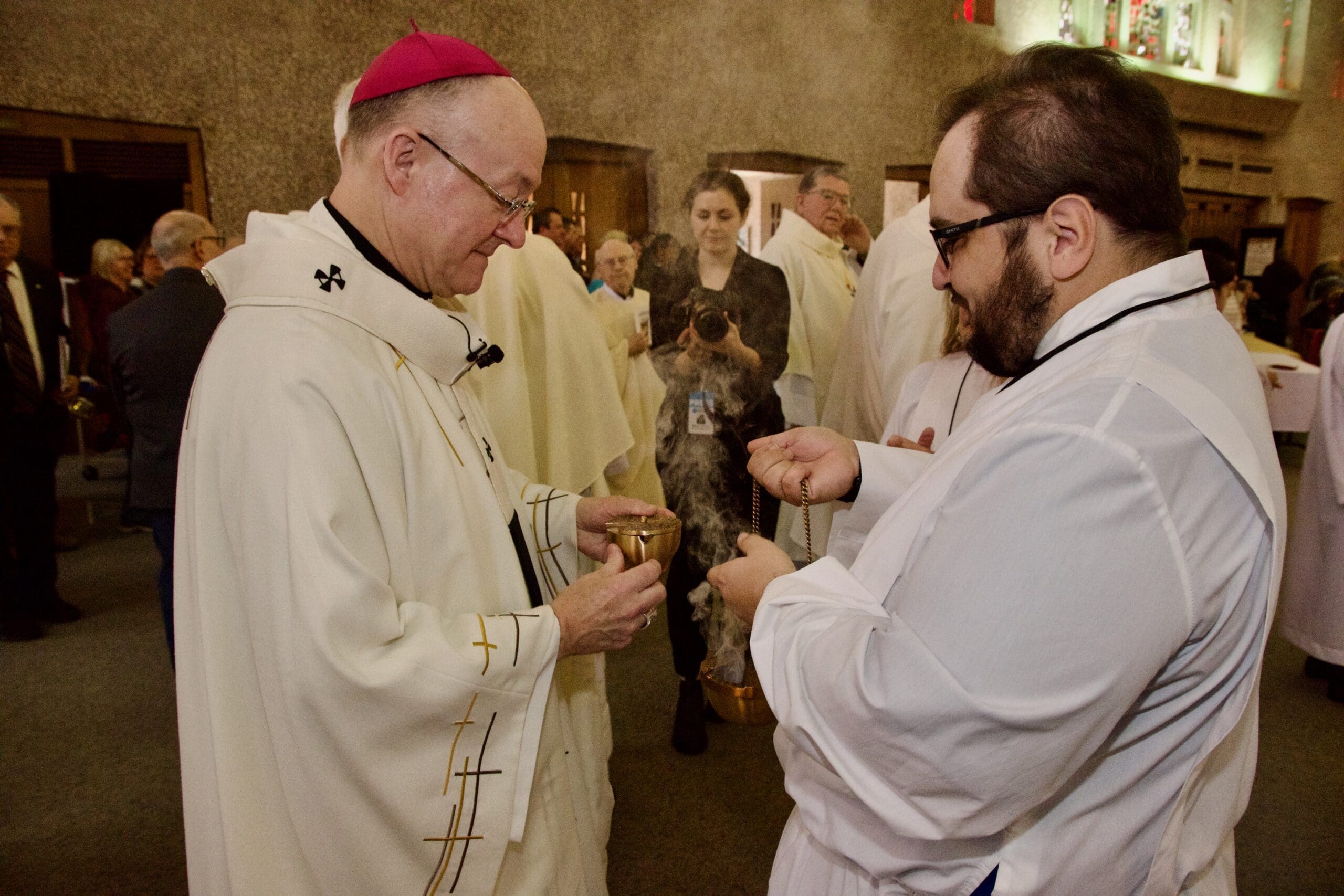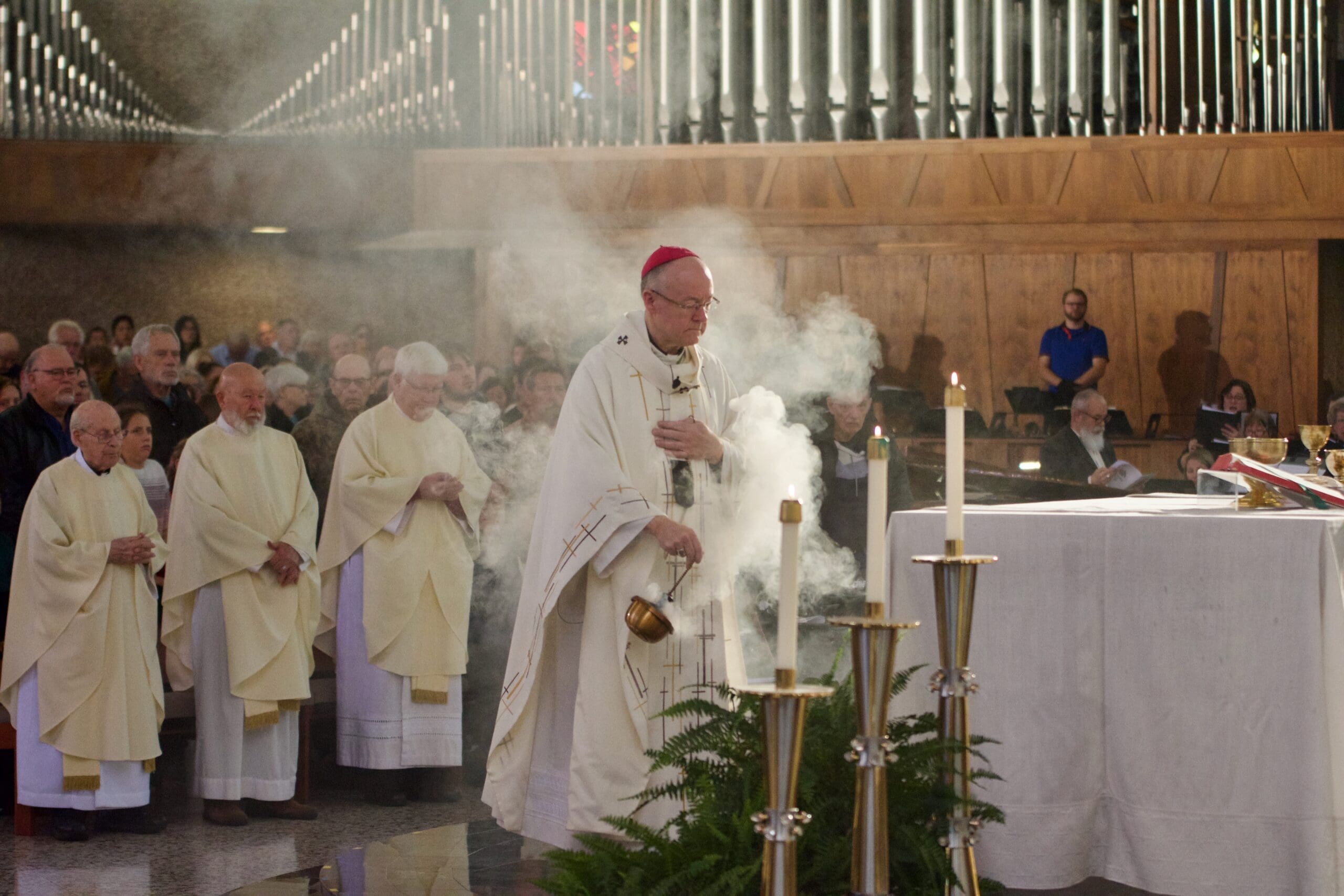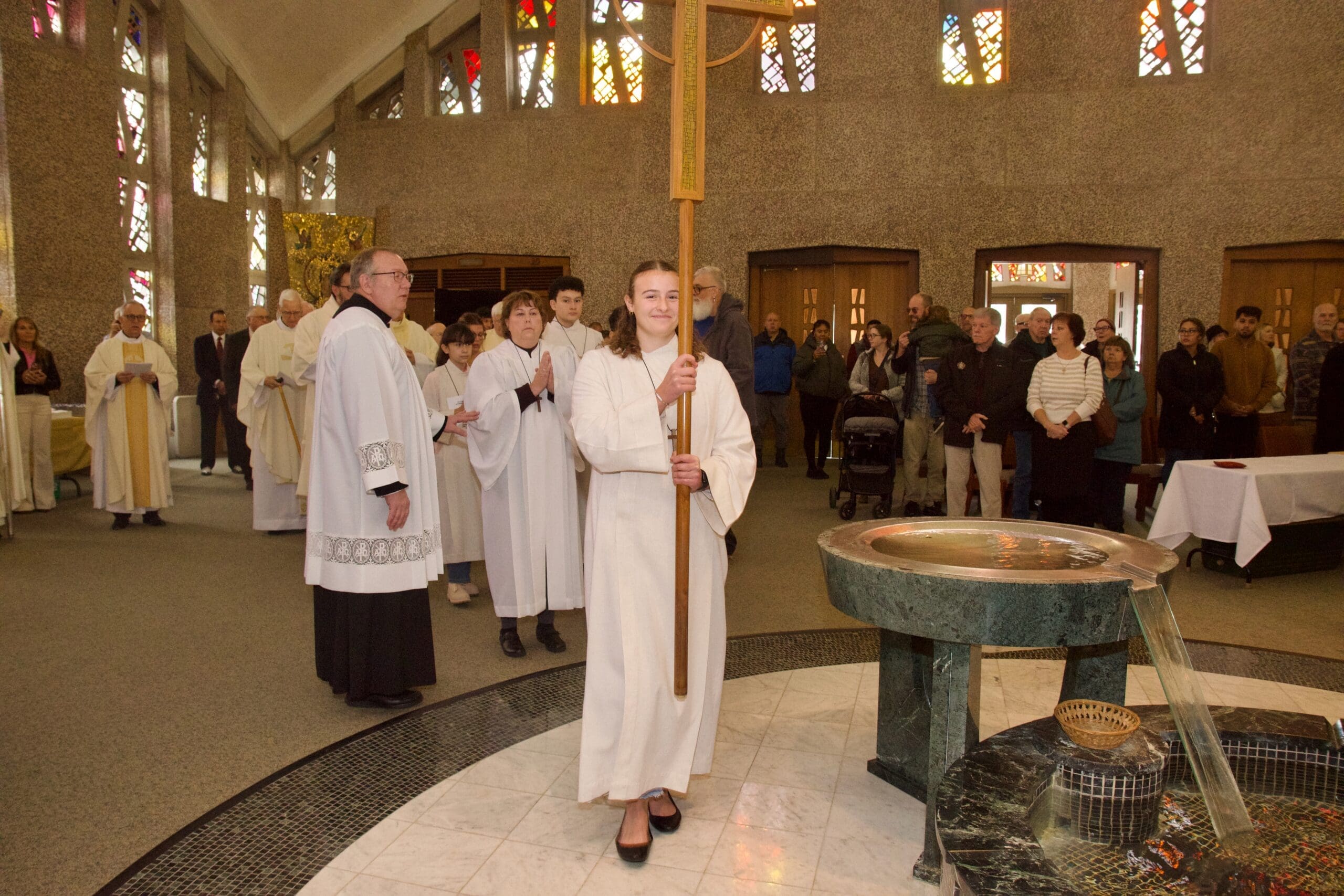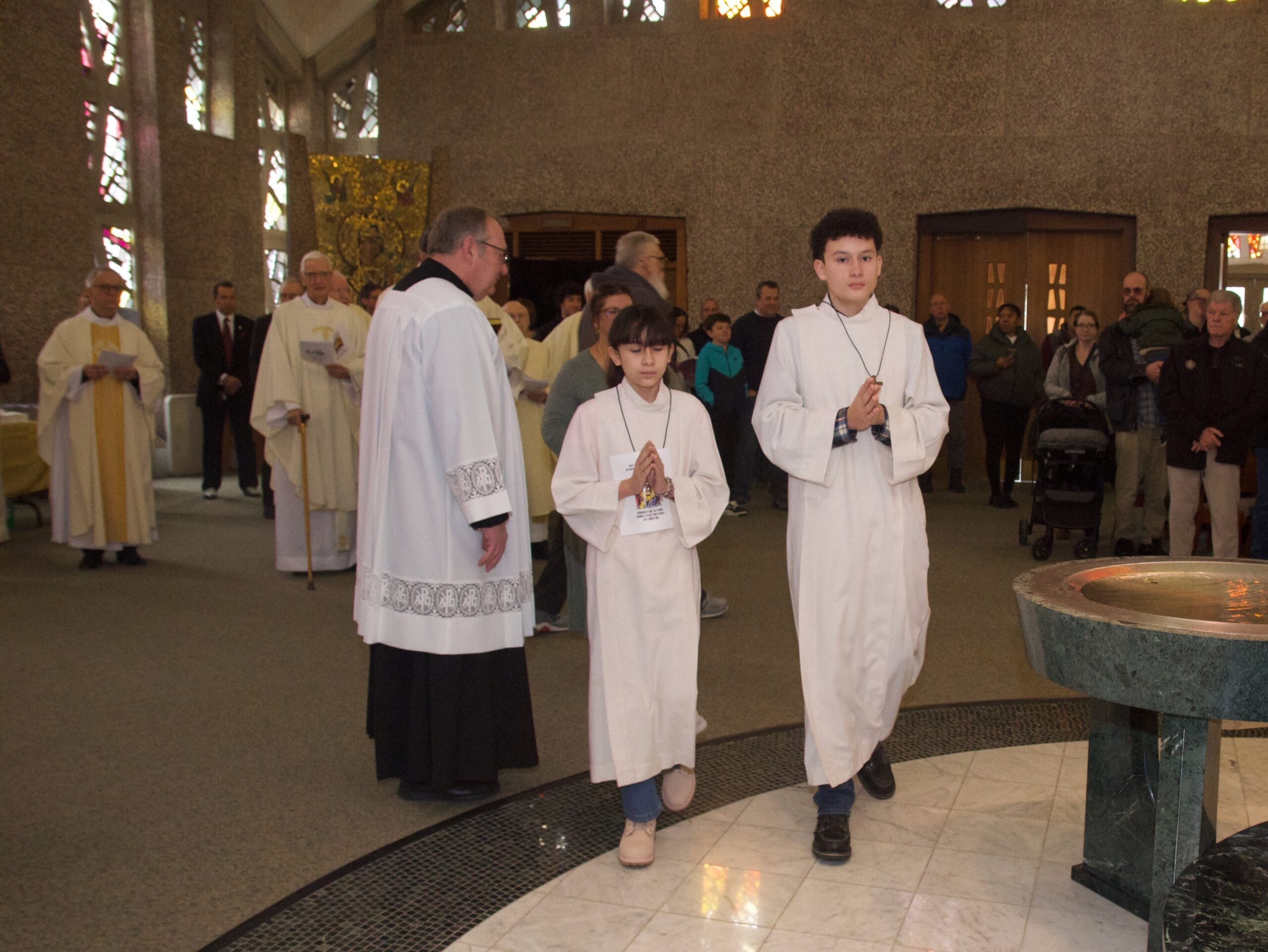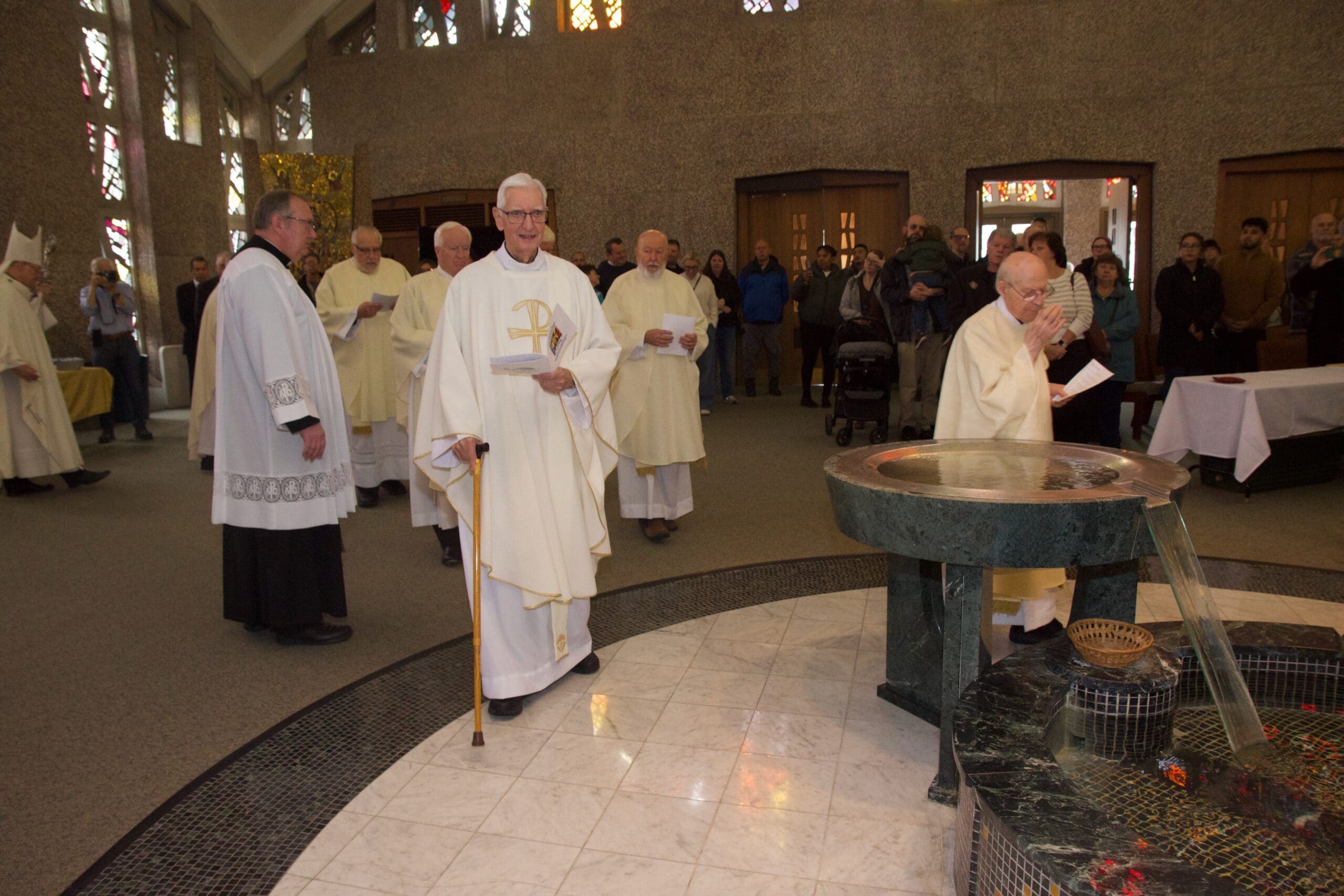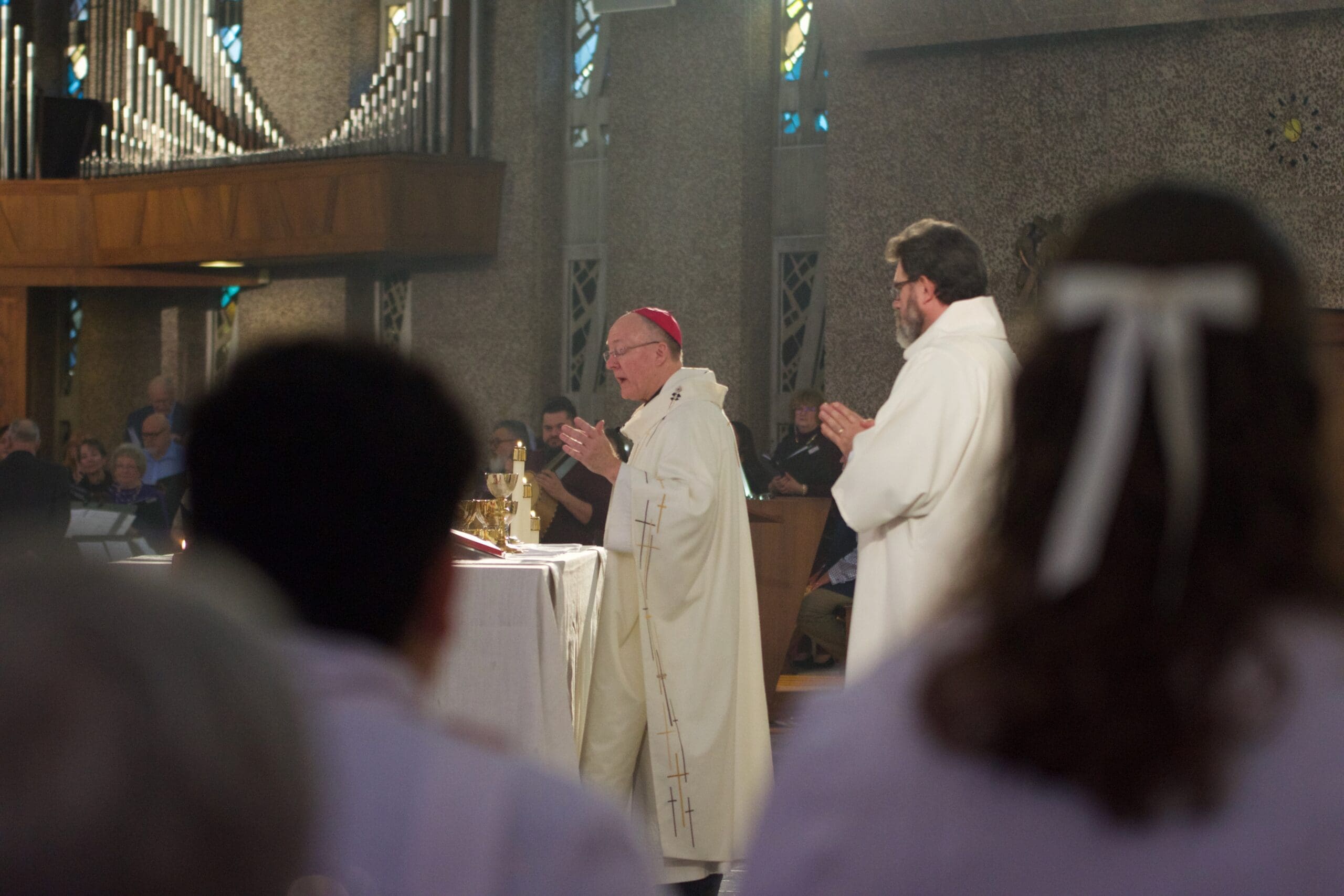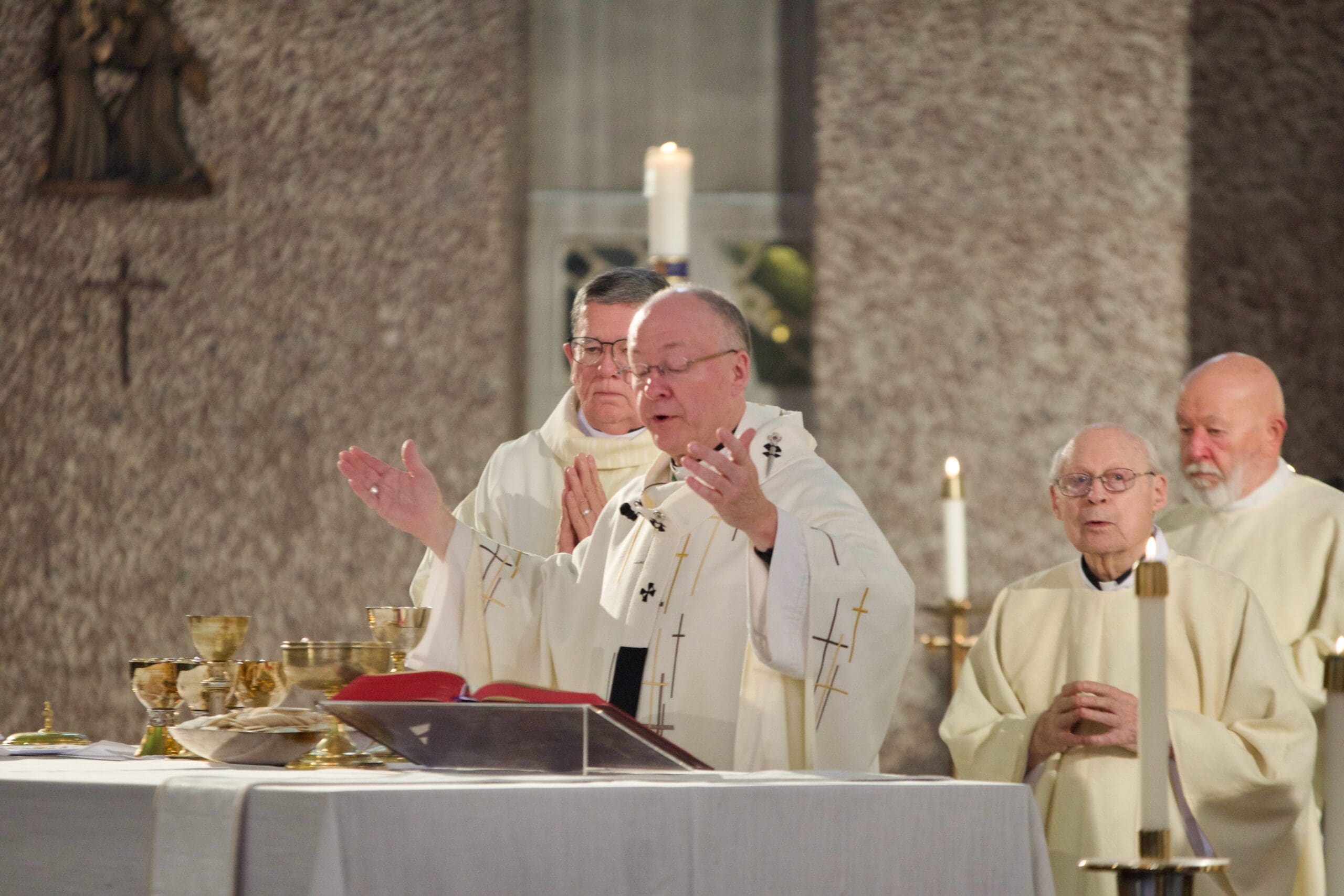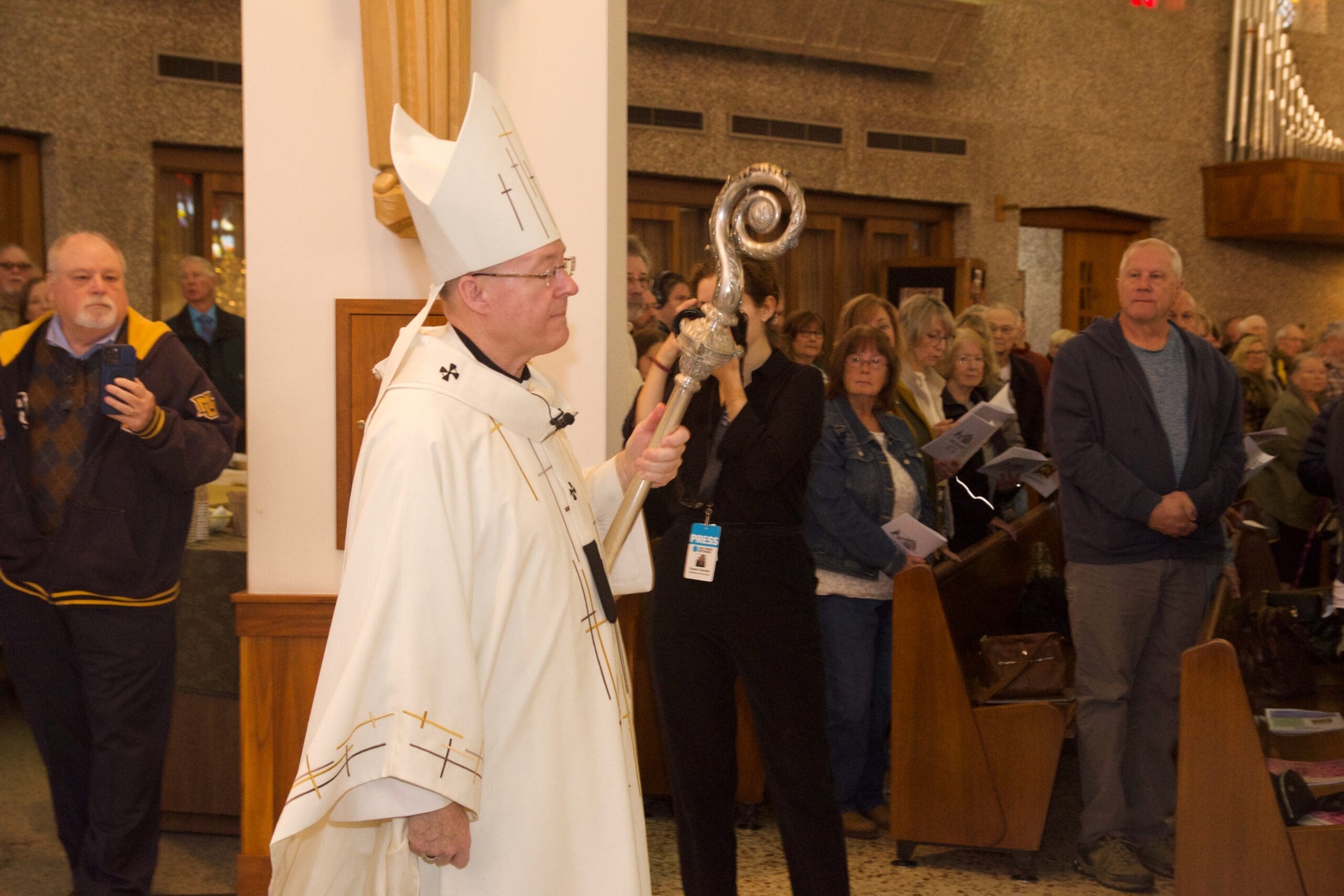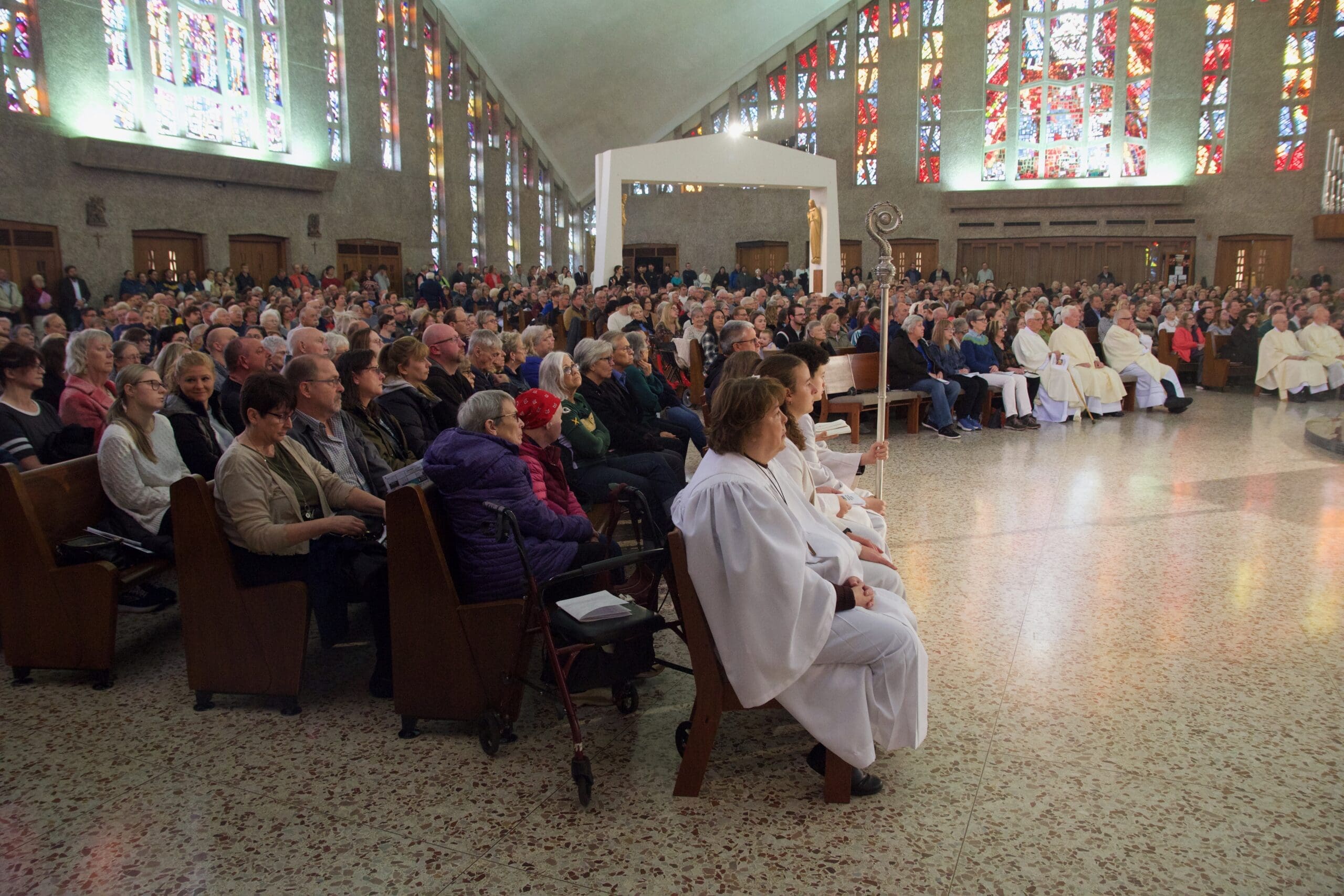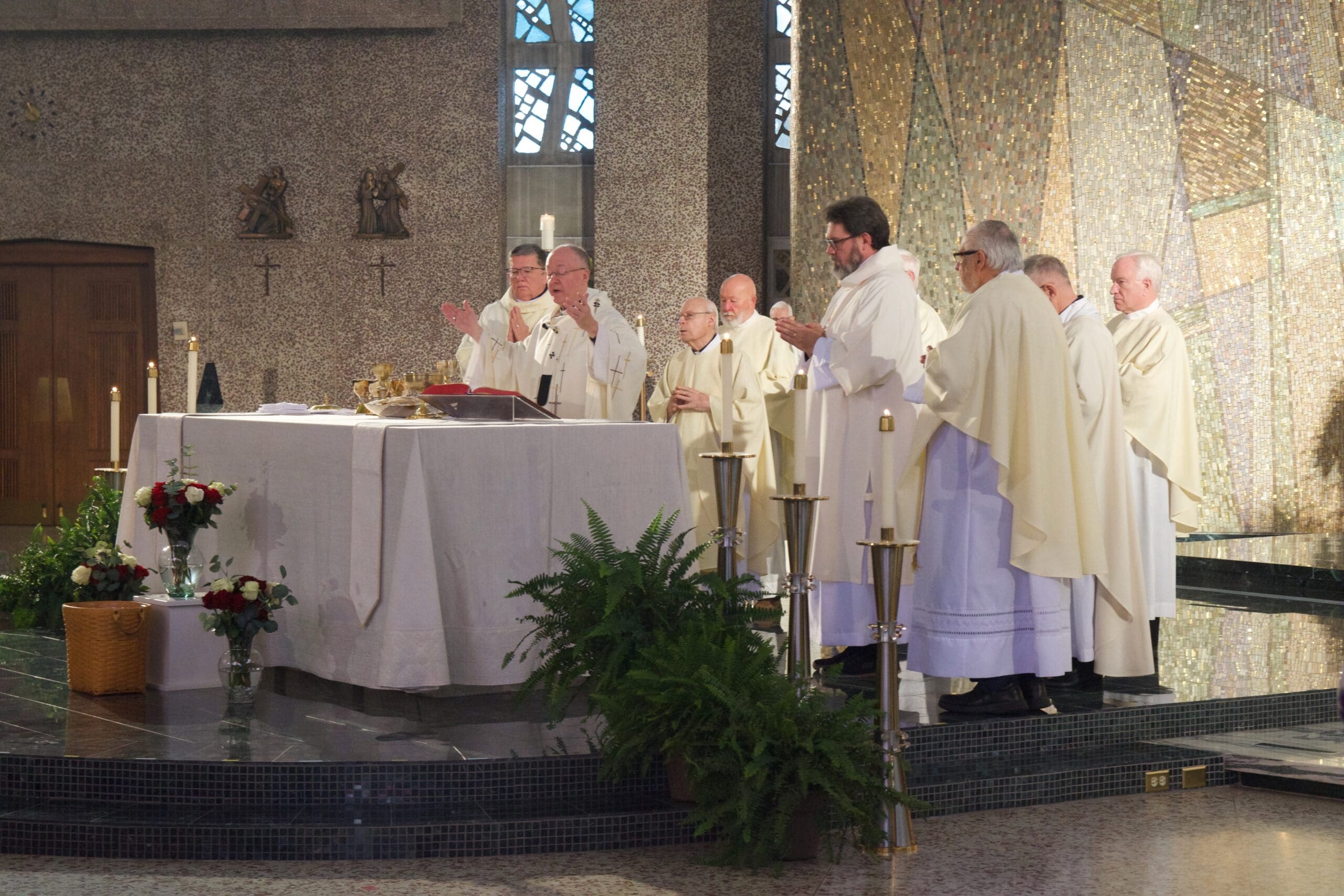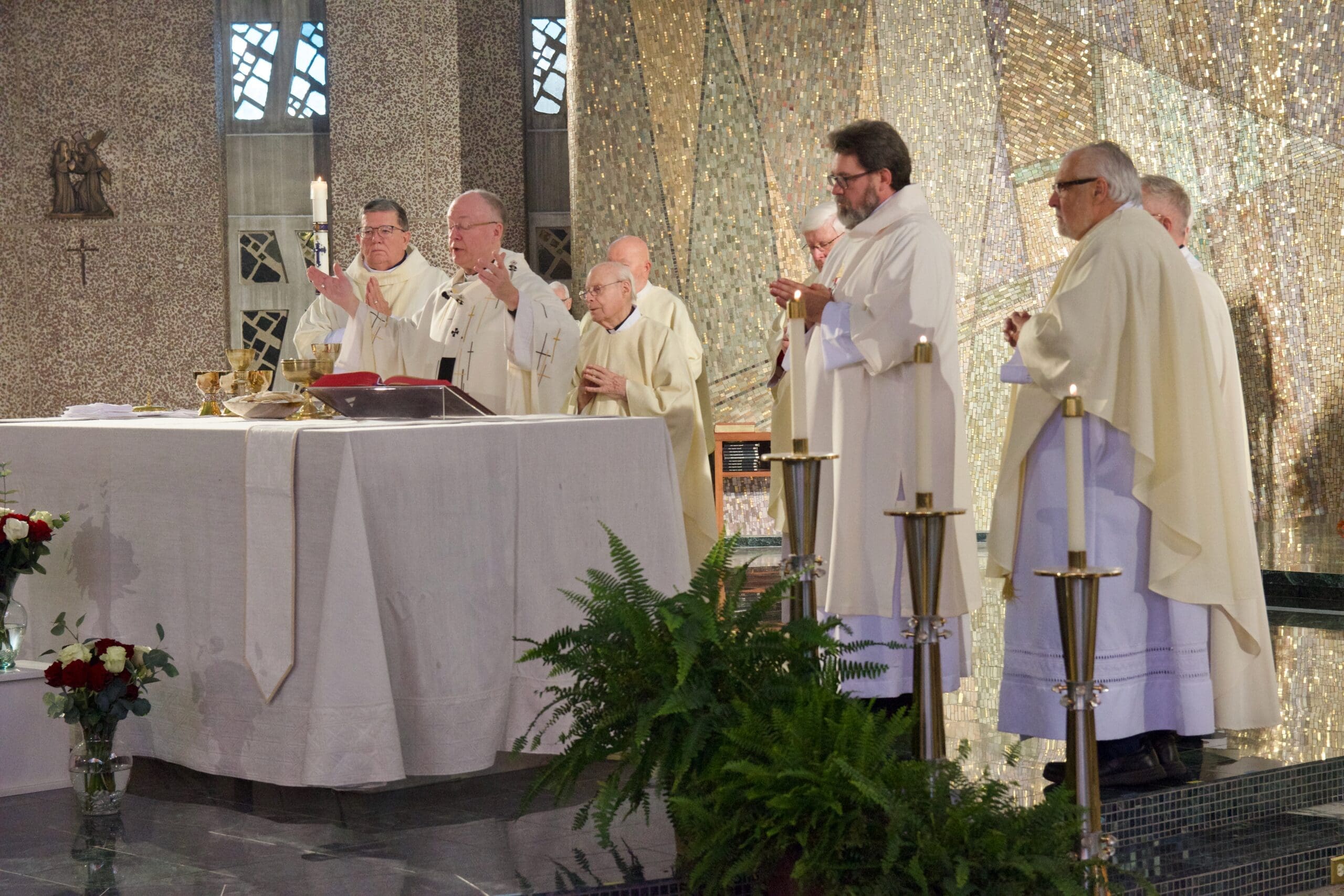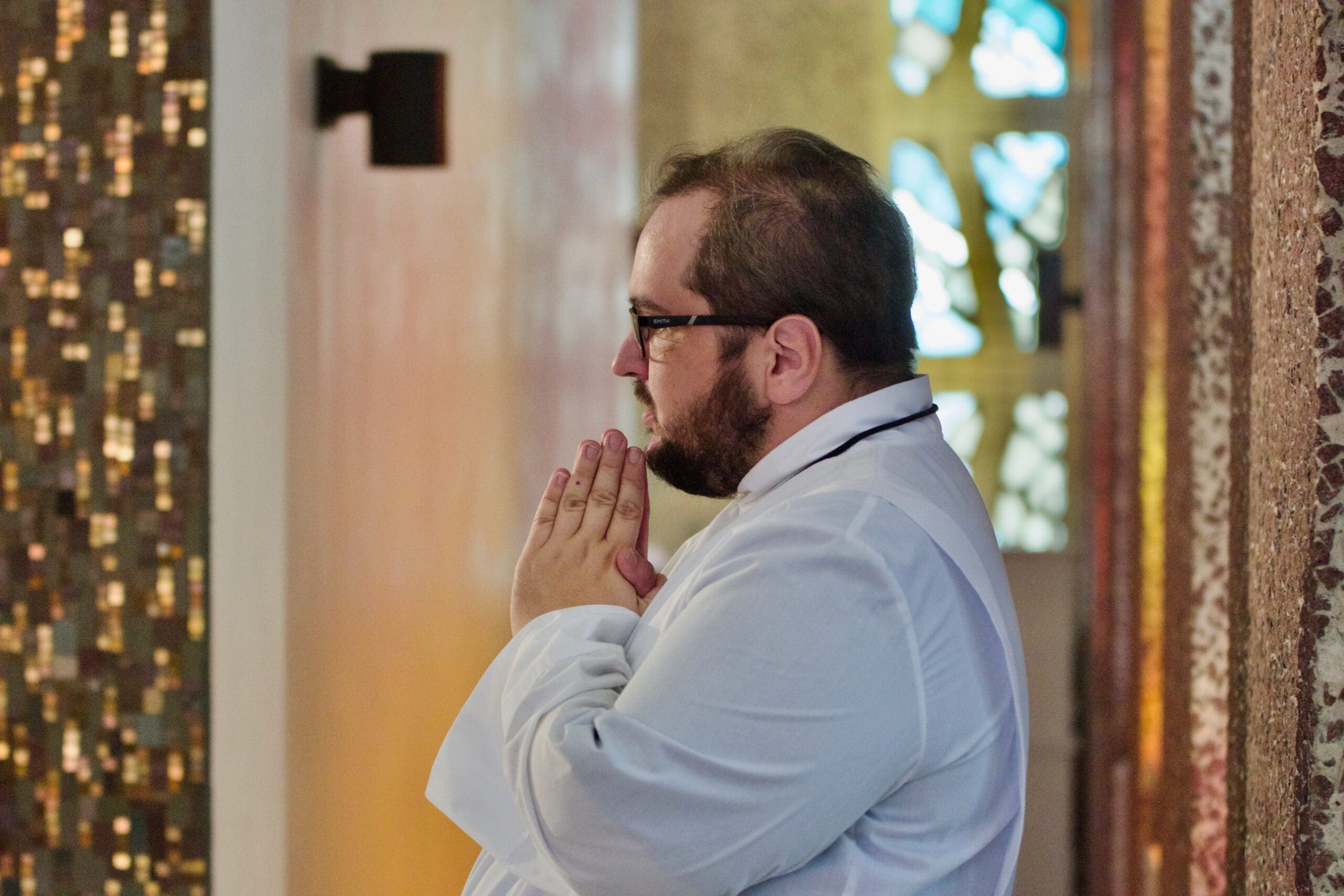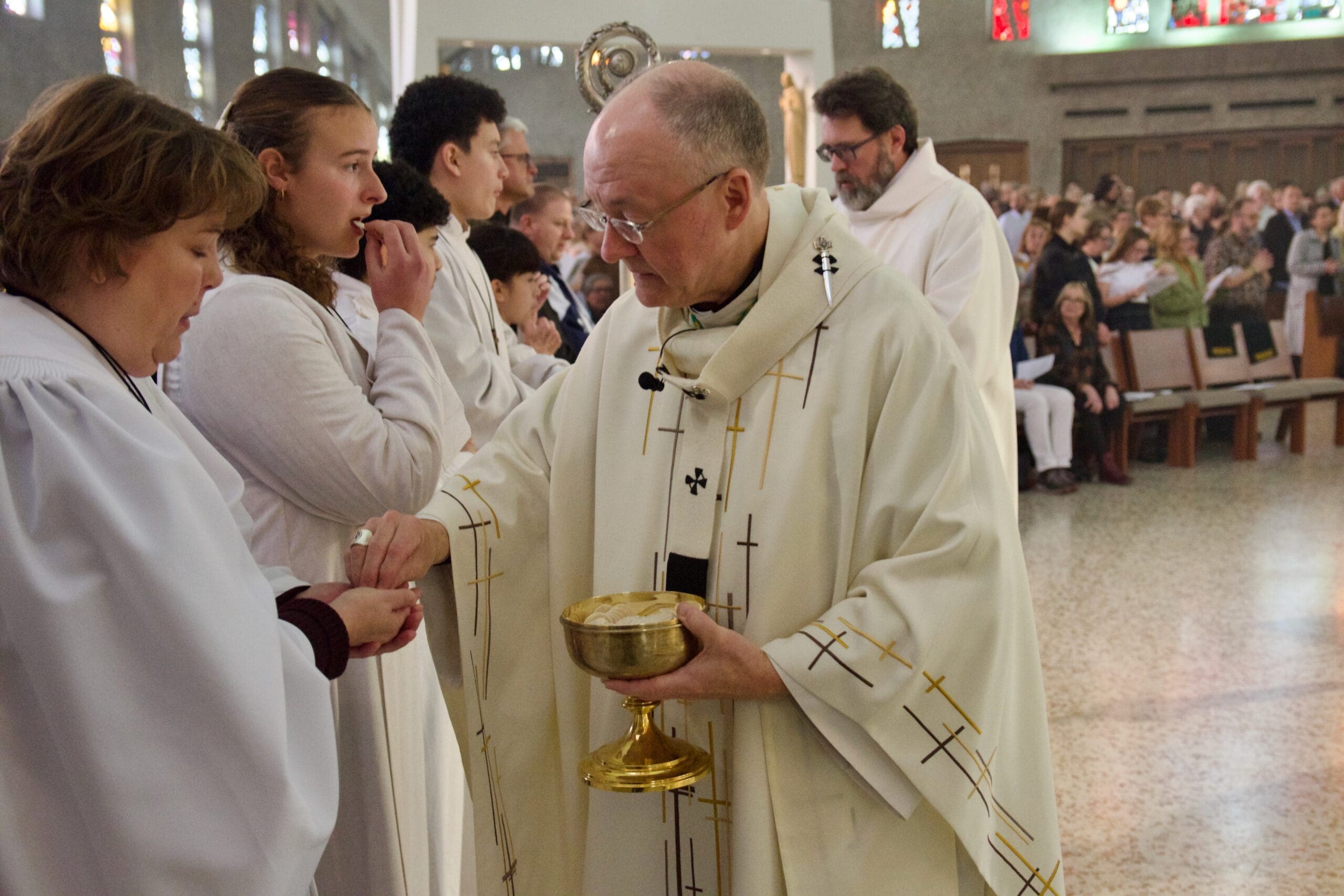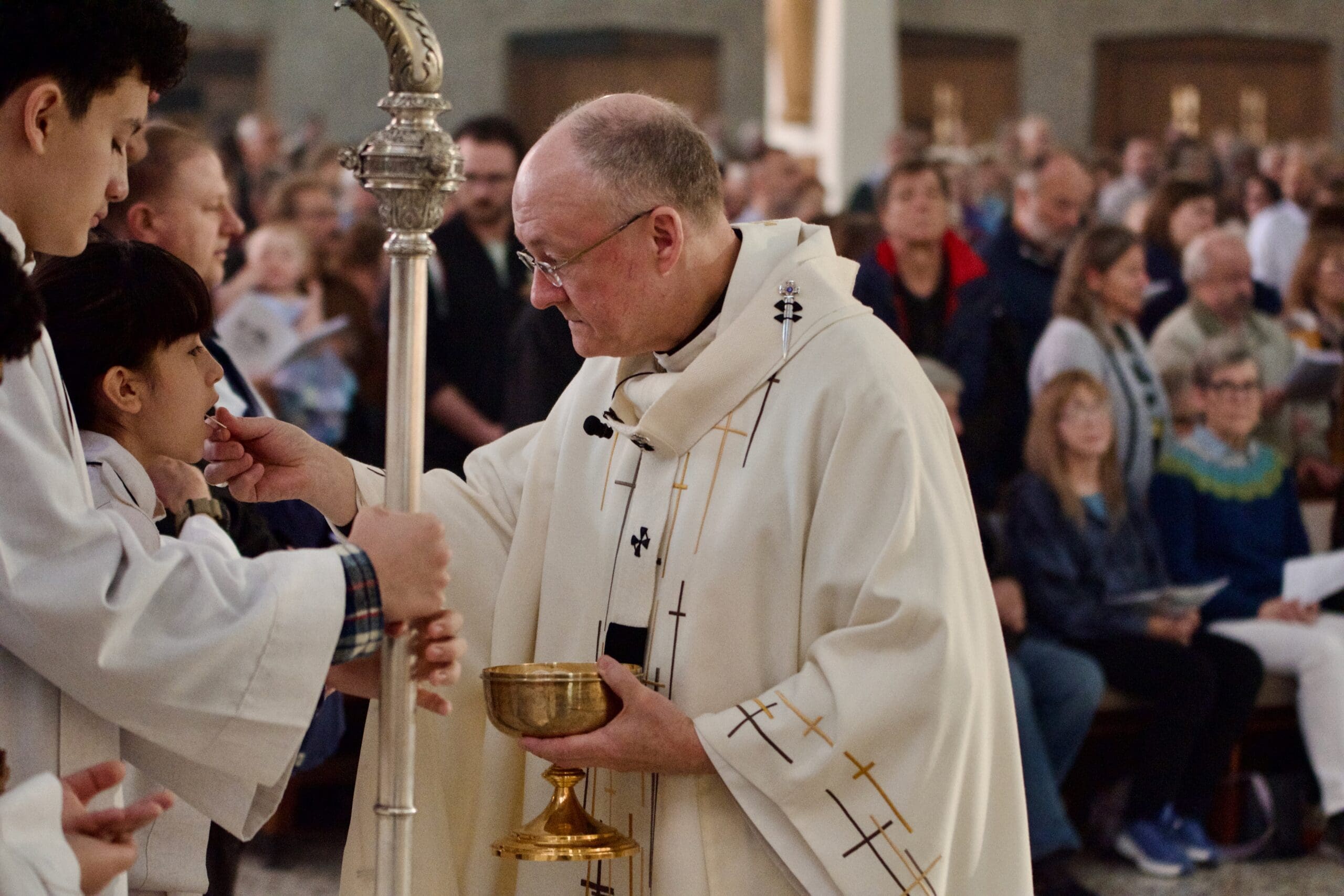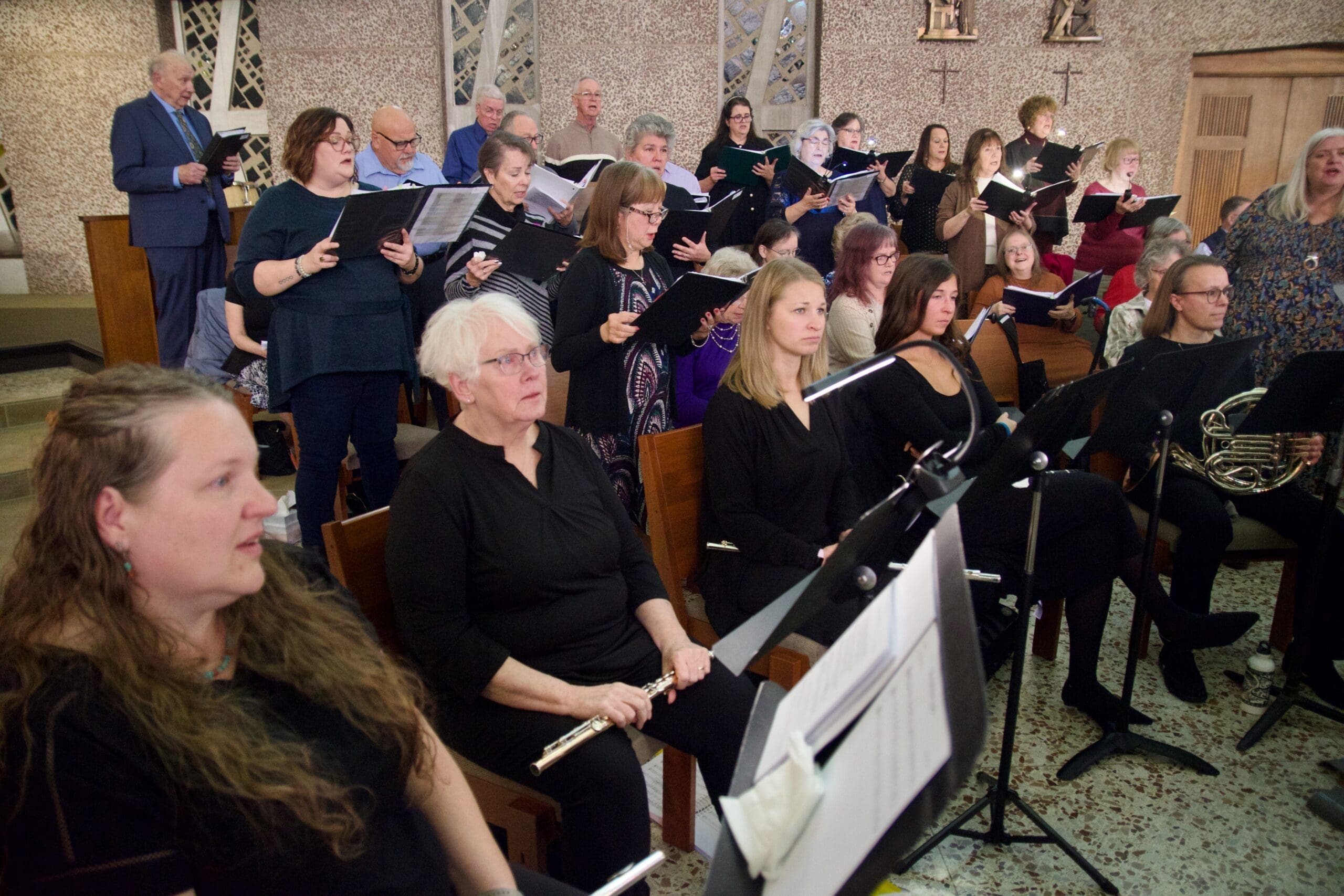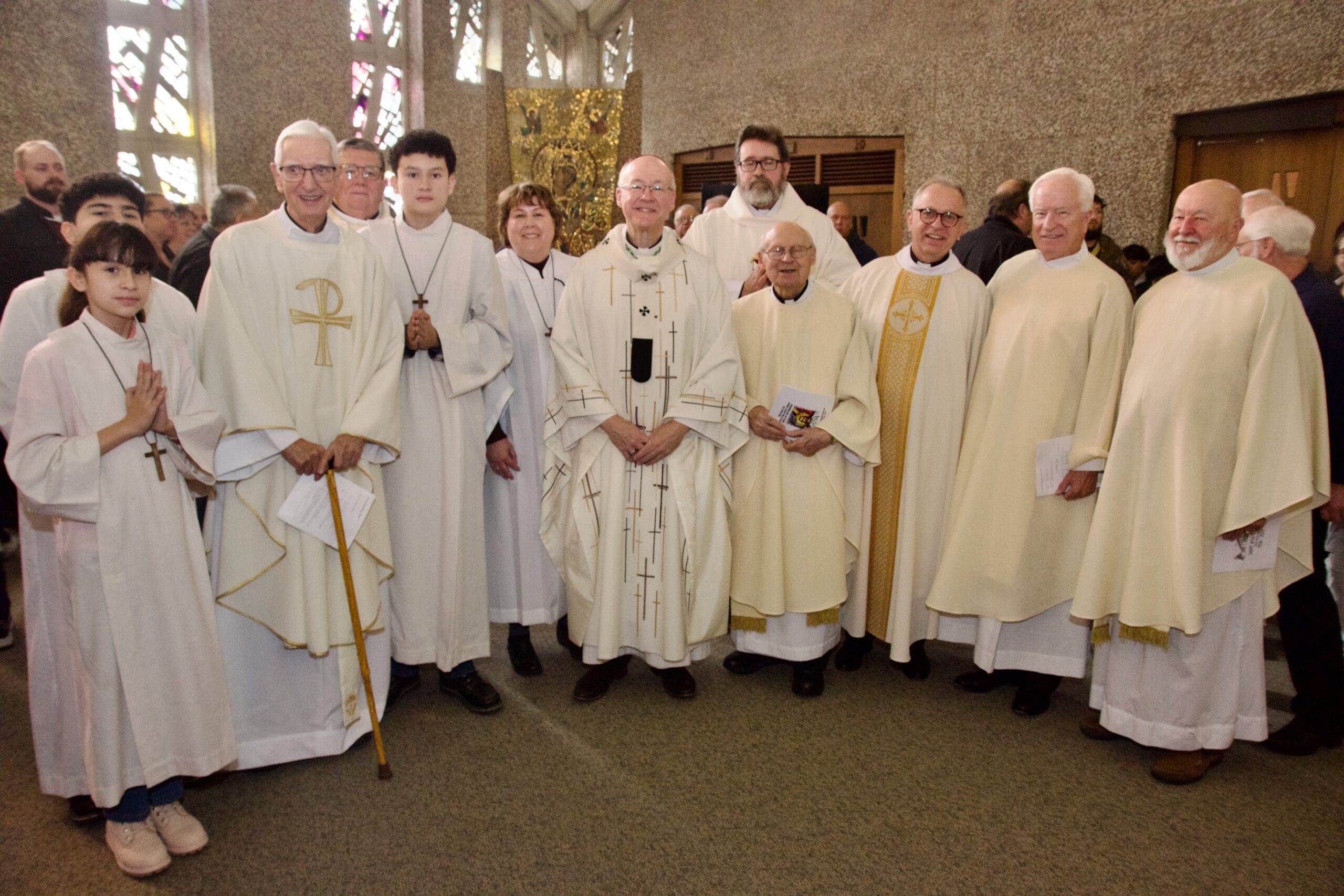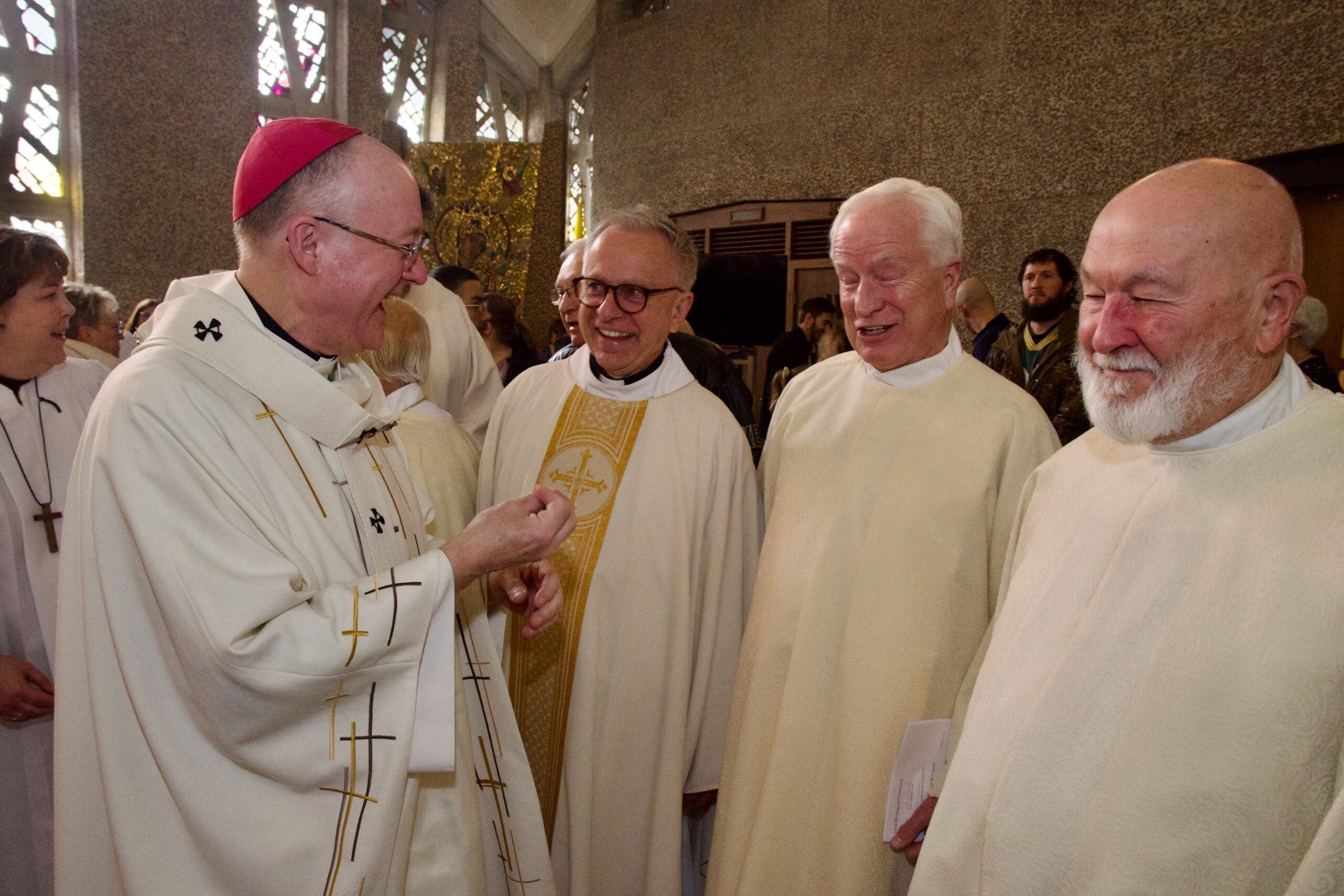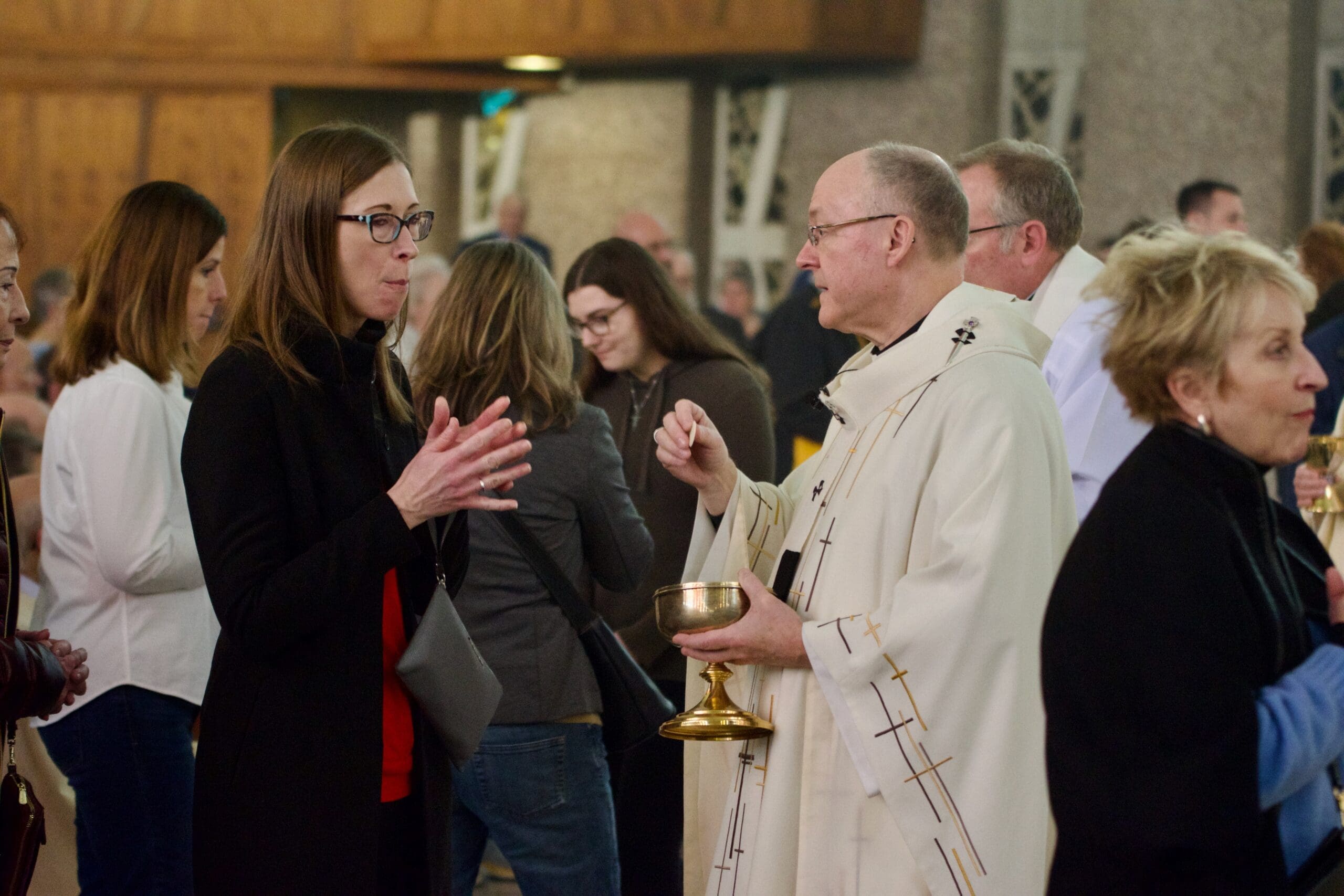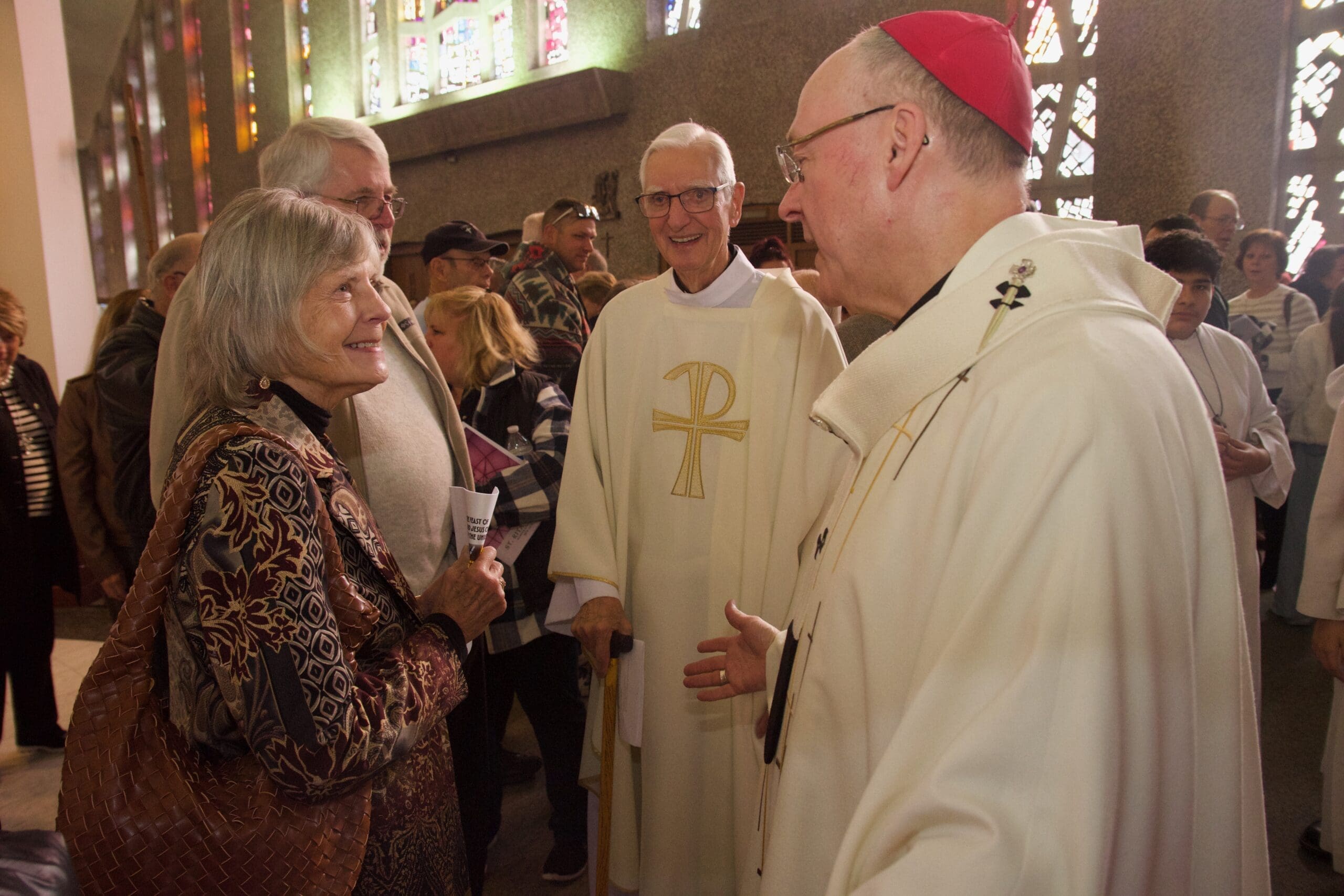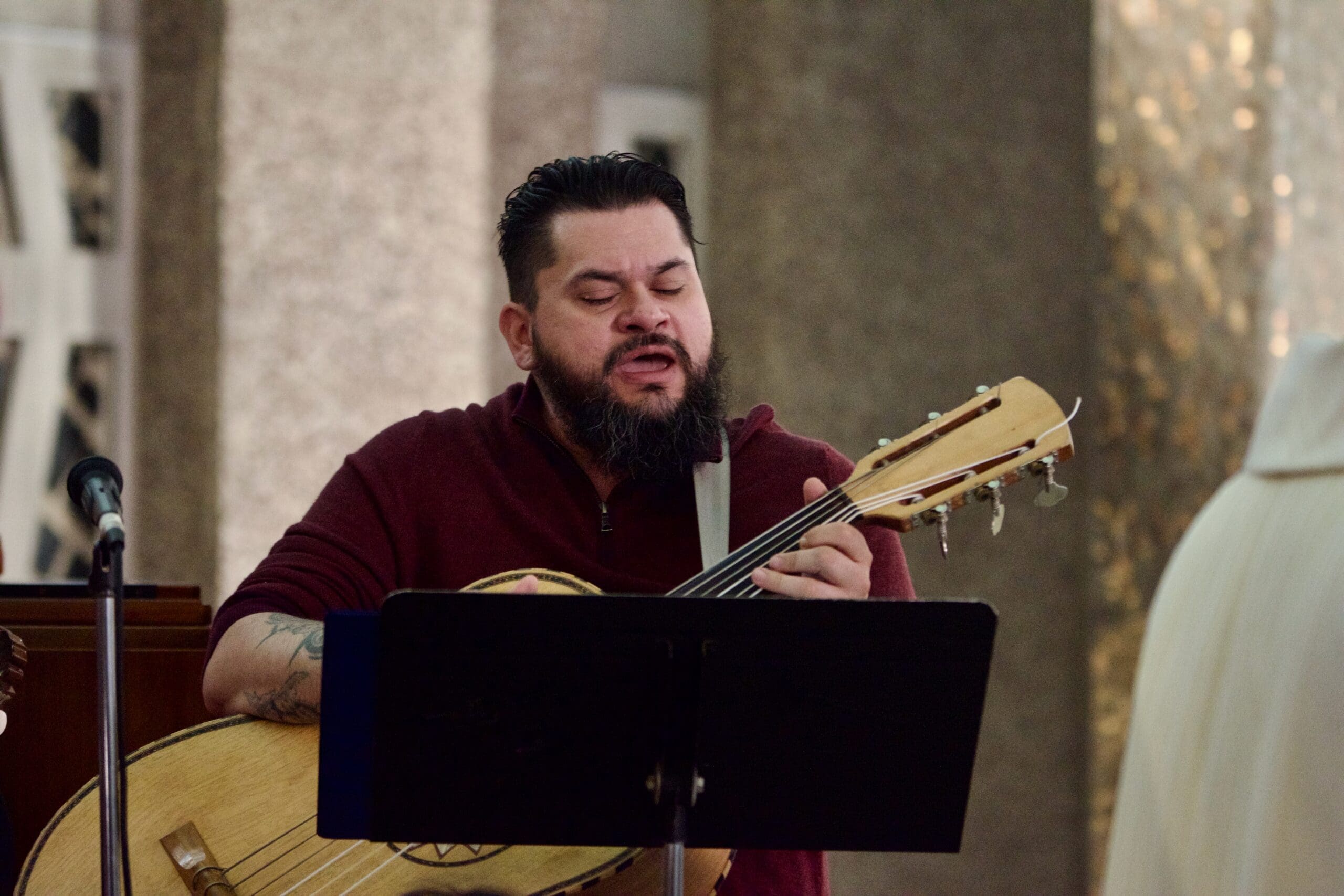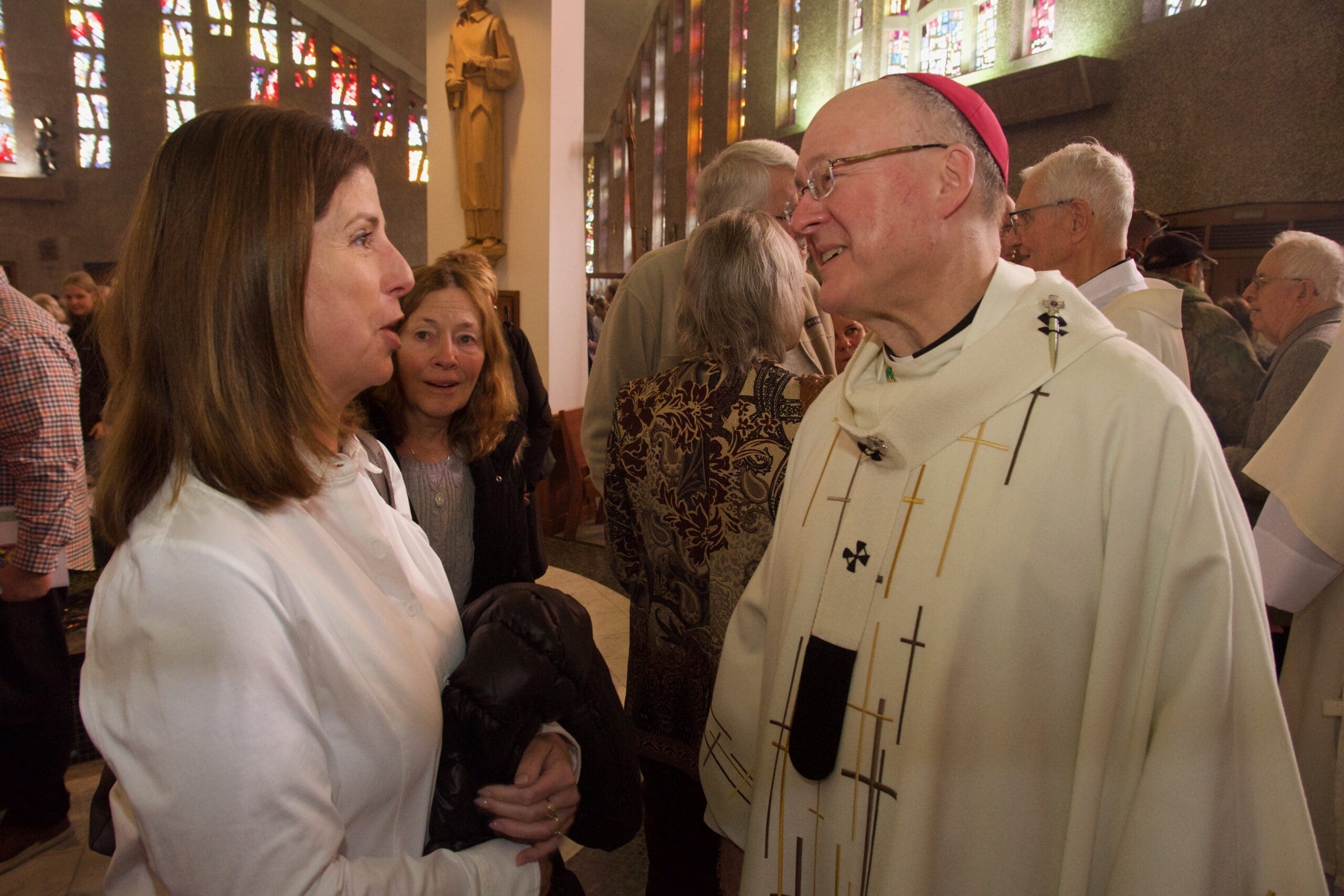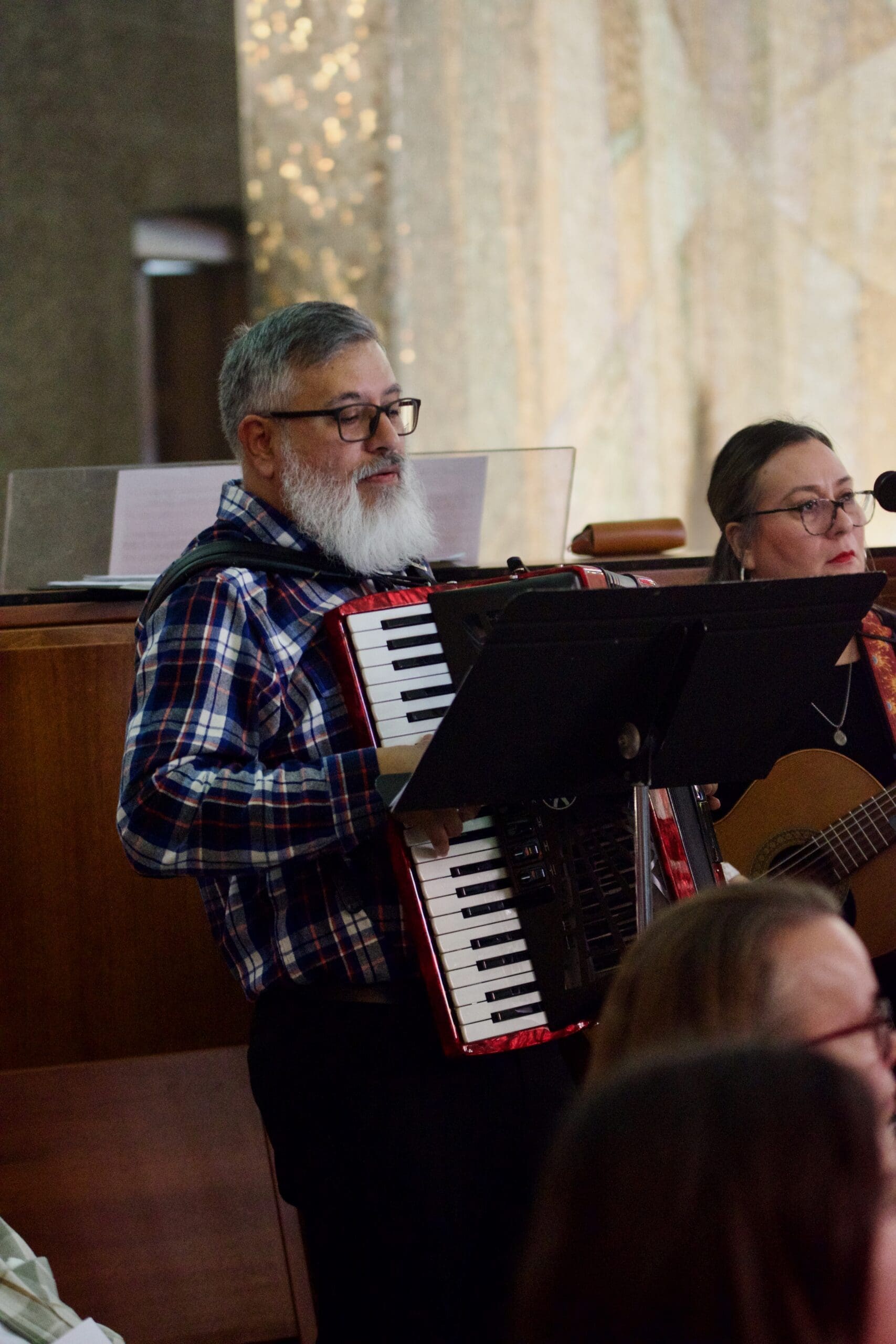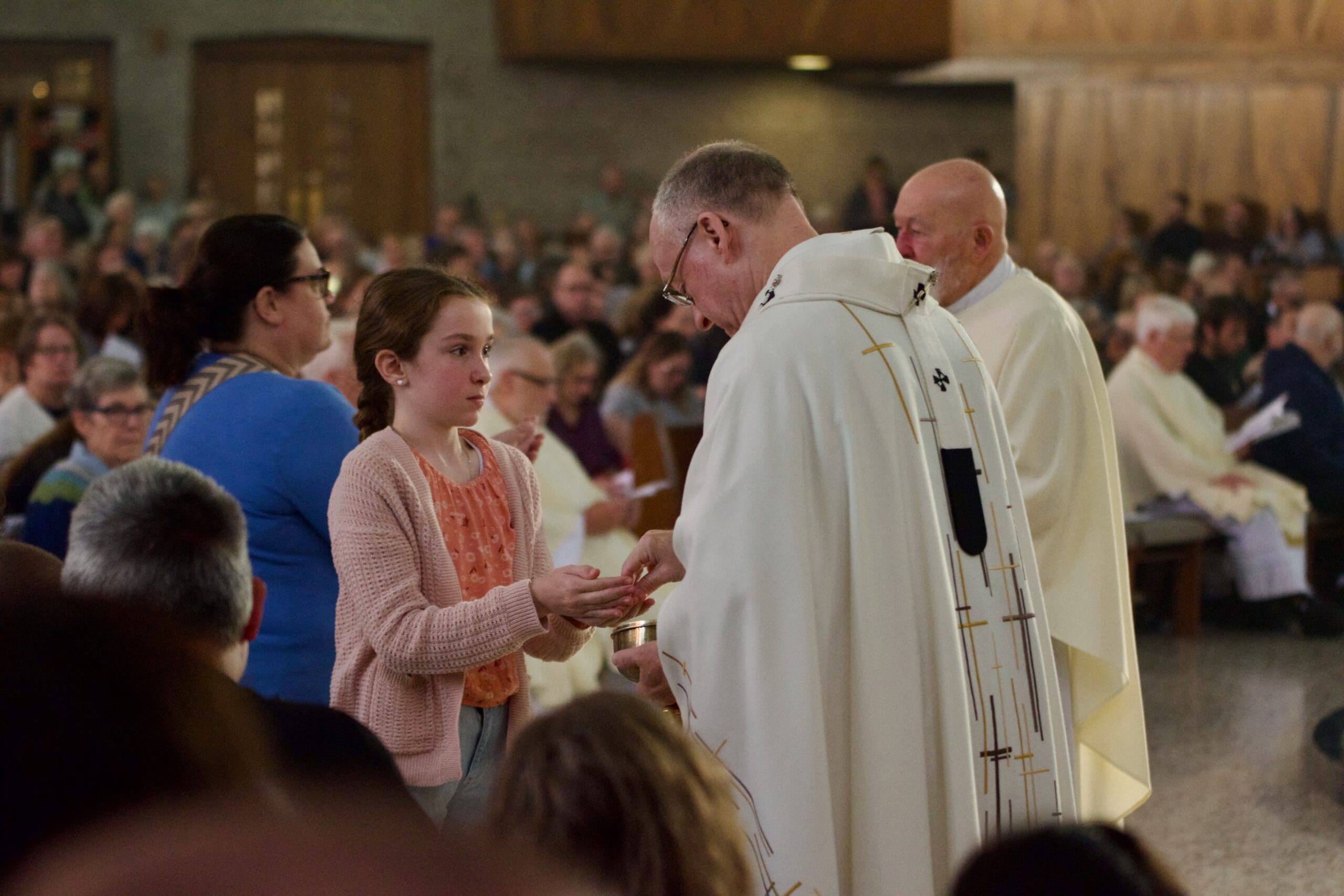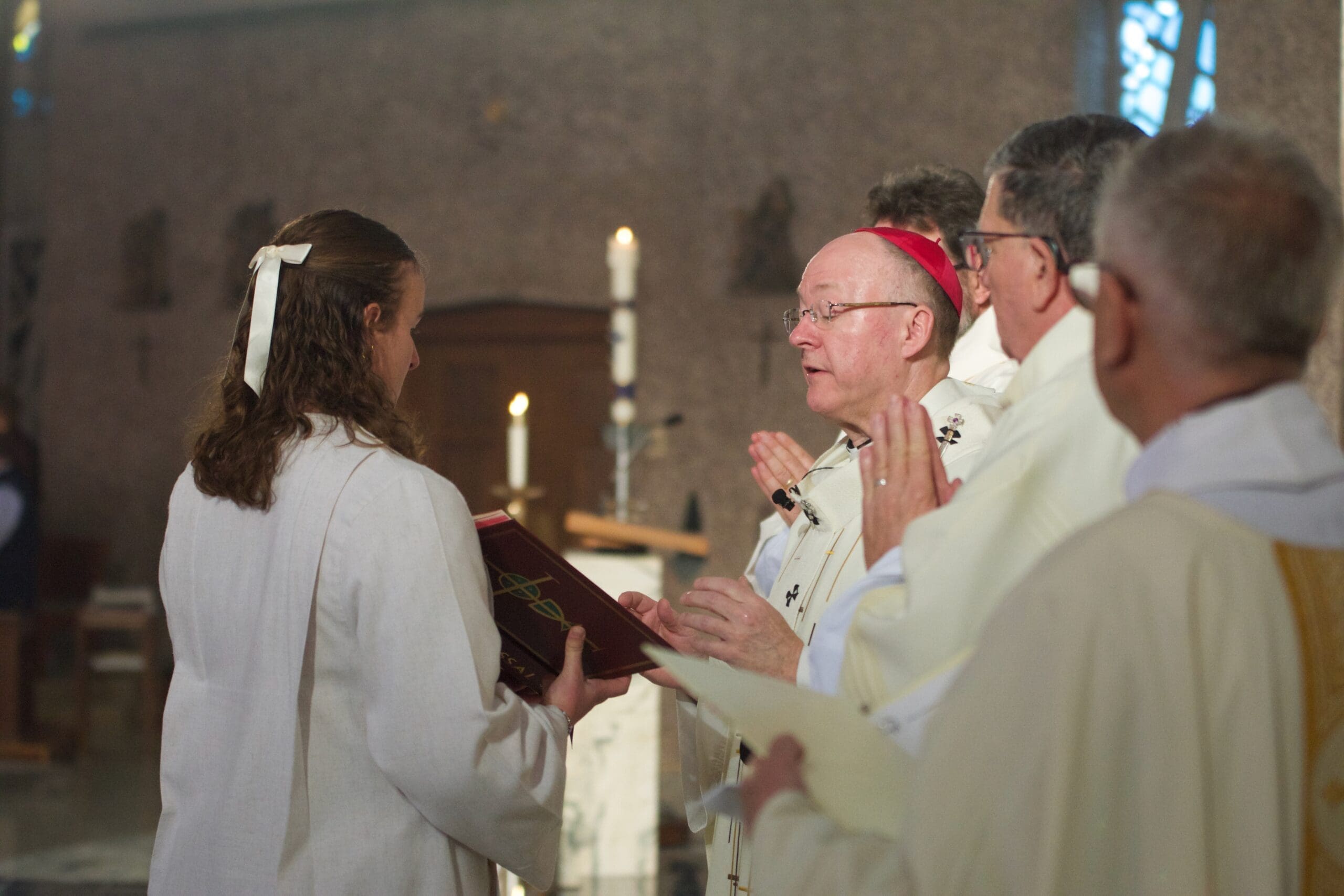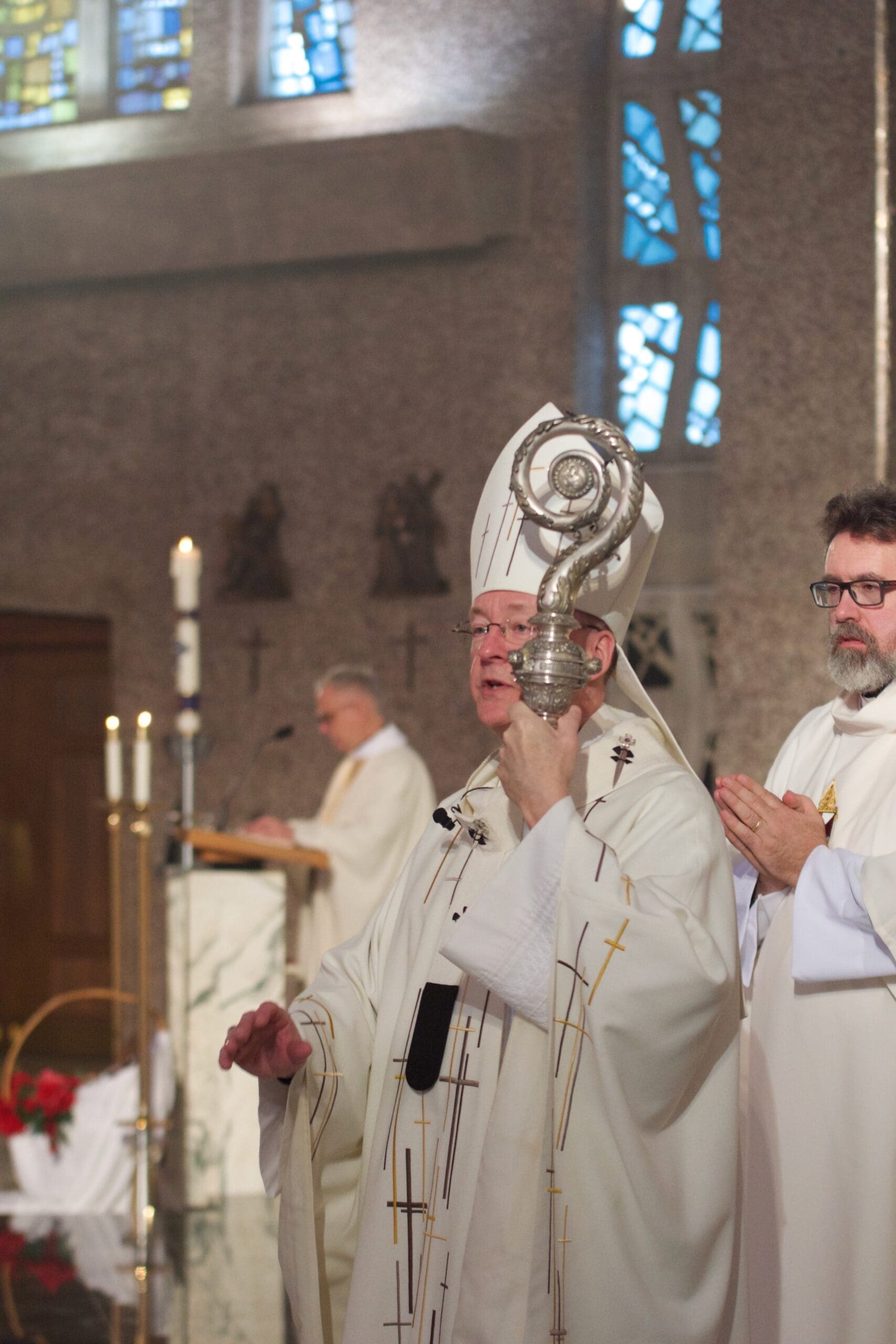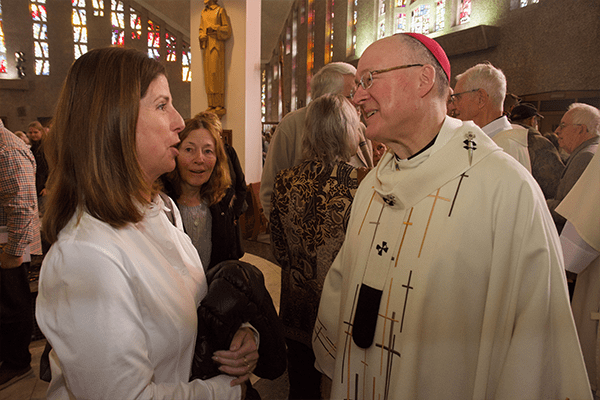
Archbishop Jeffrey S. Grob, who presided at the last Mass celebrated at St. Rita Church, West Allis, Nov. 23, visits with Mass goers afterward. (Photos by seancsmithphotos.com)
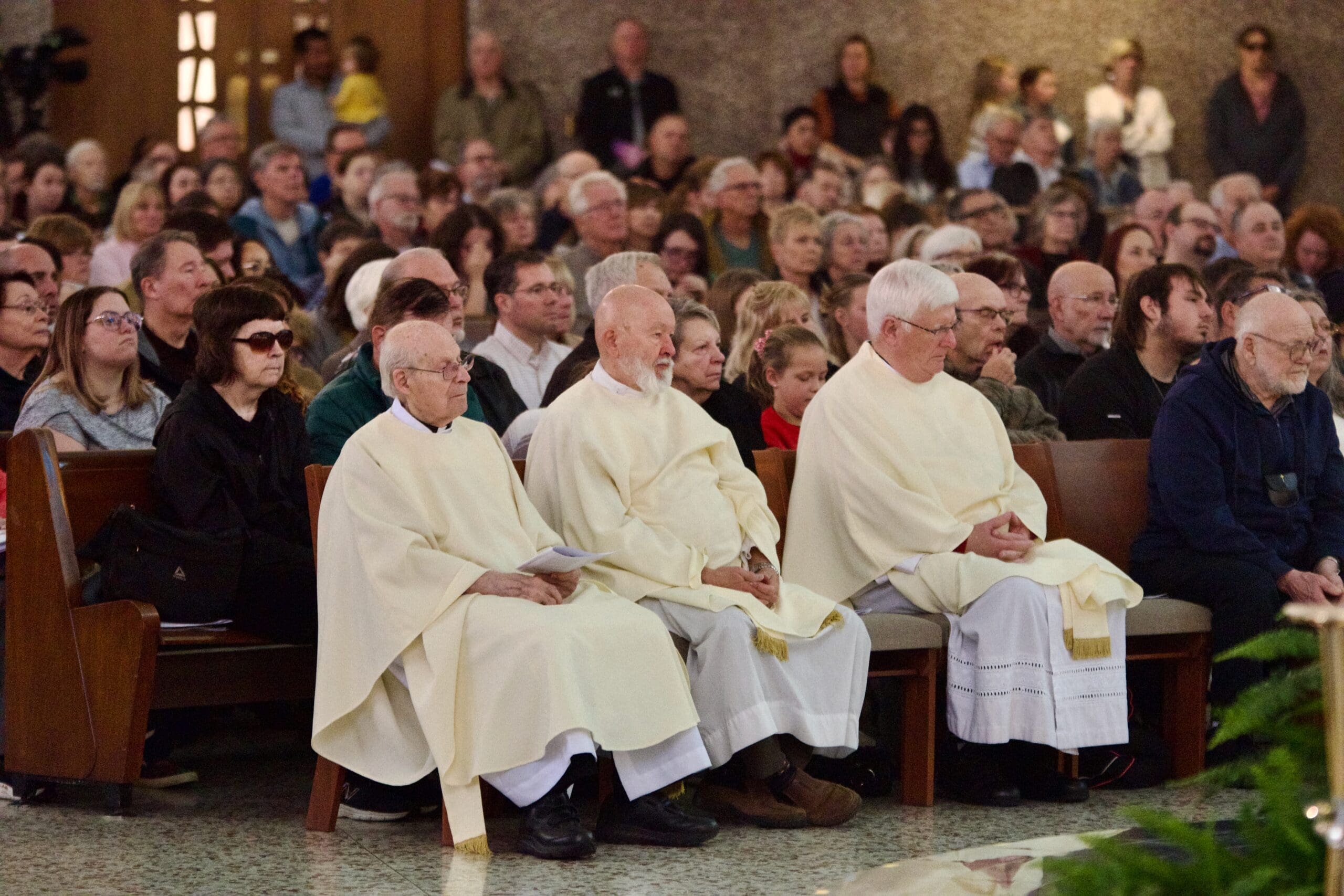
There was a half-hour to go until the start of Sunday Mass on Nov. 23, and the pews of St. Rita Church were almost full.
It’s a problem they haven’t had at the church for a while. Situated on the corner of 60th and Lincoln in West Allis, St. Rita’s seats 1,400, but the parish of St. Barnabas — created from the 2024 merger of St. Rita, St. Augustine and Holy Assumption — only sees around 350 Mass-goers each weekend across all three sites.
But this was no ordinary weekend. This was a farewell, a tribute, a reunion — the final Mass at the St. Rita campus, which the parish officially sold to new owners Dec. 1.
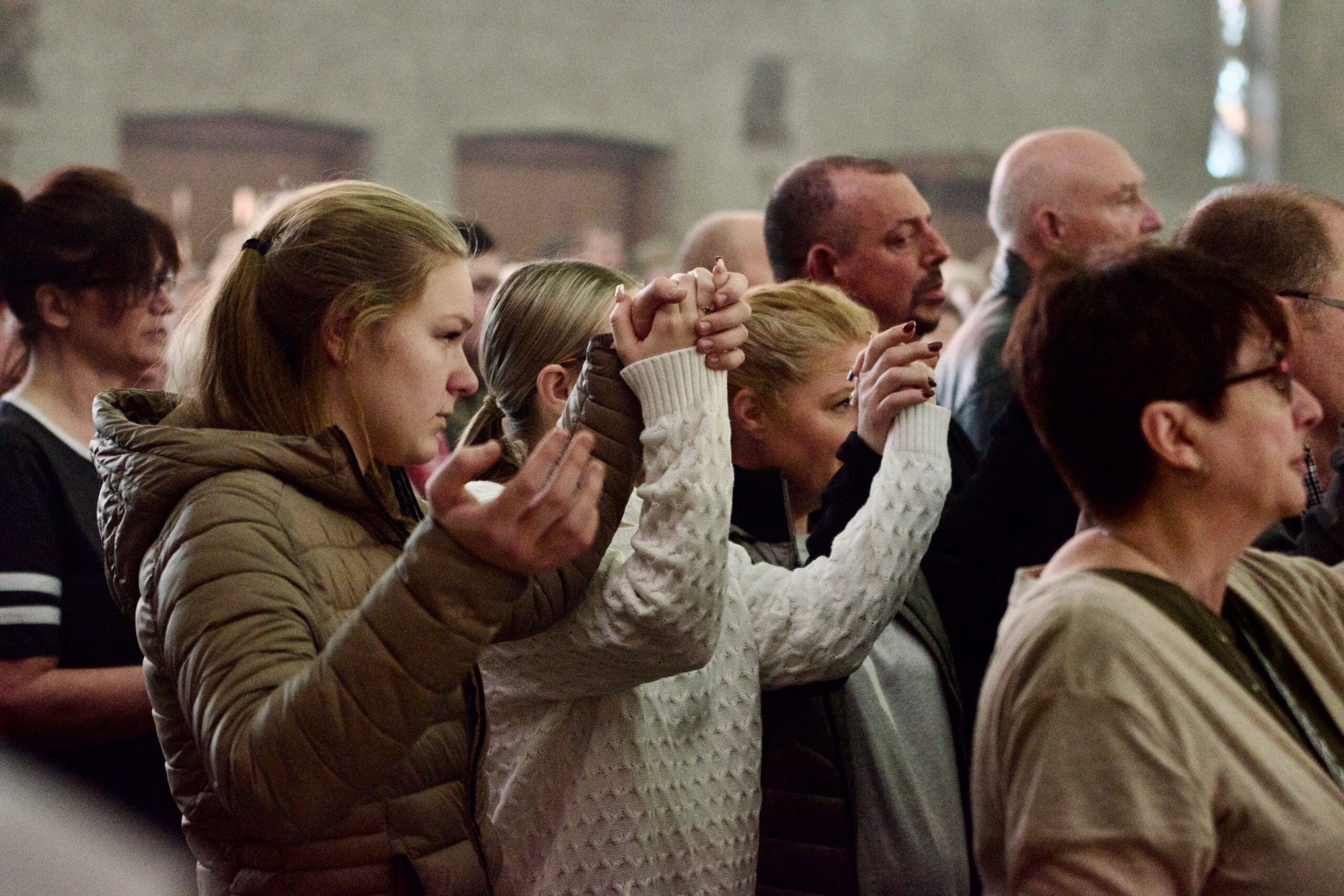
And the community — past and present — turned out in droves.
“I think that a lot of people walked into it thinking that it was going to be like a funeral, a very somber day. I’m not saying that it wasn’t for a lot of people, but I think it was (also) a celebration,” said Dave Grunwaldt, Director of Administrative Services at St. Barnabas. “I think it was a celebration of the legacy of a beautiful, wonderful church.”
The loss of the St. Rita site is a tough blow for the community, parish leaders acknowledge, and the decision wasn’t an easy one — but it was necessary, said Jeff Stanislawski, a longtime parishioner who was the St. Rita trustee at the time of the merger.
“The St. Rita building is a beautiful building, but it seats 1,000 people. We’re not having Masses that seat 1,000 people,” he said. “It’s also an expensive complex to run and it has a degree of deferred maintenance that would need to be handled.”
Due to the cost of operating the 17 buildings owned across St. Barnabas’ three campuses, the parish “started having an incredible deficit” after one of the building tenants declined to renew their lease, explained Pastor Fr. Gerardo Cárcar.
“You need to act immediately because you cannot have many years with this deficit,” he said.
All three of St. Barnabas’ worship sites were put on the market. Some people have questioned why it was St. Rita, the most recently constructed of the three churches, and not the older St. Augustine or Holy Assumption that was sold.
The answer is simple, parish leaders said: It was the St. Rita campus — which includes a school that once served close to 1,000 students at a time and closed in 2010 — that got an offer first. And while parting with the building is painful, it will enable the parish to continue on its journey from “maintenance to mission,” Fr. Cárcar said.
“The church is not the building. The church is the people who form the community,” he said. “We need to work on that – not to try to save (every) penny in order to maintain buildings that are not being used.”
“I’d like to offer programs for youth, for instance — sport programs, music programs — so that the youth feel the church is a good place to be,” Fr. Cárcar added. “We would like to concentrate more on people than on buildings.”
That same sentiment propelled the three West Allis parishes of St. Rita, Holy Assumption and St. Augustine to request the archbishop’s permission to merge in 2024.
As separate entities, the three parishes were surviving — but now, as one parish, they can focus on thriving, Stanislawski said.
“If we’re going to grow, we need to be mission-focused, we need to be able to help people grow in their spirituality, and to attract new parishioners, we have to be doing things … (to help people) to learn more about their faith and to understand their faith and to understand that it isn’t just going to church. There’s more to it,” he said.
Despite rumors to the contrary, the St. Rita building is not slated for demolition. Parish leaders said they were careful to only consider owners who wanted to use the building, not raze it.
“We want to do what we can to keep this building here for the next hundred years,” Grunwaldt said.
Walking with parishes
St. Barnabas is far from the only parish in the Milwaukee archdiocese — or in any American diocese — navigating this reality.
It has become a fact of life in the modern Catholic Church that parishes often have more real estate than parishioners can use or financially support, and more parishes than priests.
“The building boom that happened in our churches in the ’50s and ’60s — we’re on the downward slide of that,” said Tom Fredrickson, Director of Missionary Leadership for the Archdiocese of Milwaukee.
Of the 180 parishes in the Archdiocese of Milwaukee, about half are single parishes with one pastor, and about half are multiple locations sharing one pastor, Fredrickson estimated.
“We have 180 parishes, but we have 100 pastors,” he said. It amounts, essentially, to “a numbers problem.”
It’s the job of Fredrickson and his colleague Michael Laird, in collaboration with the Office for Ordained and Lay Ecclesial Ministry, to work with pastors to assess their communities’ resources, needs and goals.
“It’s really assisting the (pastor) through that process — that’s what we do. We just walk with them,” said Fredrickson.
In the case of St. Barnabas, which requested a merger, Fredrickson spent over a year accompanying the parish on their journey toward combining parish cultures and assets.
The archdiocese does not dictate what parish buildings are bought or sold, although parishes must get approval from the archdiocese before selling property, Fredrickson said. Each parish is its own separate corporation, with the archbishop as president and the pastor as vice-president. The money from a building’s sale benefits the parish, not the archdiocese, he noted.
Grunwaldt said that he has been fielding calls from other parish administrators around the archdiocese who are facing the same decisions as St. Barnabas.
“The velocity of this change is not just St. Barnabas in West Allis,” he said. “I’ve had multiple mergers reach out to me and say, ‘How did you pull this off?’ I just tell them, be honest with yourself. That’s probably a good place to start.”