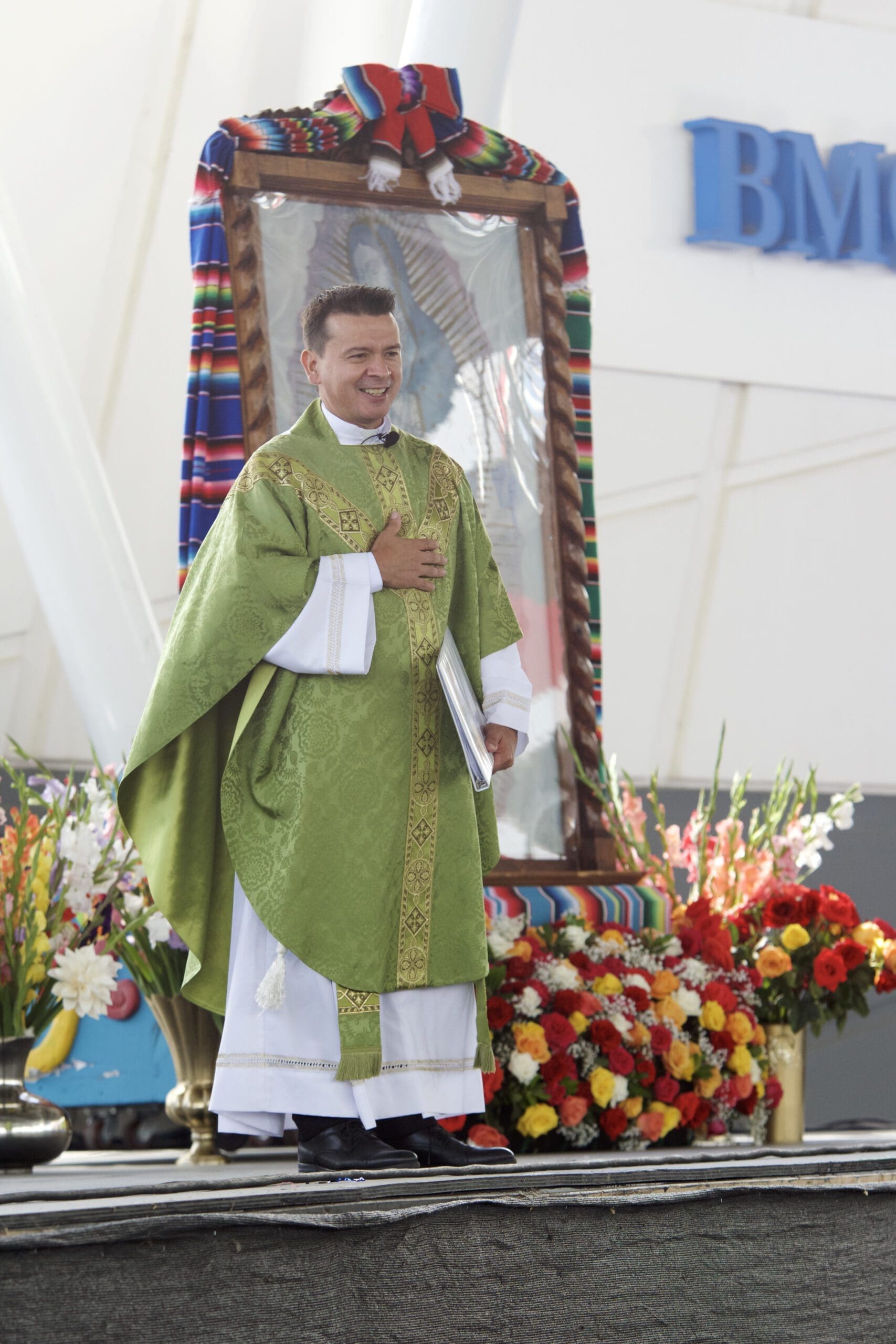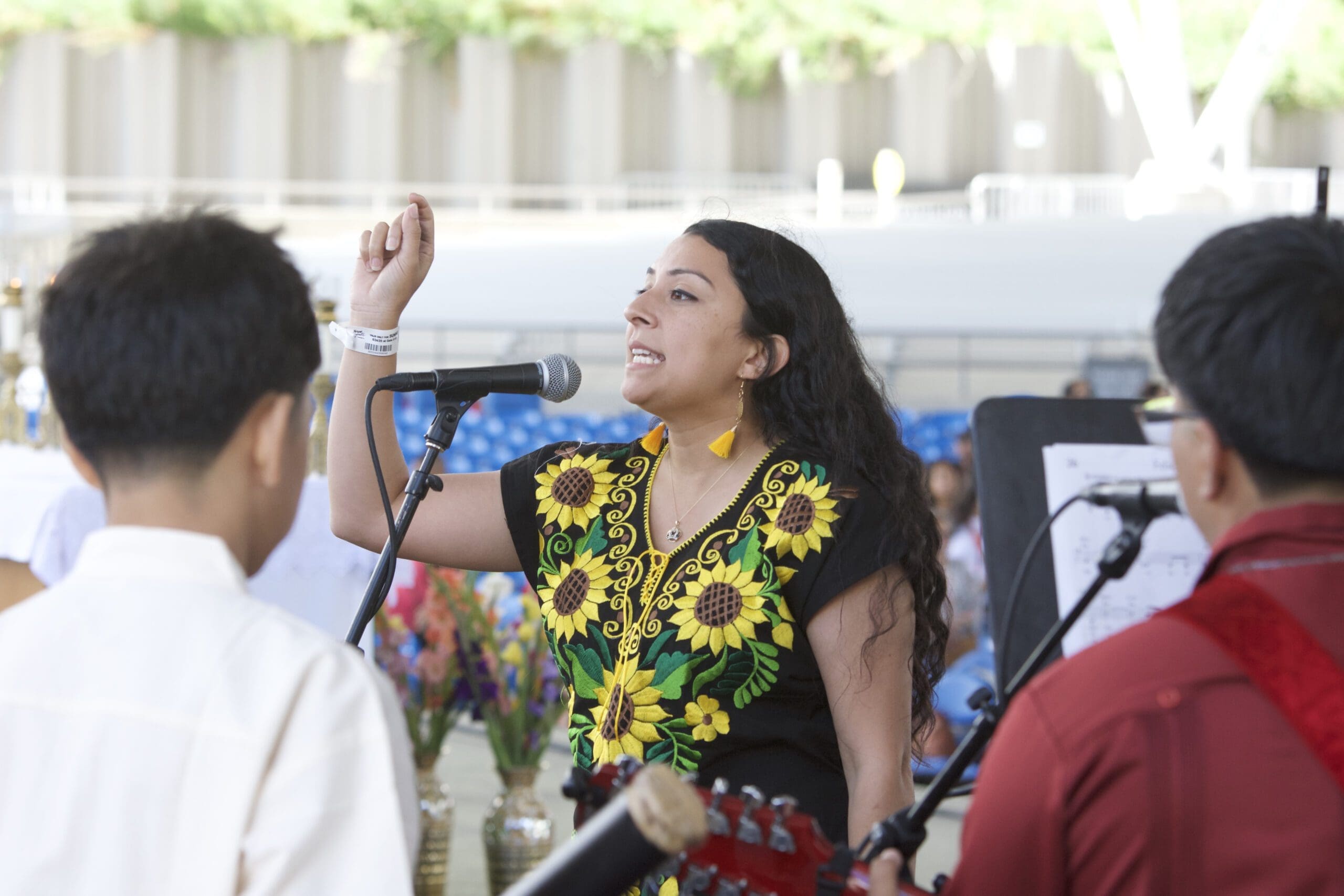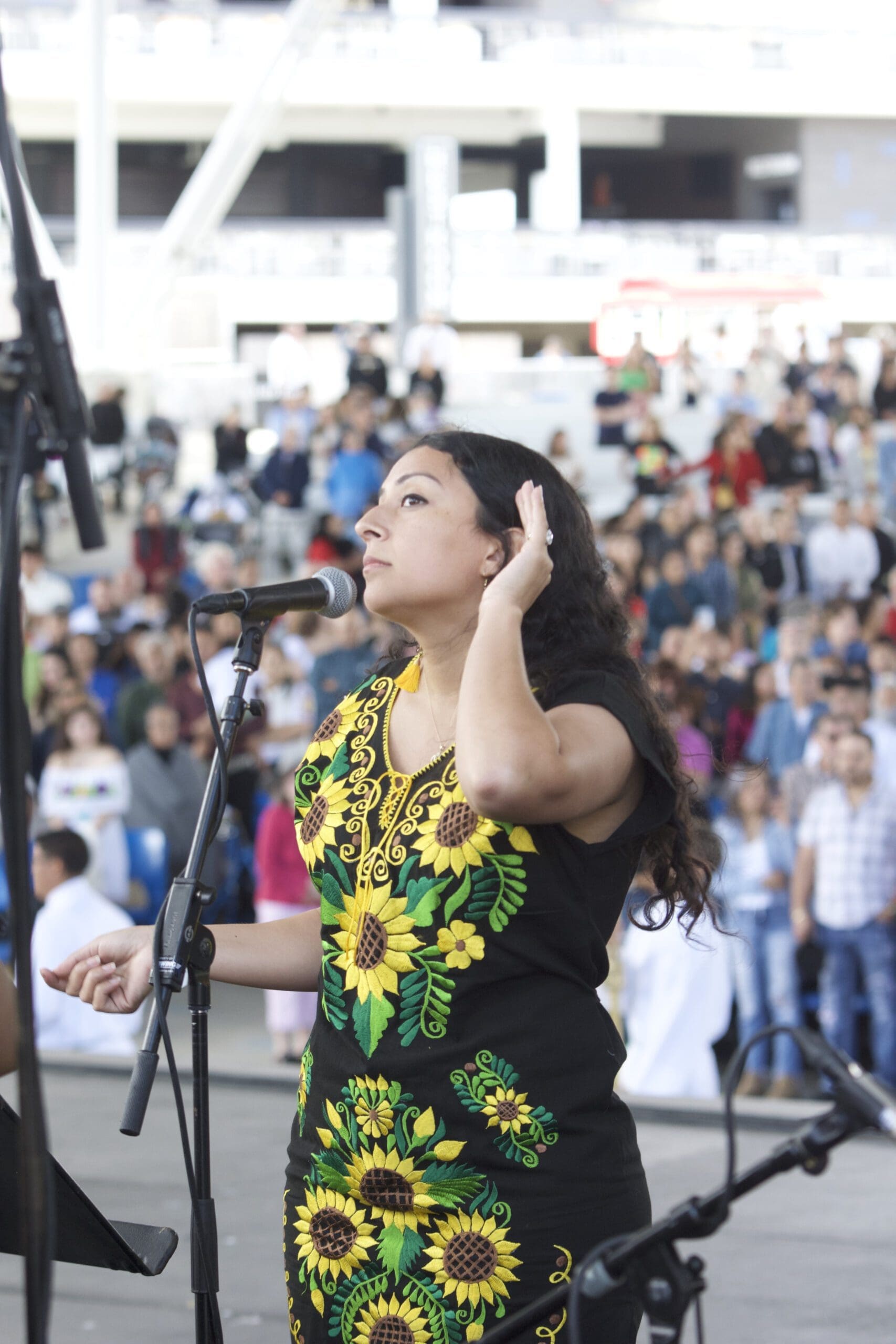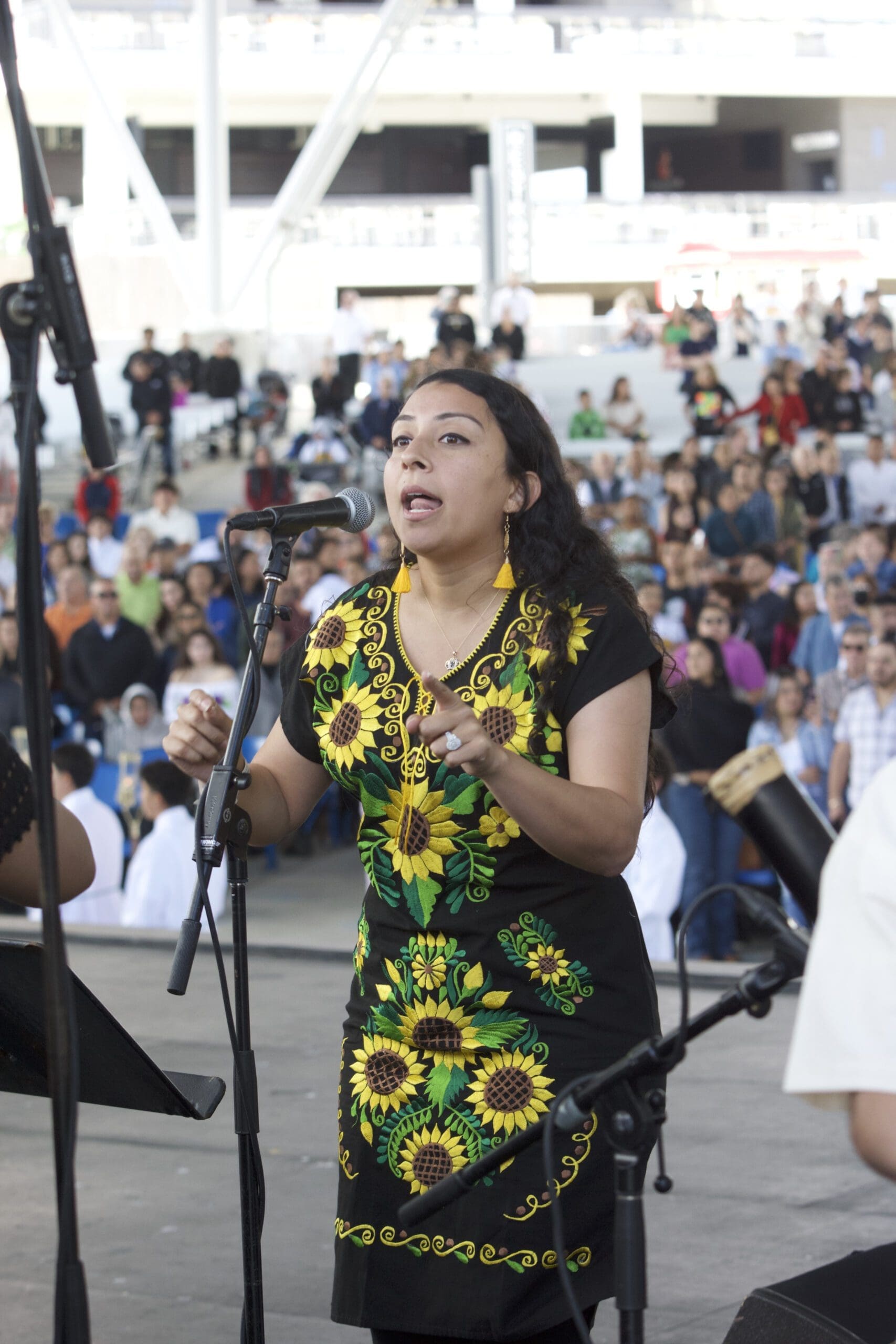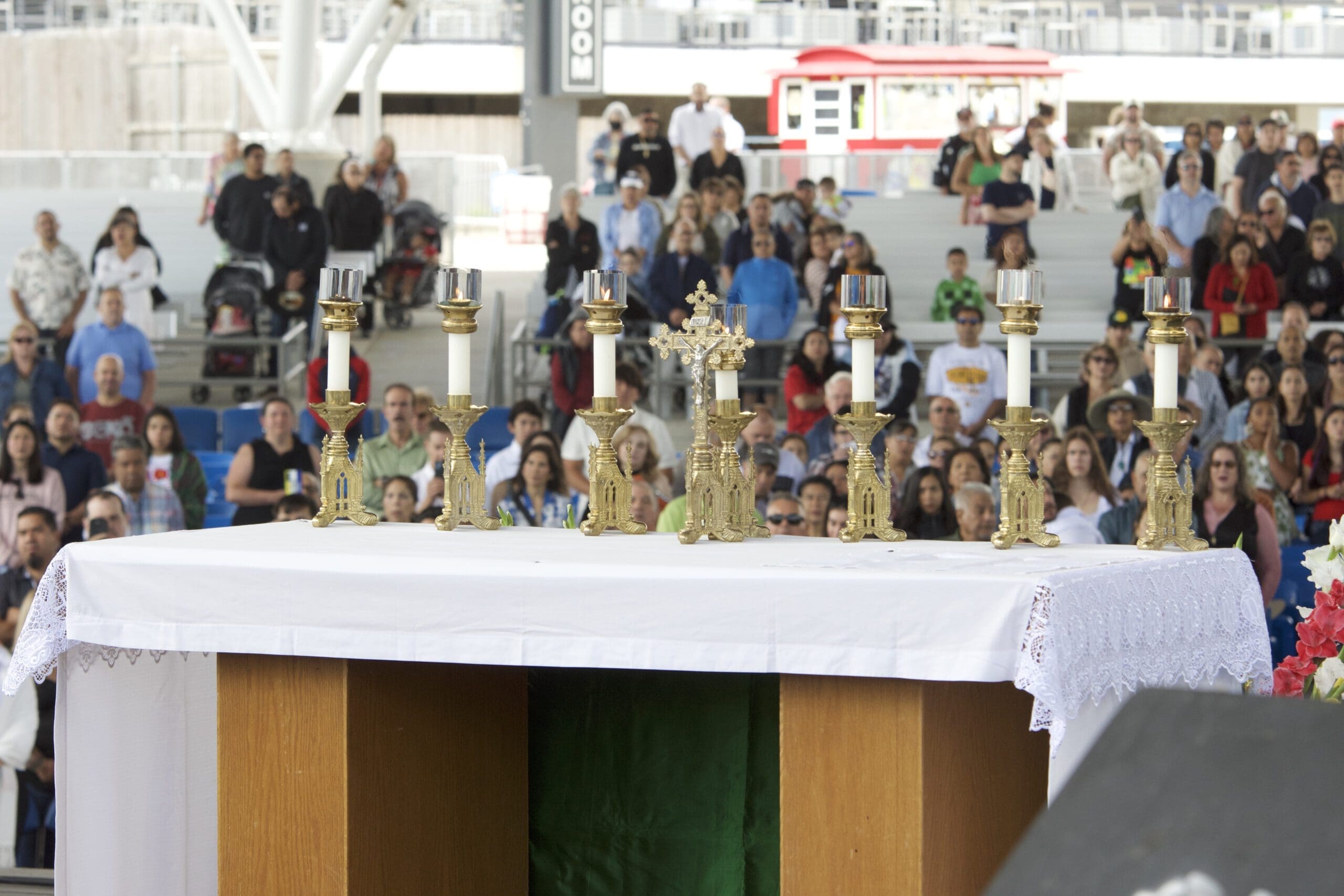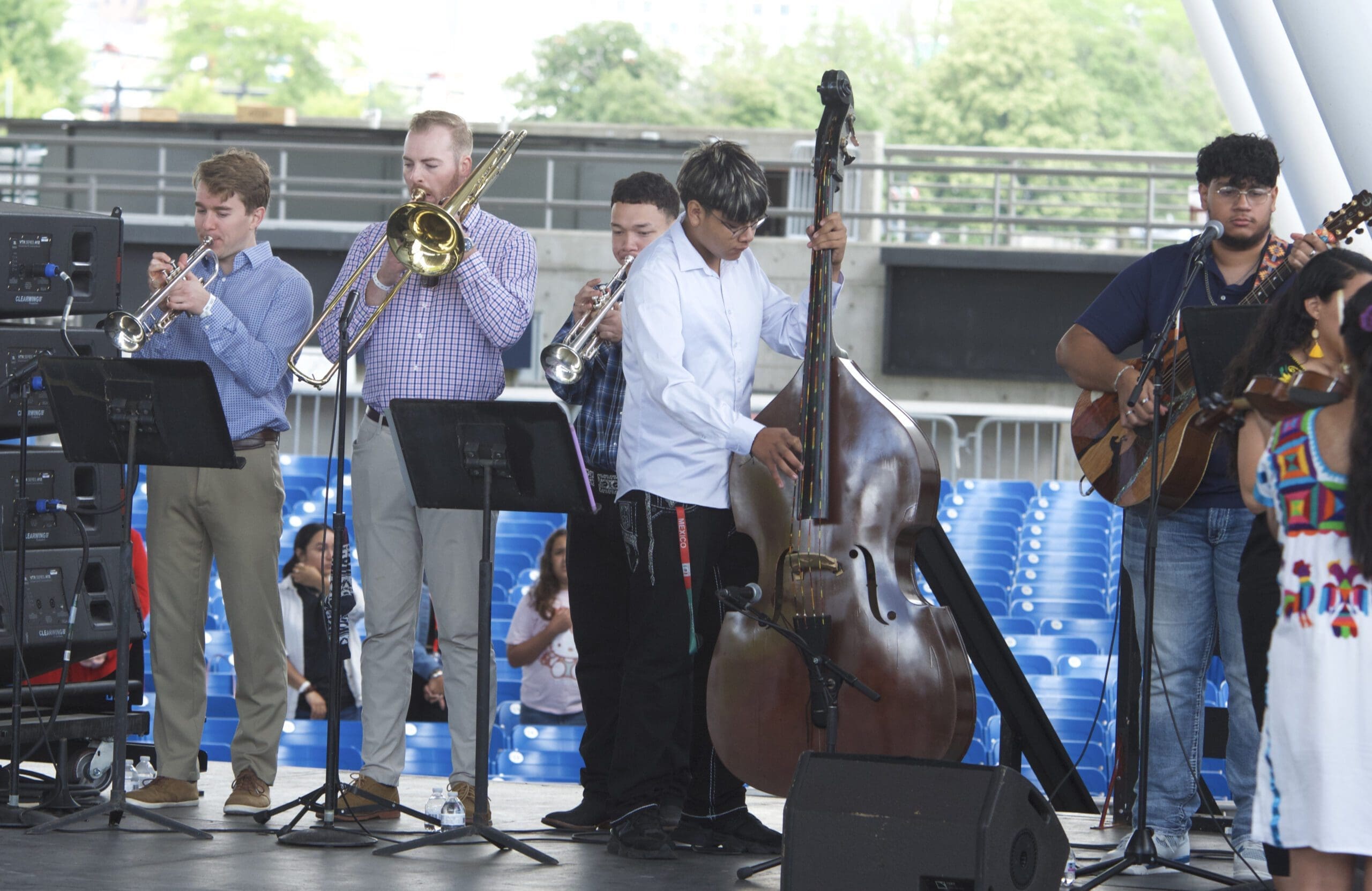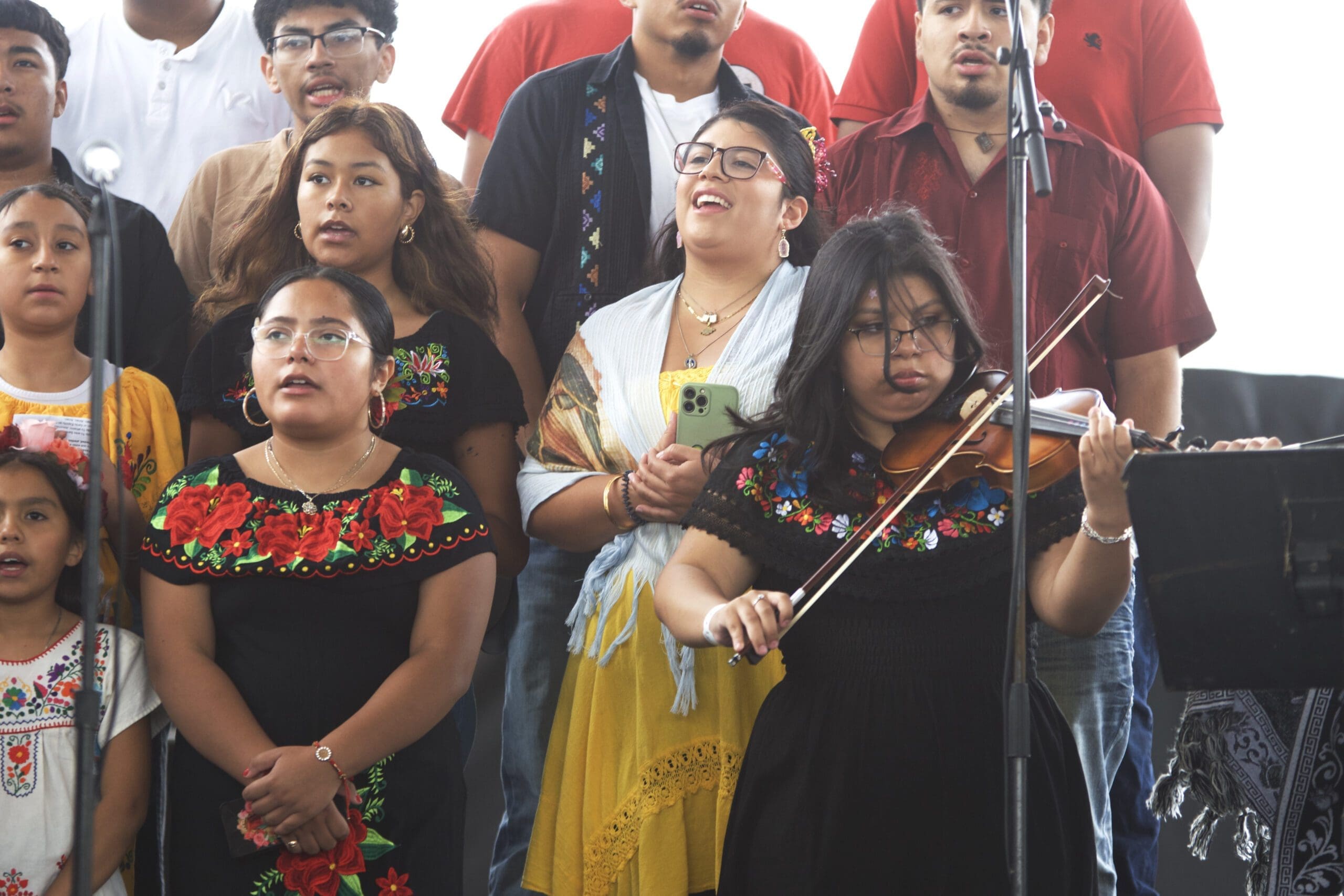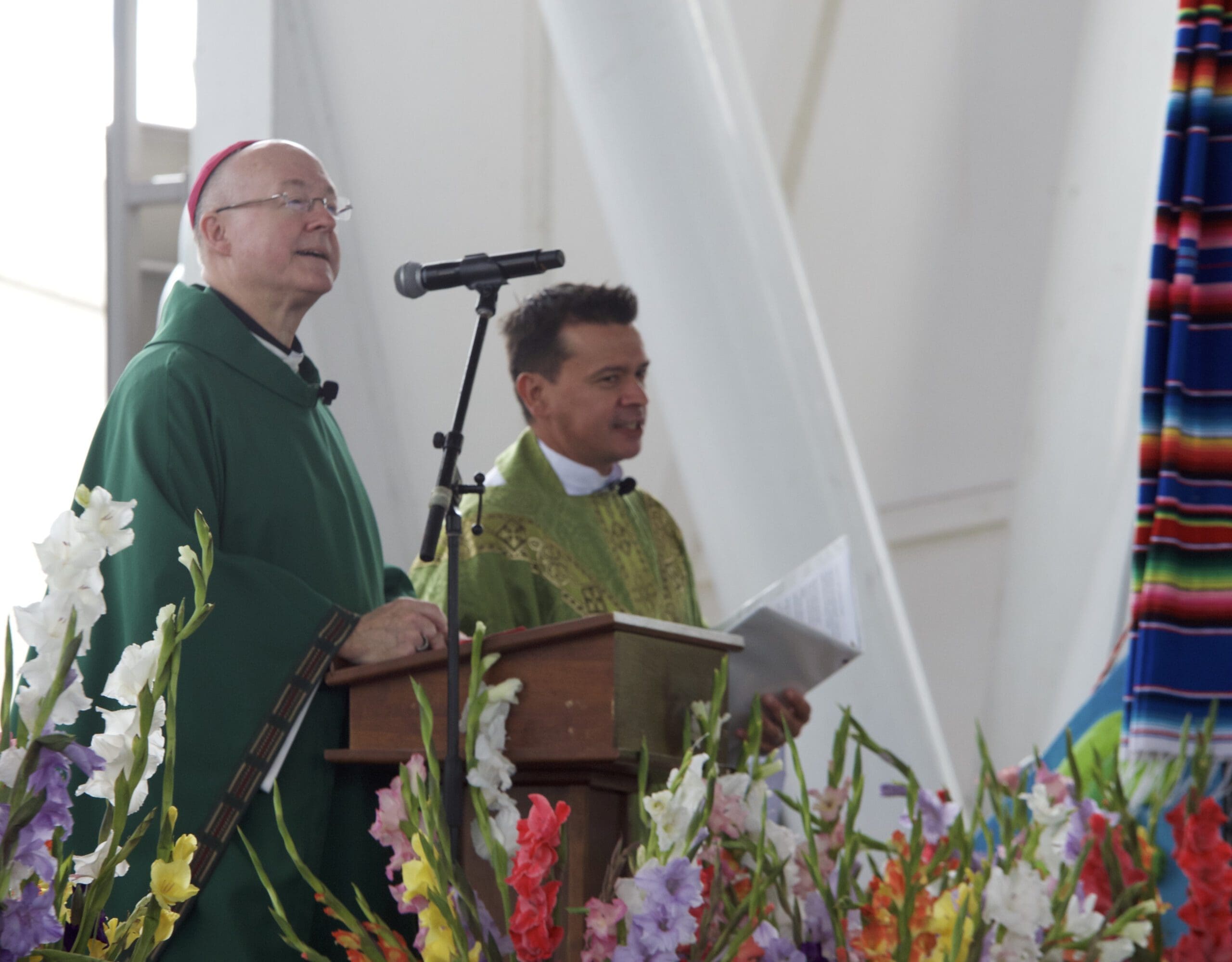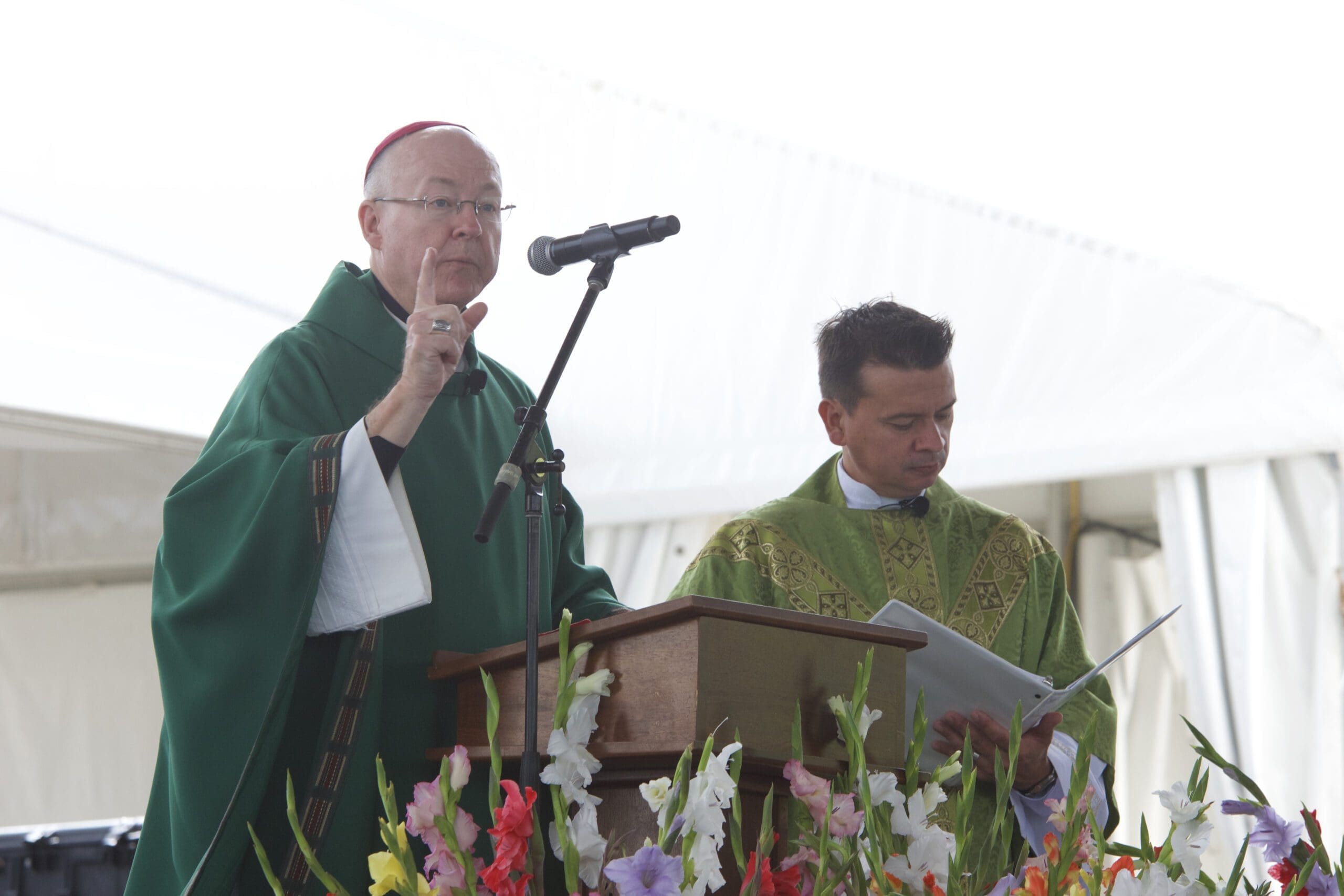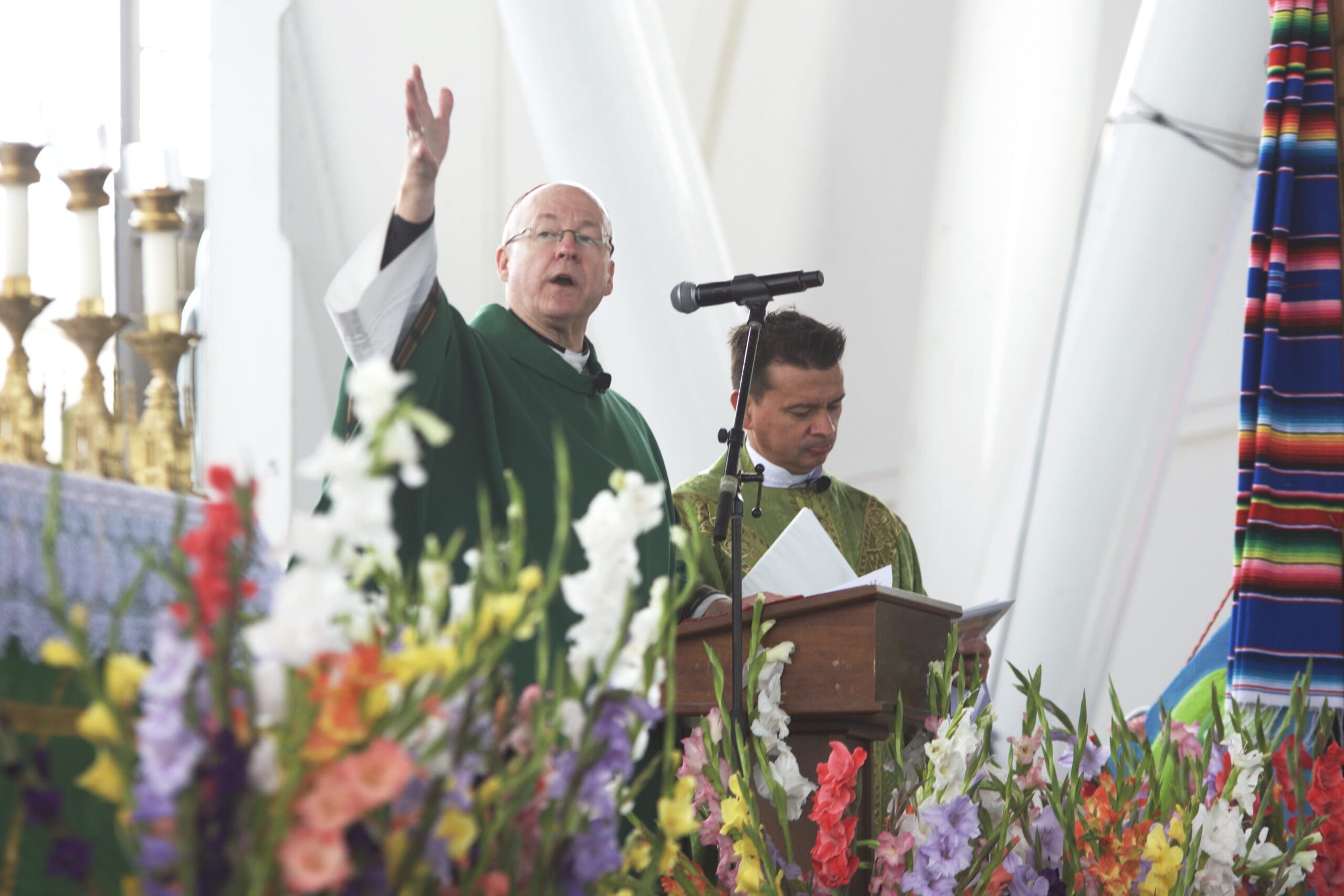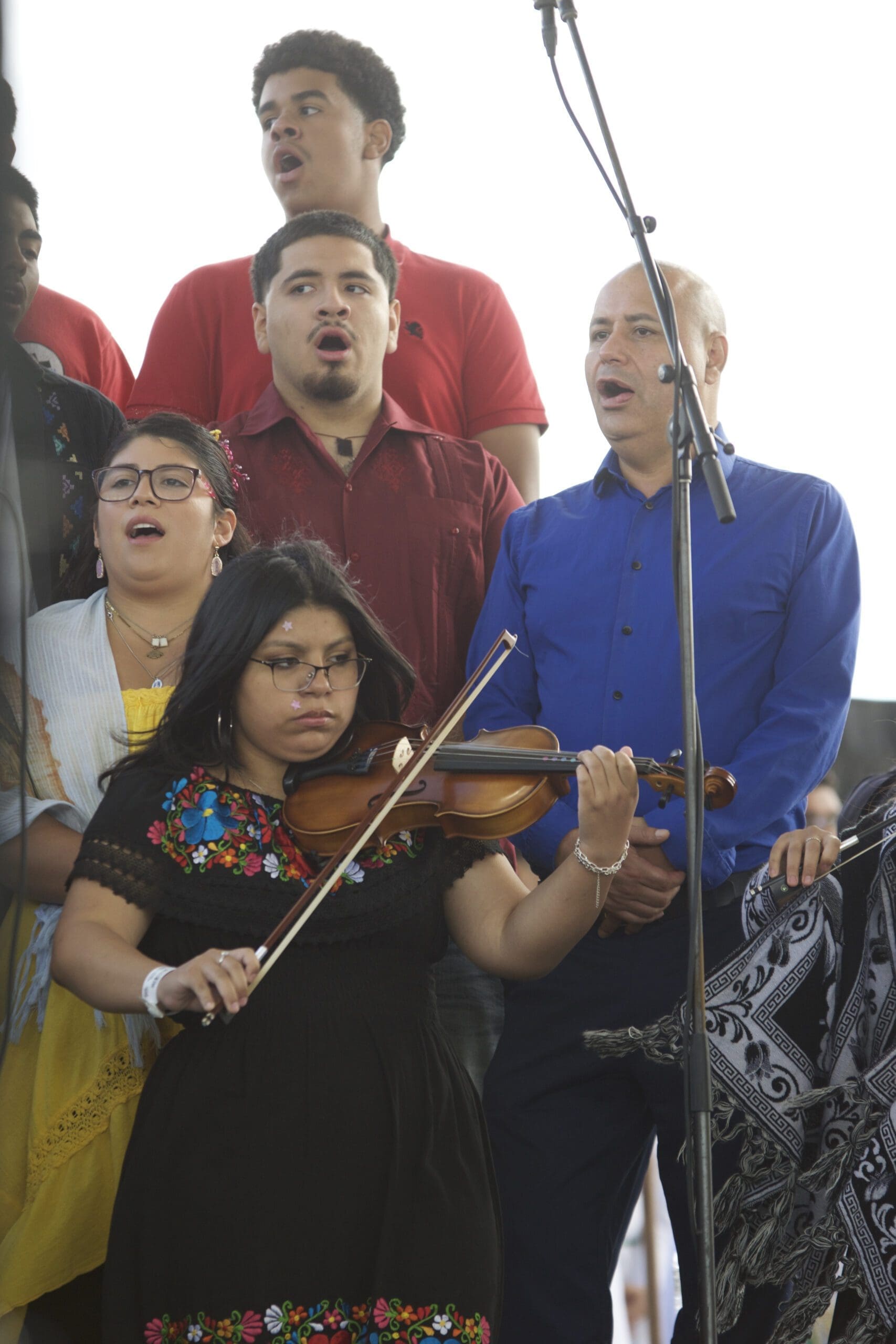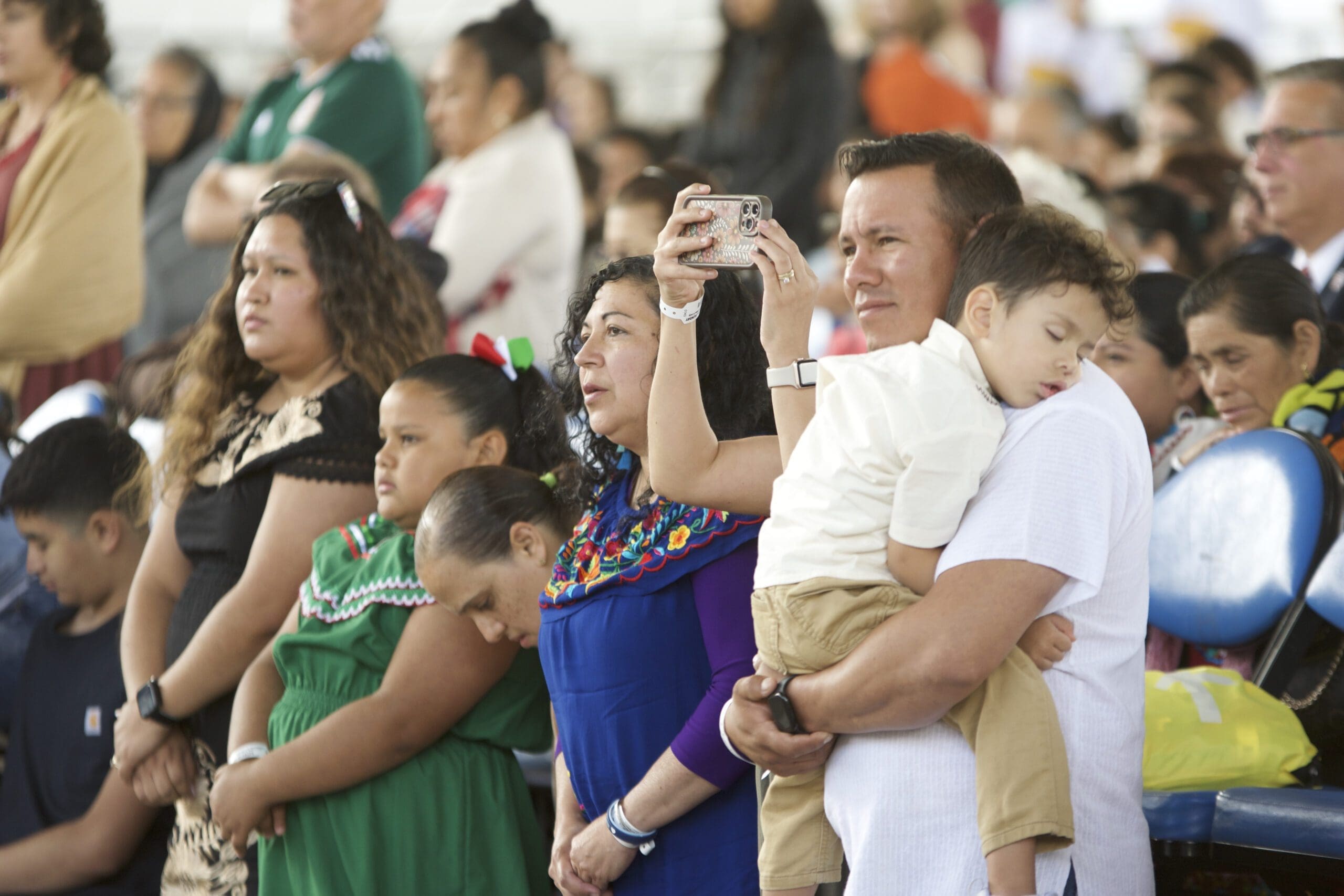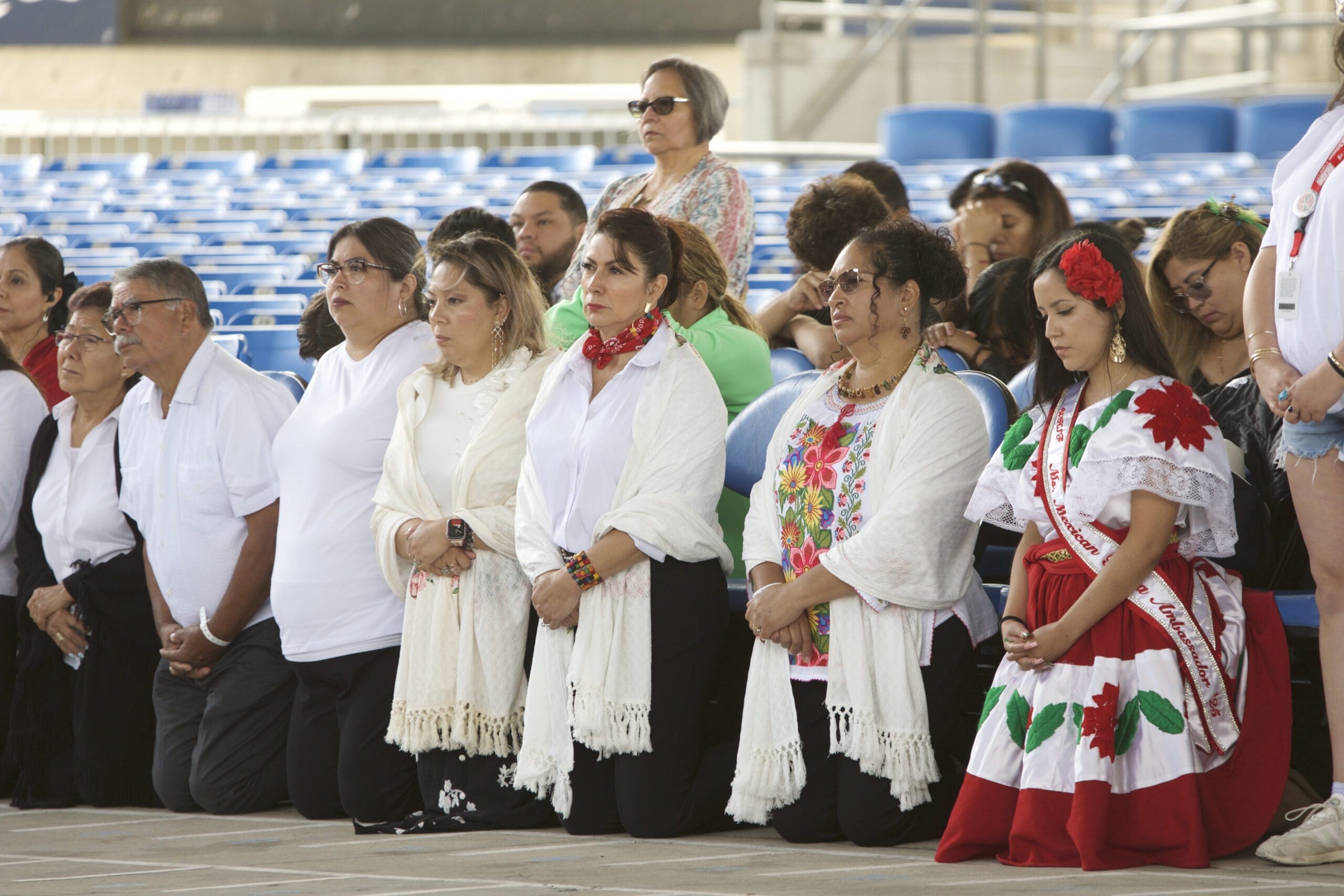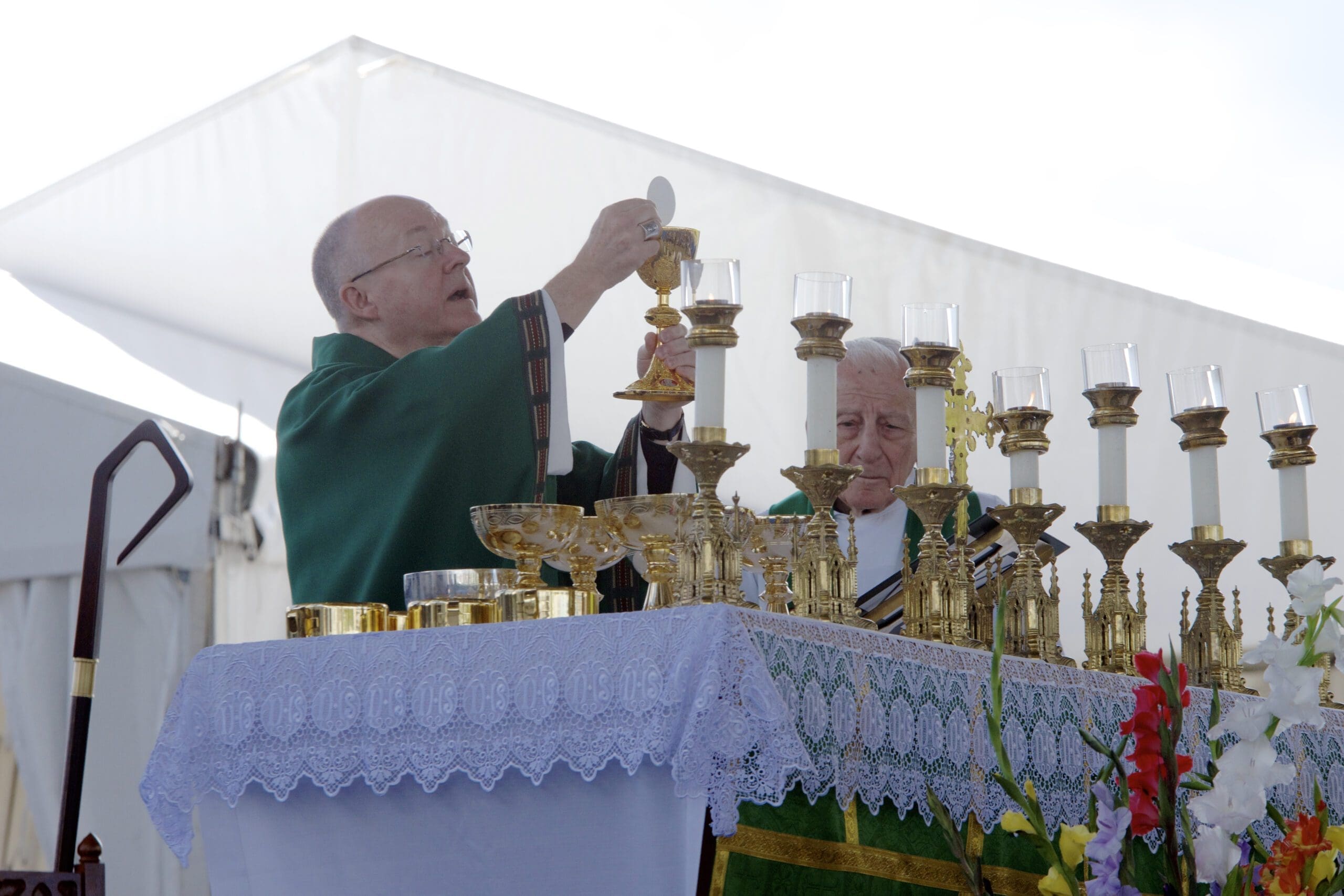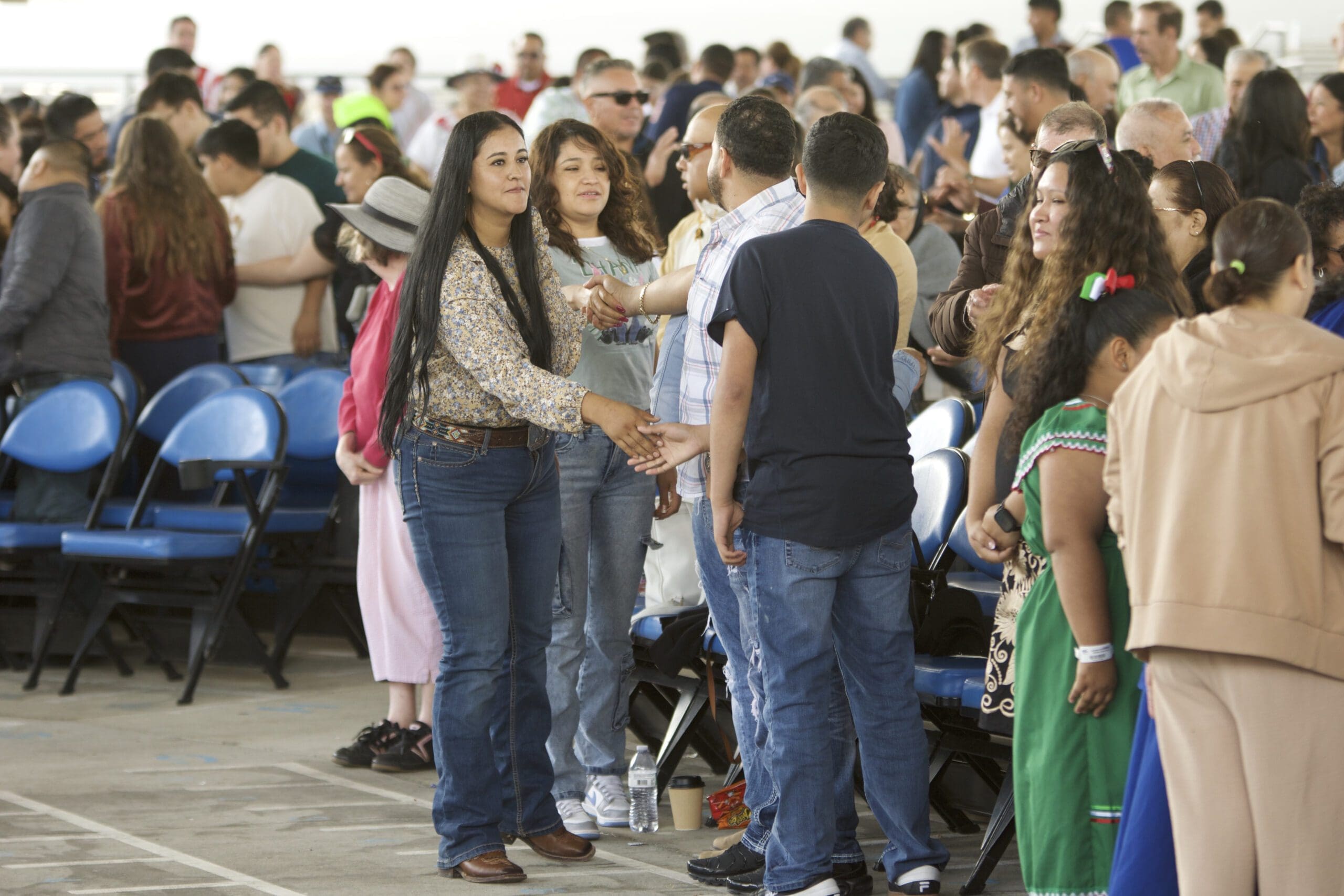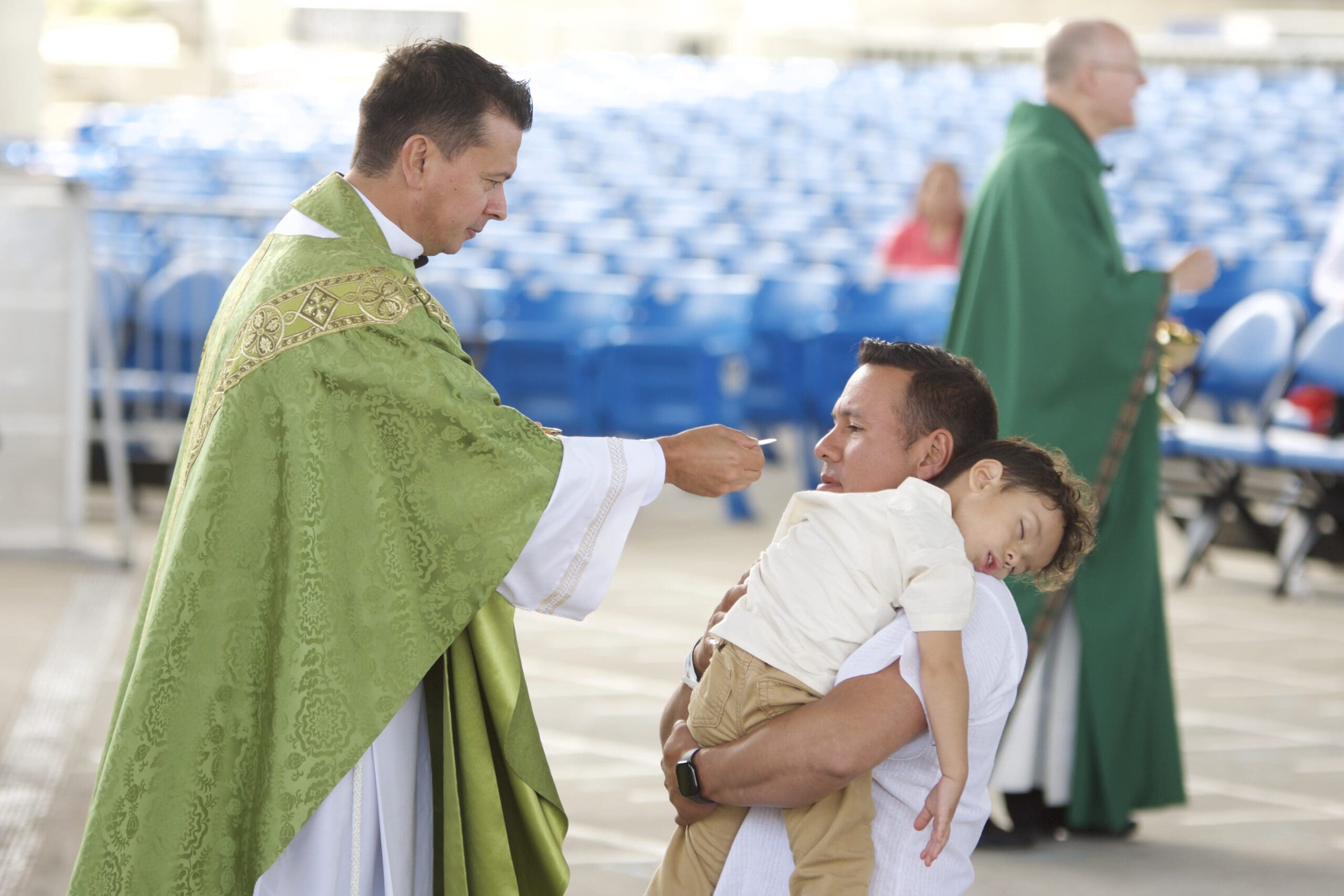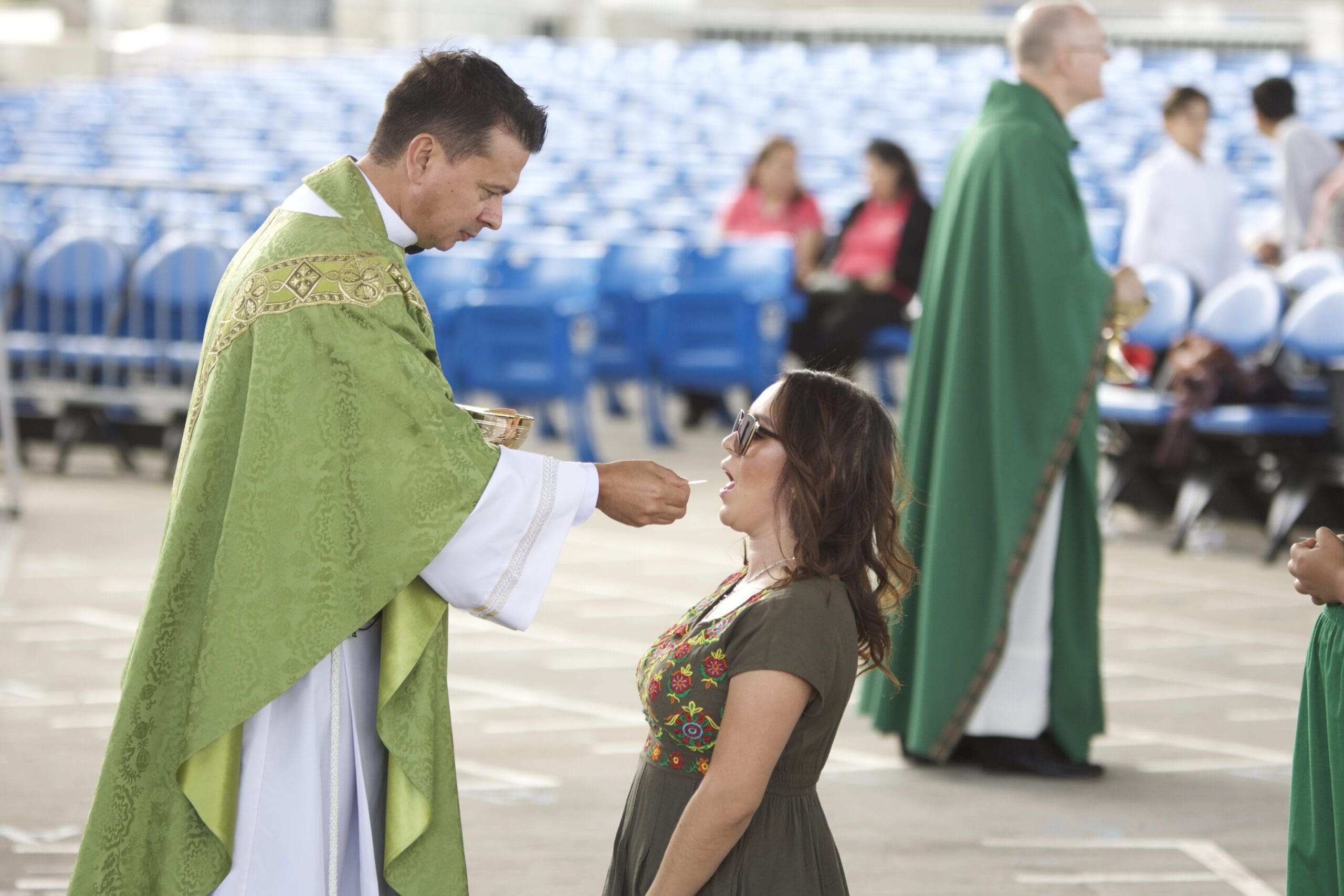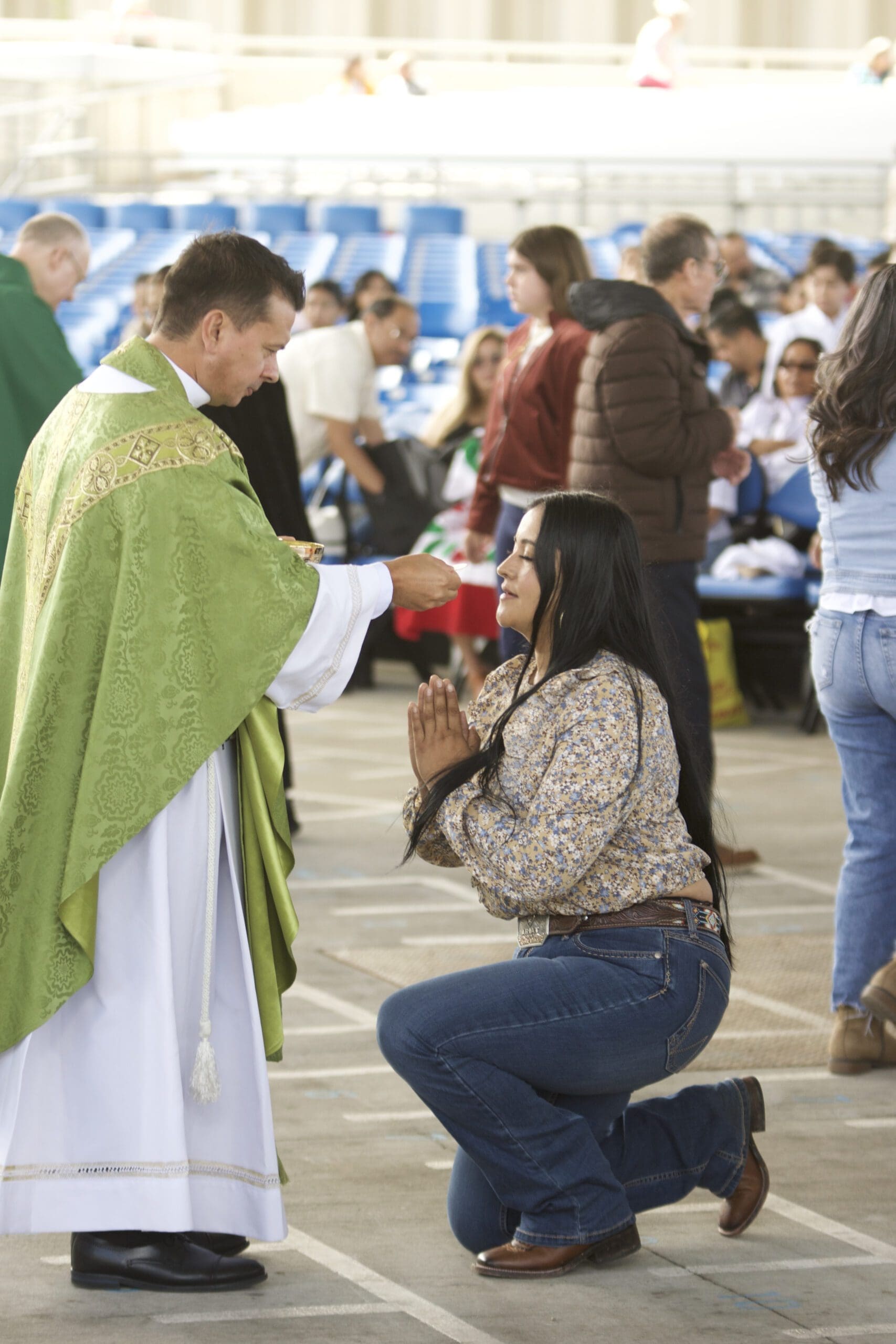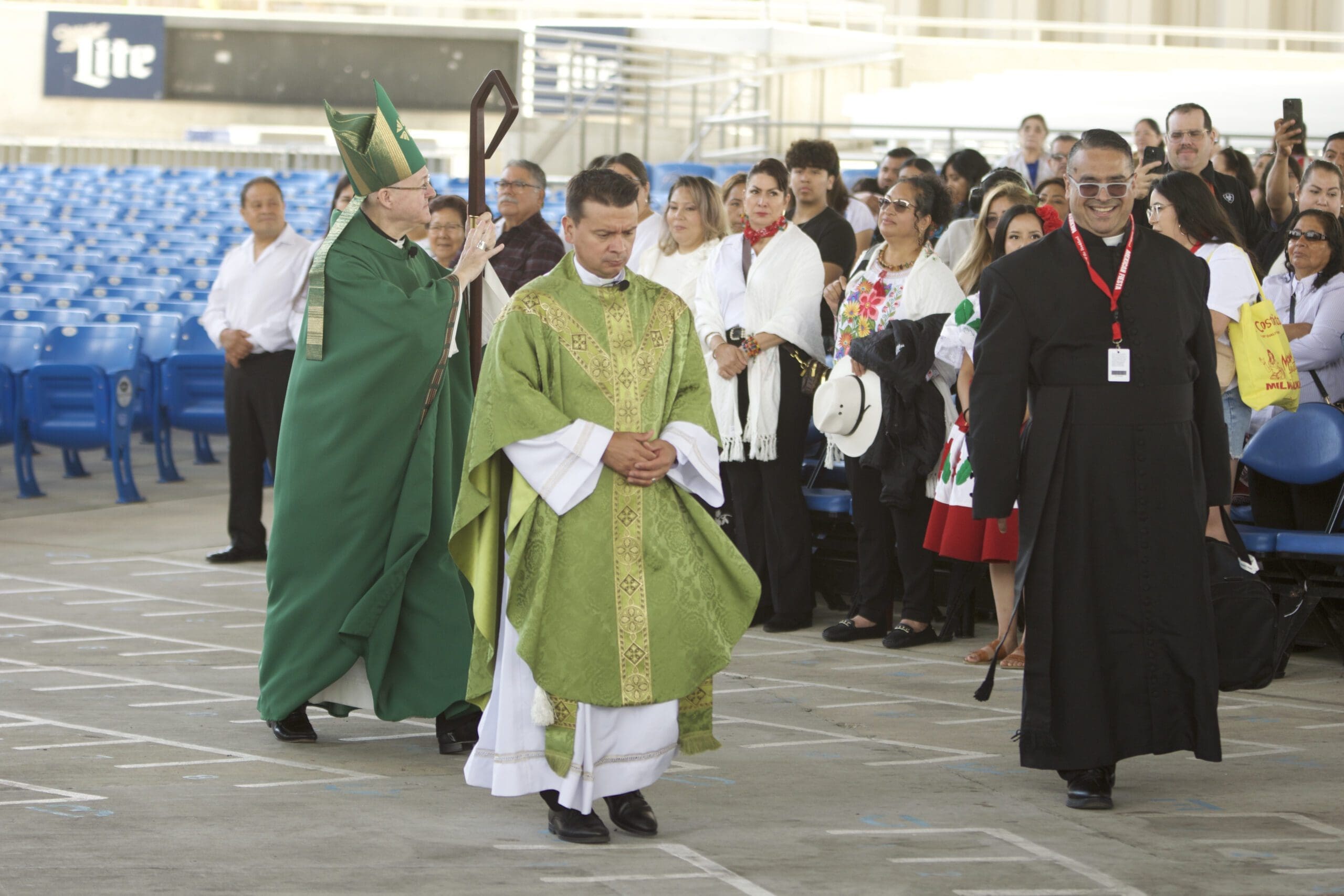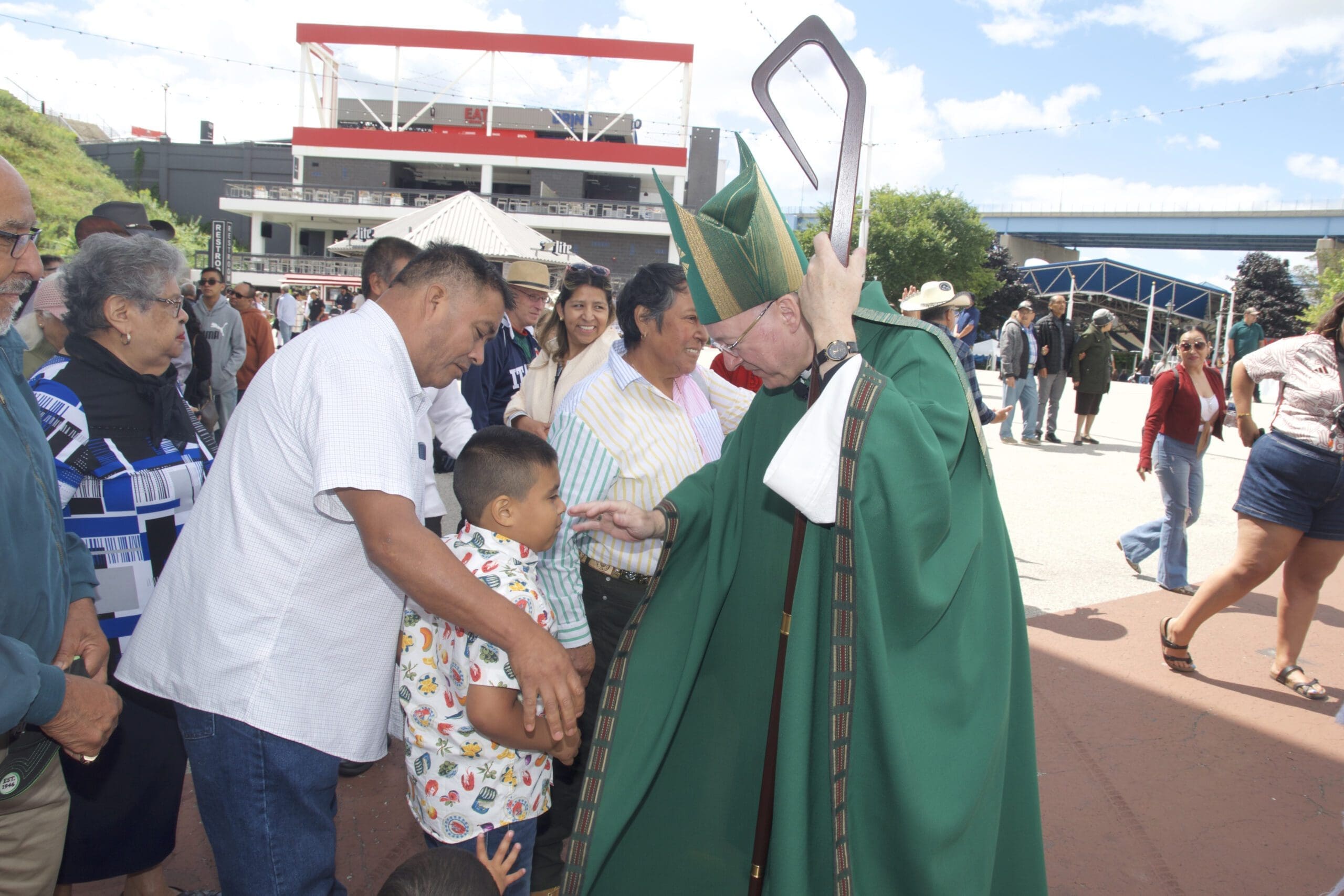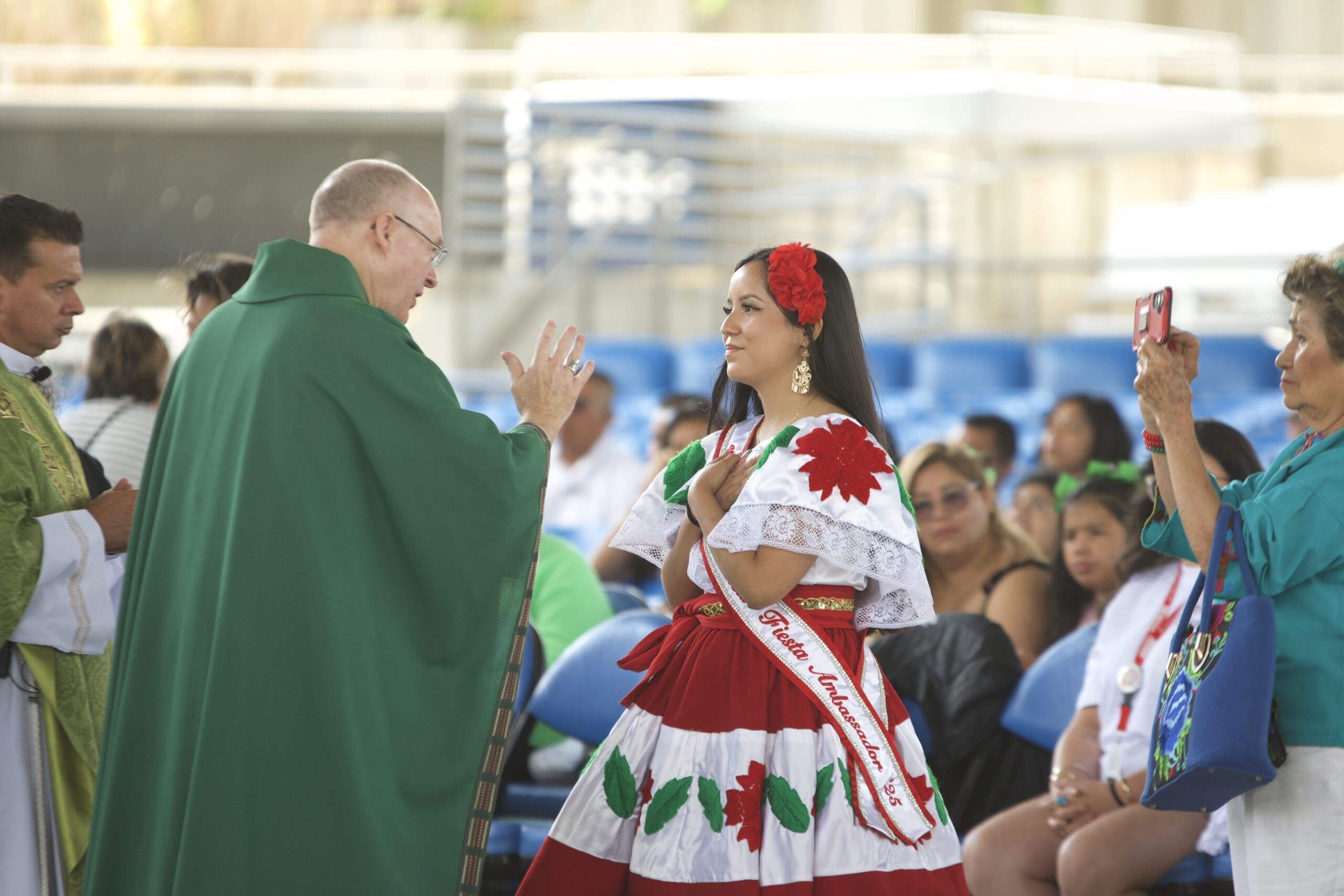
Archbishop Jeffrey S. Grob celebrates Mass at Mexican Fiesta on Aug. 24. (Photo by Sean Smith)
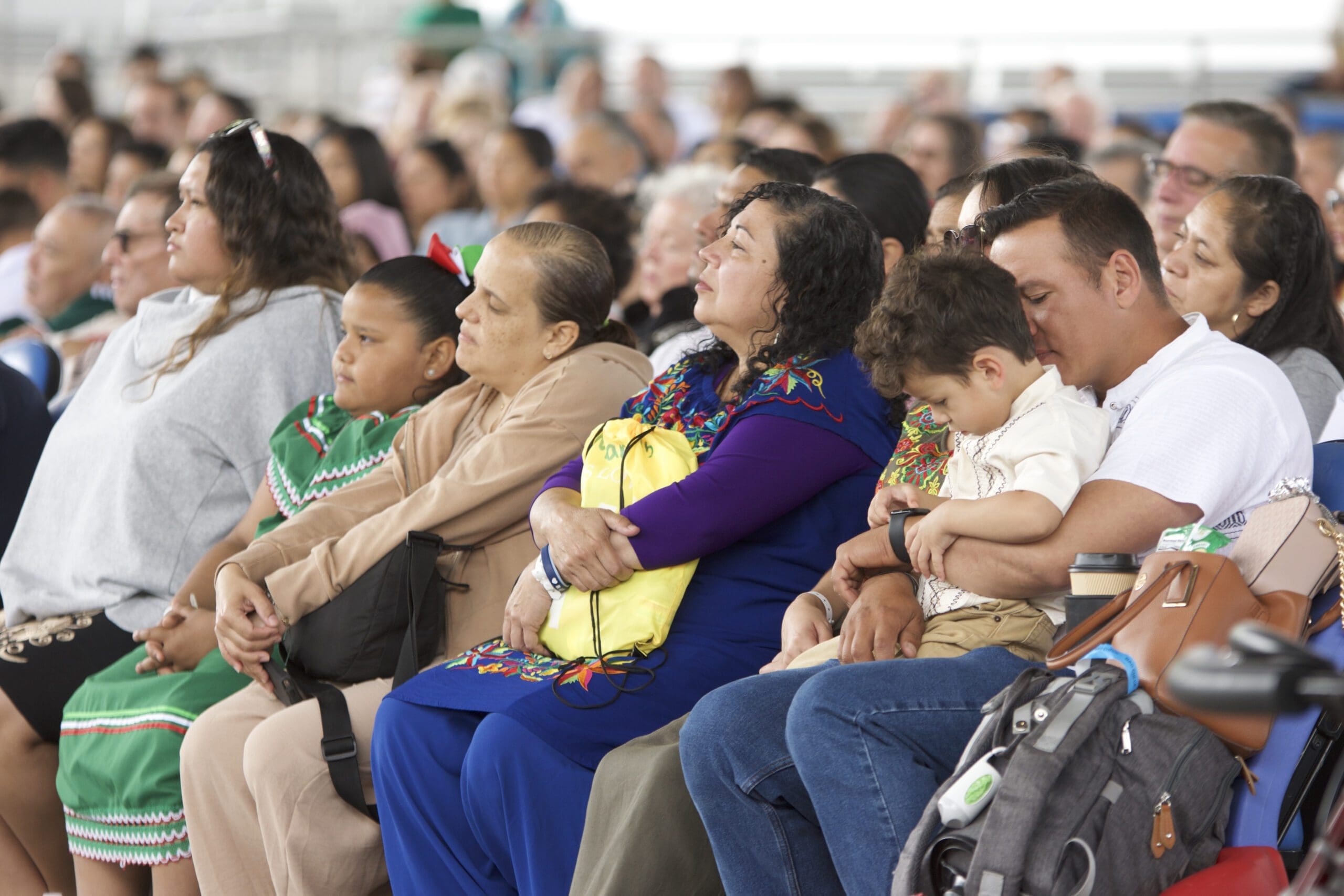
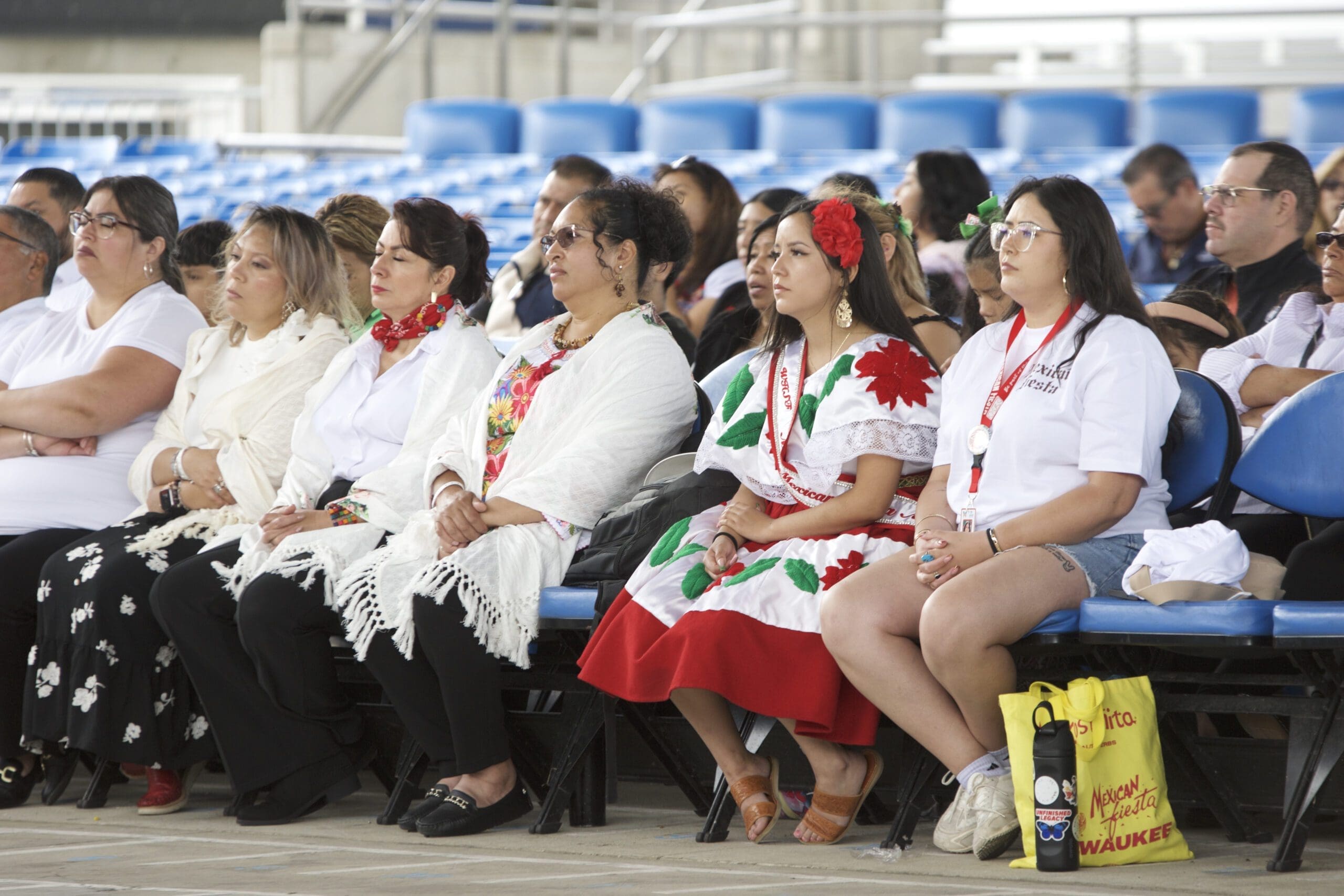
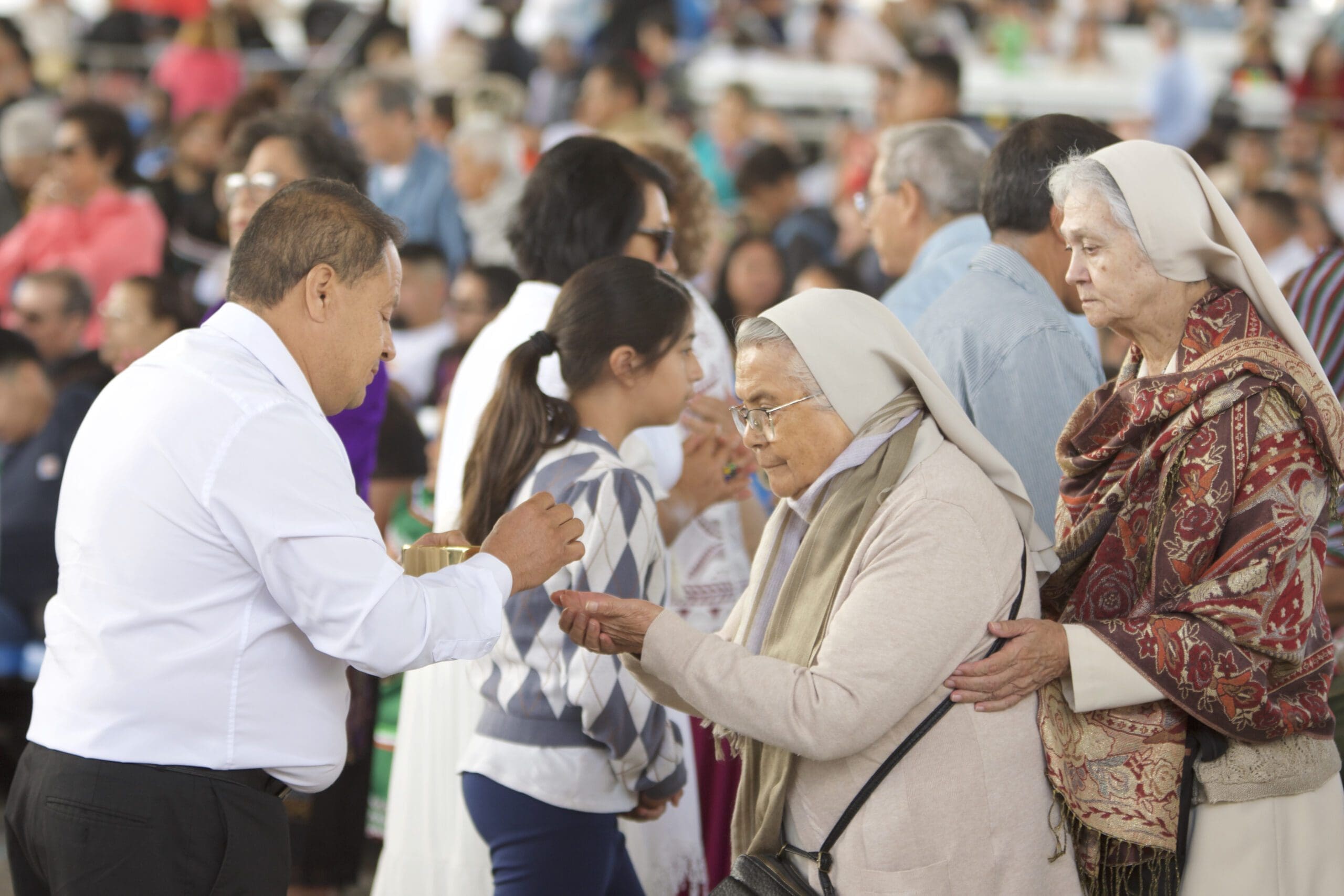
Archbishop Jeffrey S. Grob made his first appearance at Mexican Fiesta on Sunday, Aug. 24, where he celebrated Mass at the BMO Harris Pavilion on the third and final day of the festival.
“It’s going to be like listening in stereo — some English, some Spanish, some English, some Spanish,” he joked, referring to the fact that his homily, delivered in English, was simultaneously being translated into Spanish by Fr. Juan Manuel Camancho, Vicar for Hispanic Ministry. “We won’t make it long, we promise.”
Archbishop Grob offered his thoughts on the morning’s Gospel reading from Luke 13:22-30, wherein Jesus is asked how many people will be saved.
Jesus gave the right answer to the wrong question, the archbishop said — because the right question isn’t “how many will be saved,” but “how can we be saved?”
We expect the question about “how many” to be answered with a number, Archbishop Grob said.
“But listen to the answer that Jesus gives,” said the archbishop. “He says: ‘Strive to enter through the narrow gate. For many, I tell you, will attempt to enter but will not be strong enough.’”
Jesus proceeds to liken God to the master of a house who locks his door, and, upon locking it, will not open it again.
“That’s not the answer to the question,” the archbishop said. “It is, however, exactly what everyone — us included — needs to hear. Not about how many. Does that really matter, after all?”
No, Archbishop Grob continued. “What is essential is knowing how to be saved.”
“Our entry into the life of God requires an odyssey about ourselves,” he said. It’s an odyssey into the heart of each person’s soul, an endeavor that requires brutal honesty.
“The narrow gate that we hear about in the Gospel is the honest confrontation of who we are before Christ,” he said. “We — you and I — are called to stand before Christ and understand who we are.”
The narrow gate is found “in the ability to remain aware of where we’ve been, of what we’ve done, of what we hear God asking us in the depths of our hearts, and so many questions that ask us to … reflect within ourselves, to understand who we are,” he said.
It’s not for the faint of heart, the archbishop noted.
“This is difficult work. It’s something that requires us, every day, to remember what Jesus says: ‘For many, I tell you, will attempt to enter but will not be strong enough,’” he quoted.
It can only be accomplished with the help of God’s grace and the faithful reception of the sacraments.
“If not, we’re left with our own human tendency to mask, to deny, to avoid. None of these give us life,” Archbishop Grob said. “Again and again, the late Pope Francis reminded us that the Christian life is a constant battle. And so, we’re reminded this weekend that that narrow gate means that we enter into the life of God, enter into the heart of the Father, and that’s the way we find our heavenly home.”
He closed with a smile, gesturing between himself and Fr. Camancho, who had been faithfully translating each paragraph of the homily after the archbishop said it. “Thank you for watching this game of tennis.”
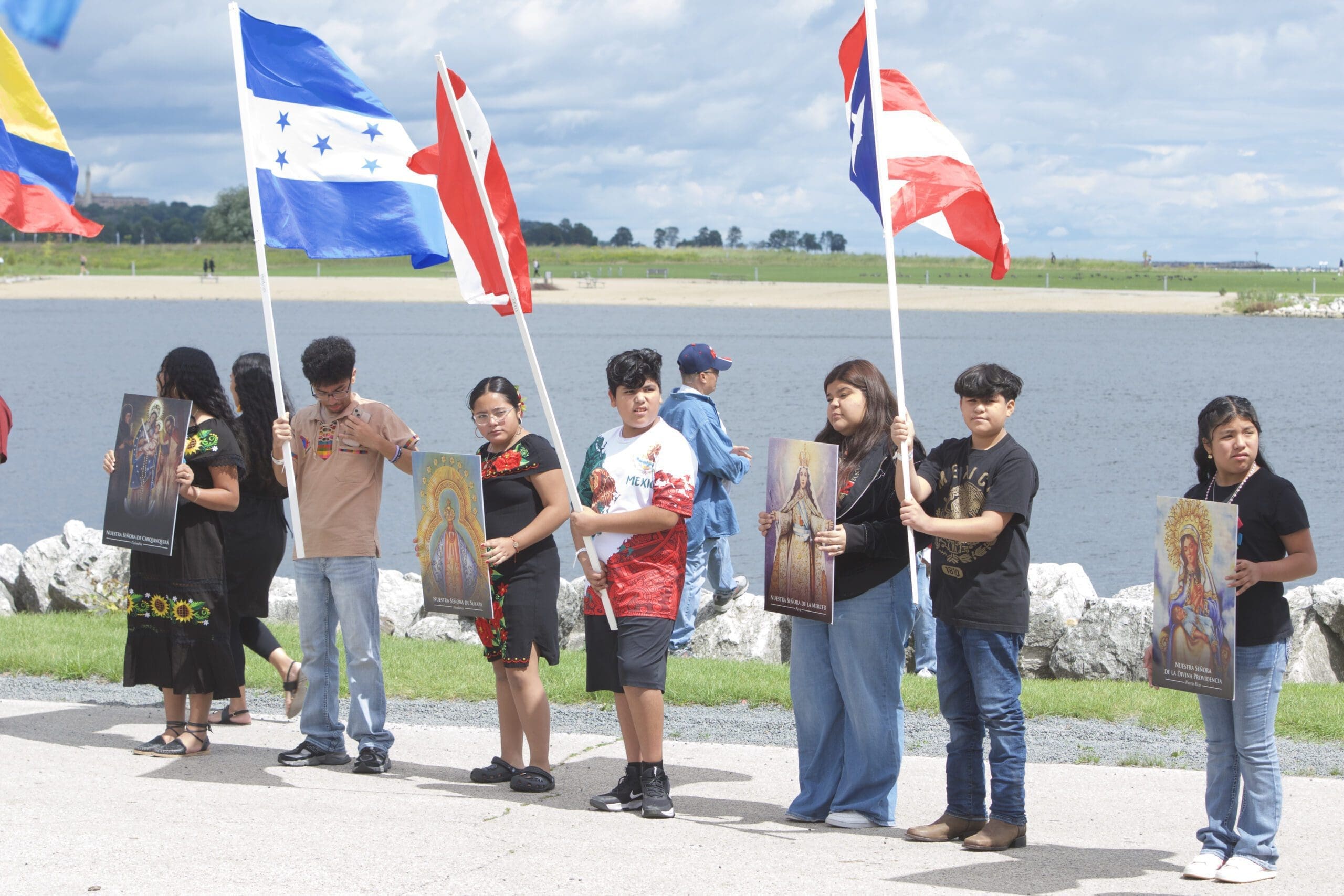
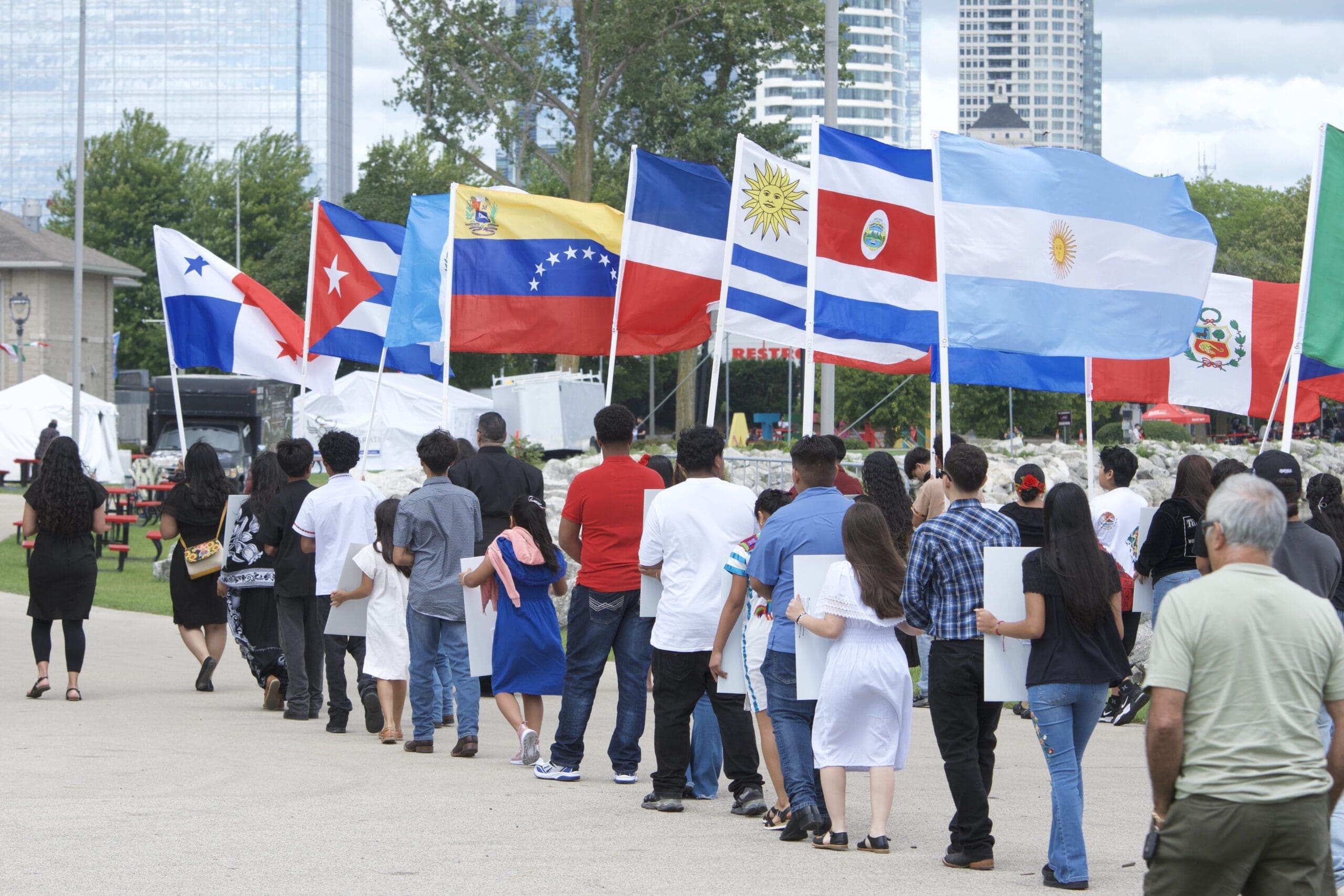
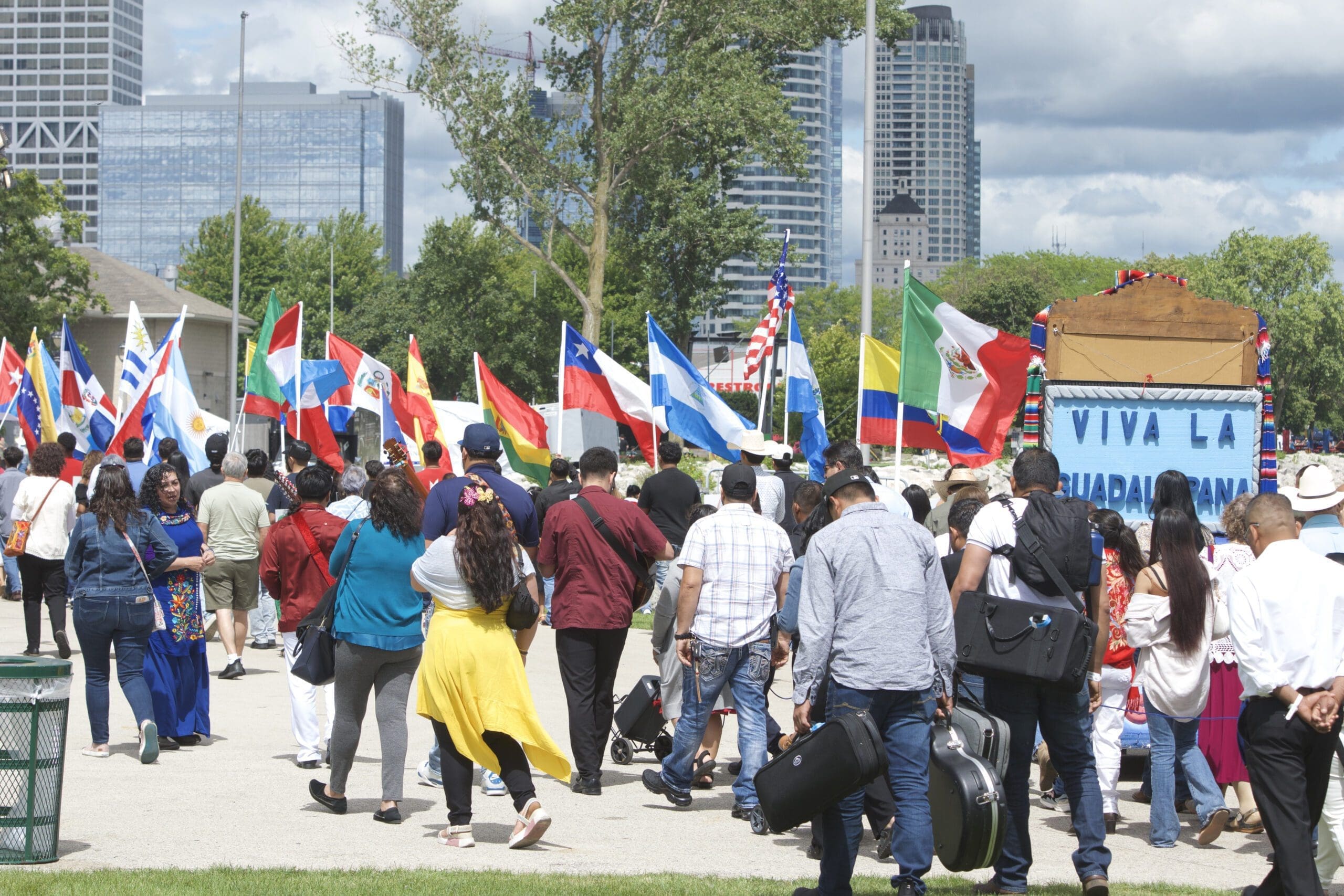
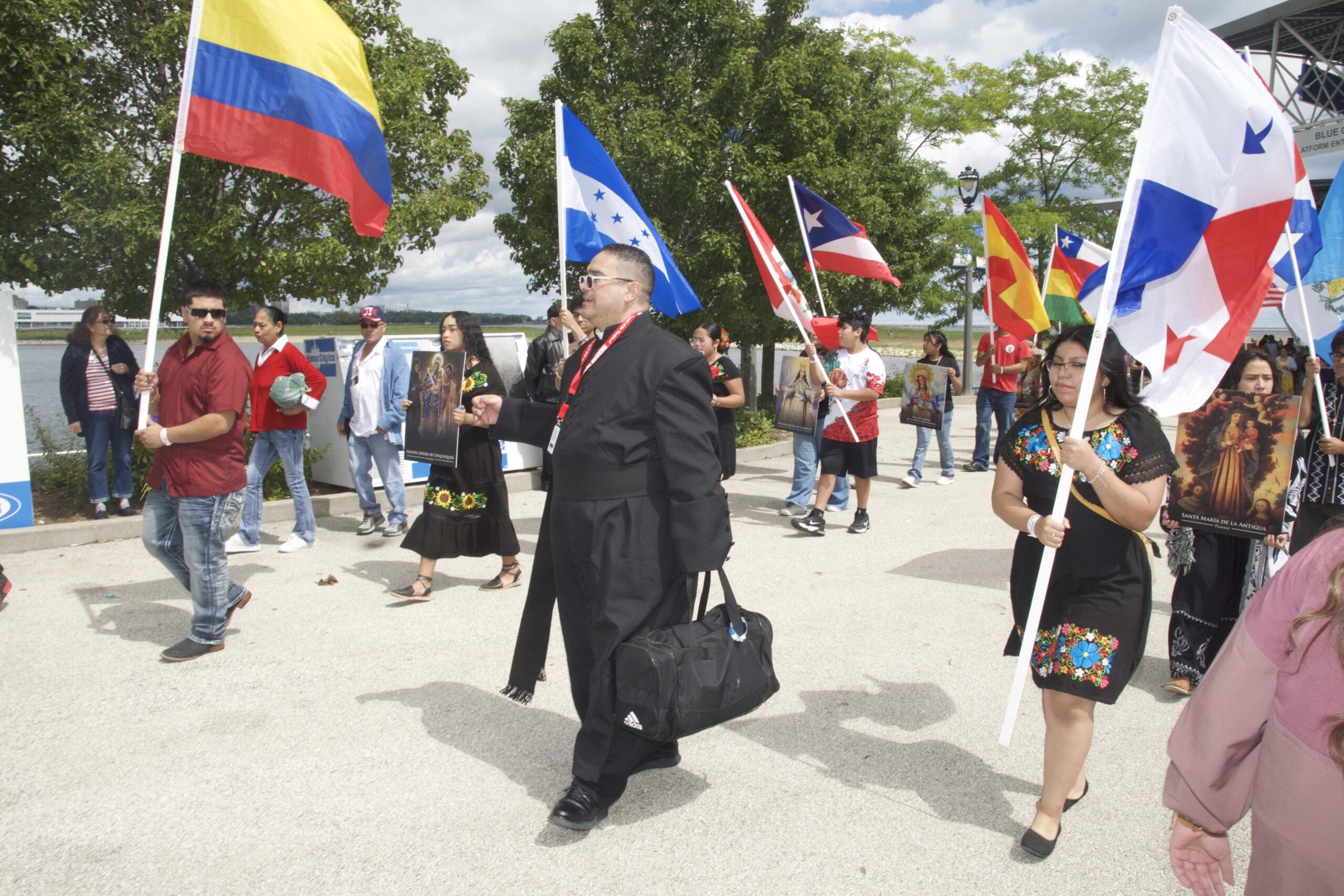
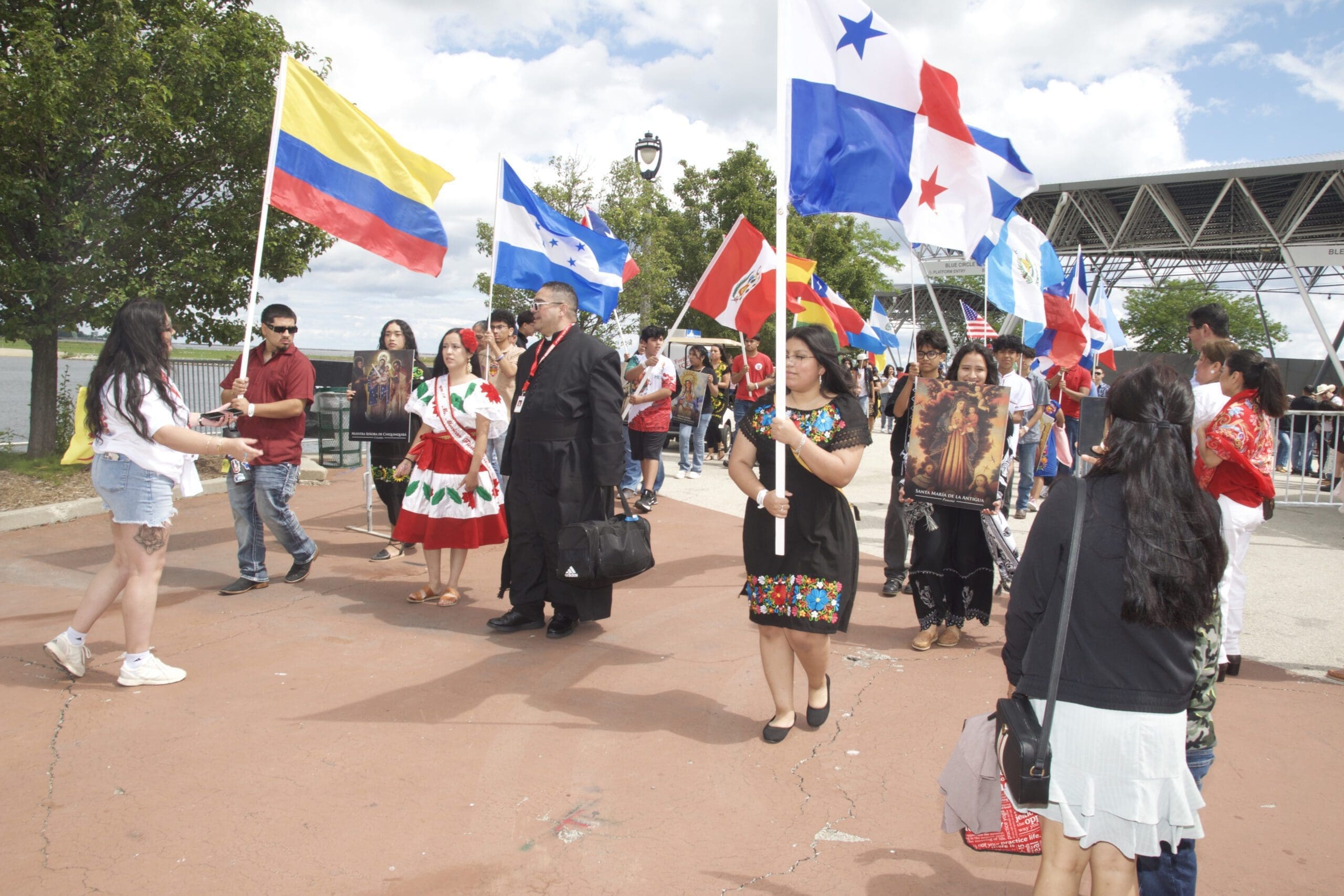
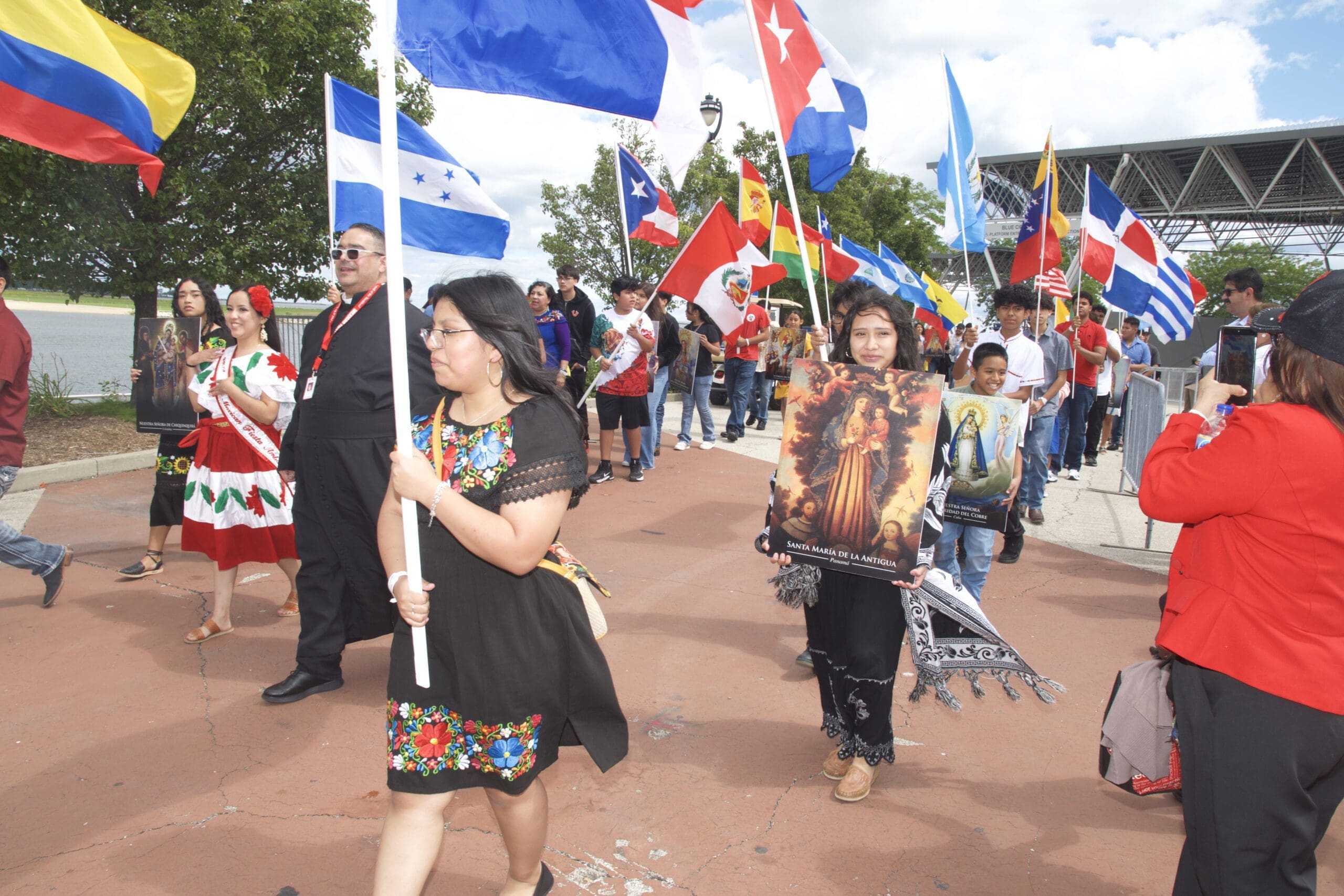
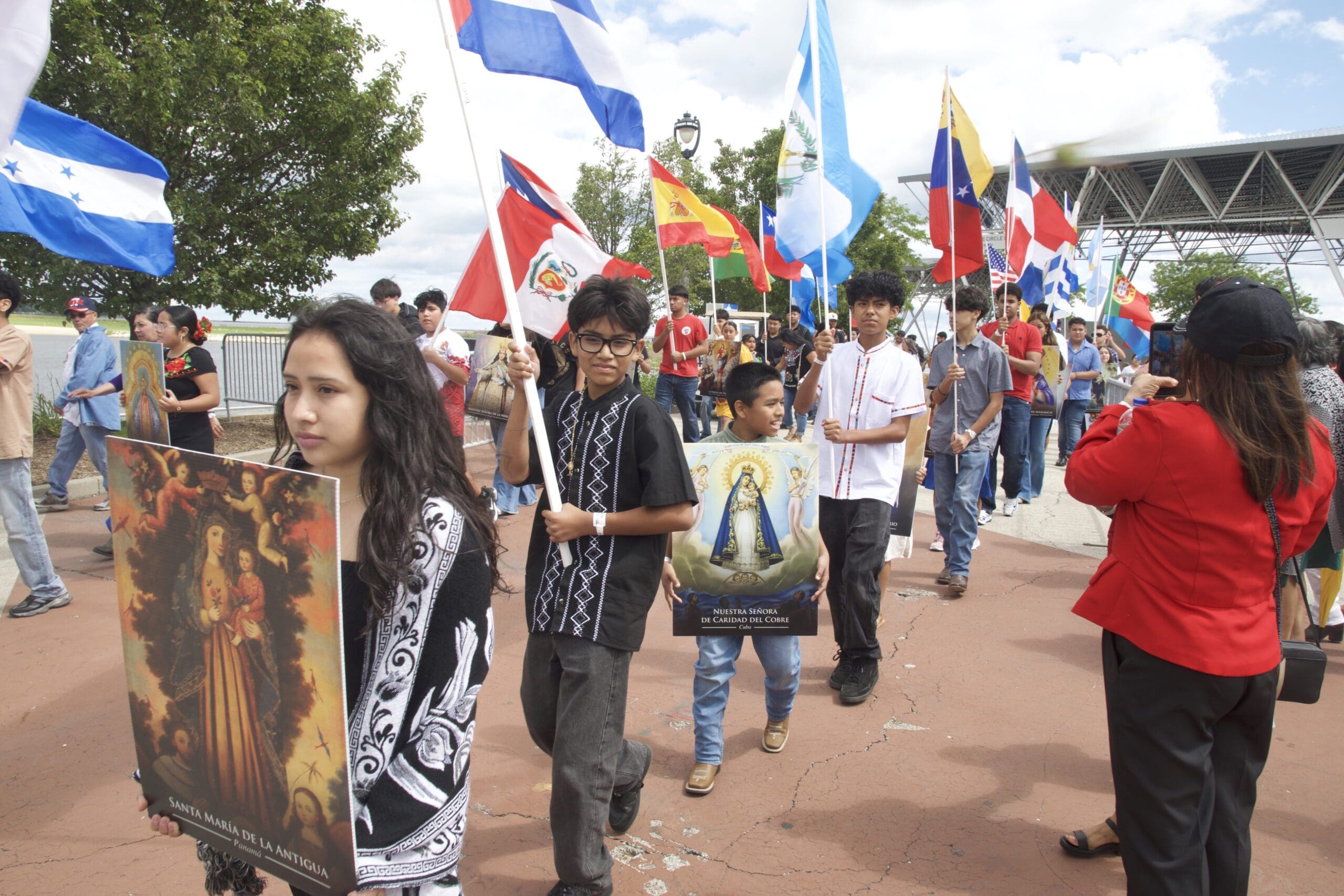
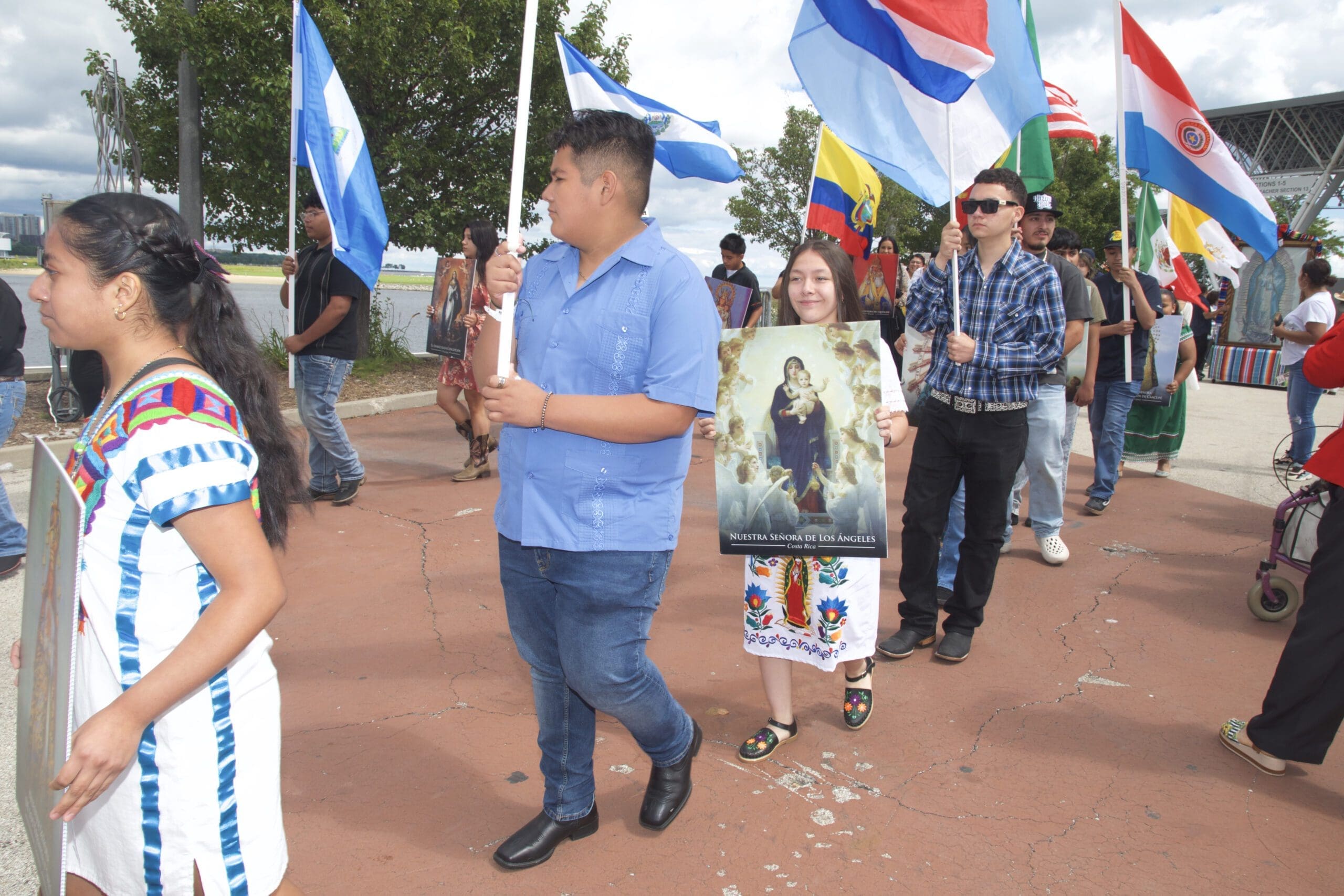
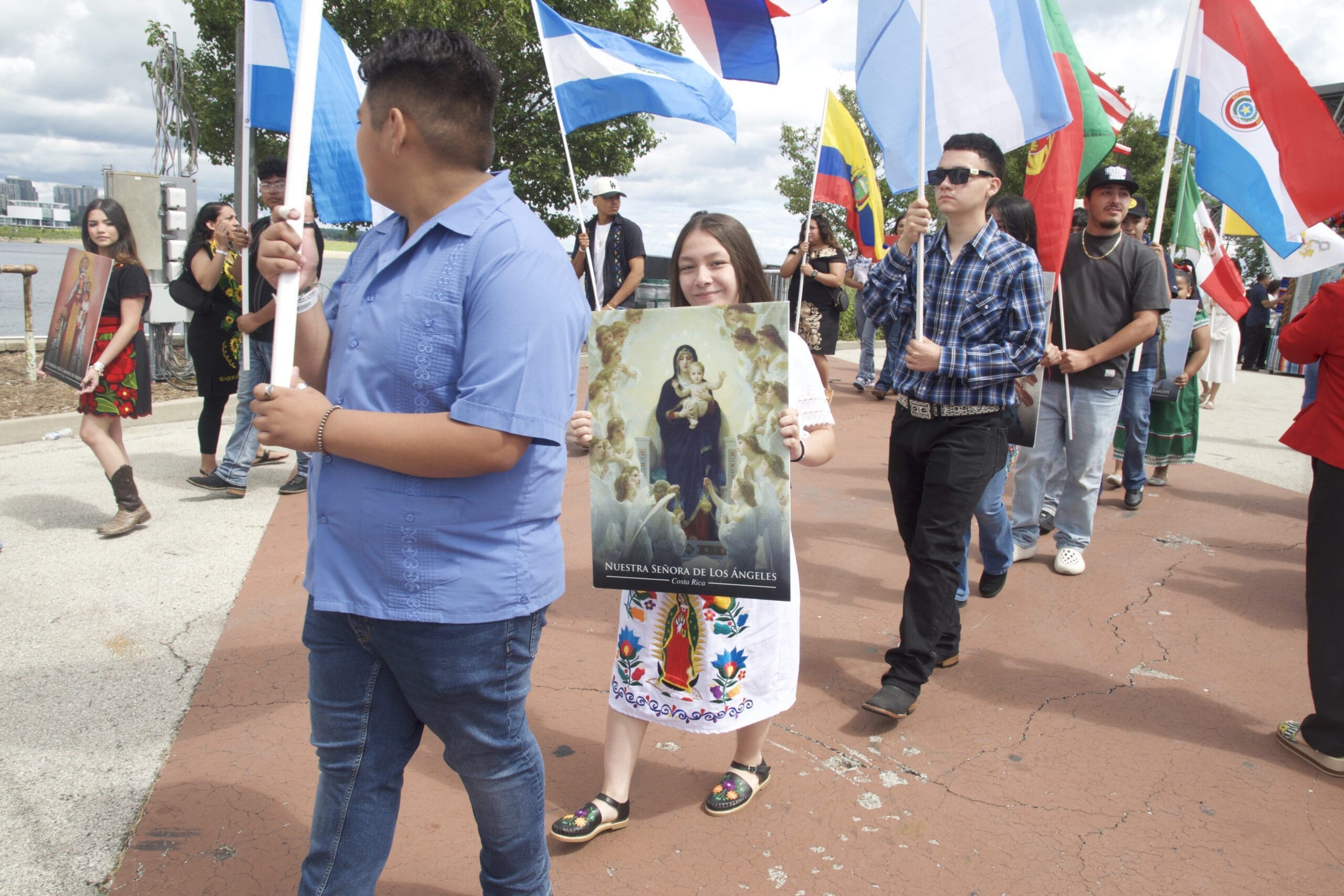
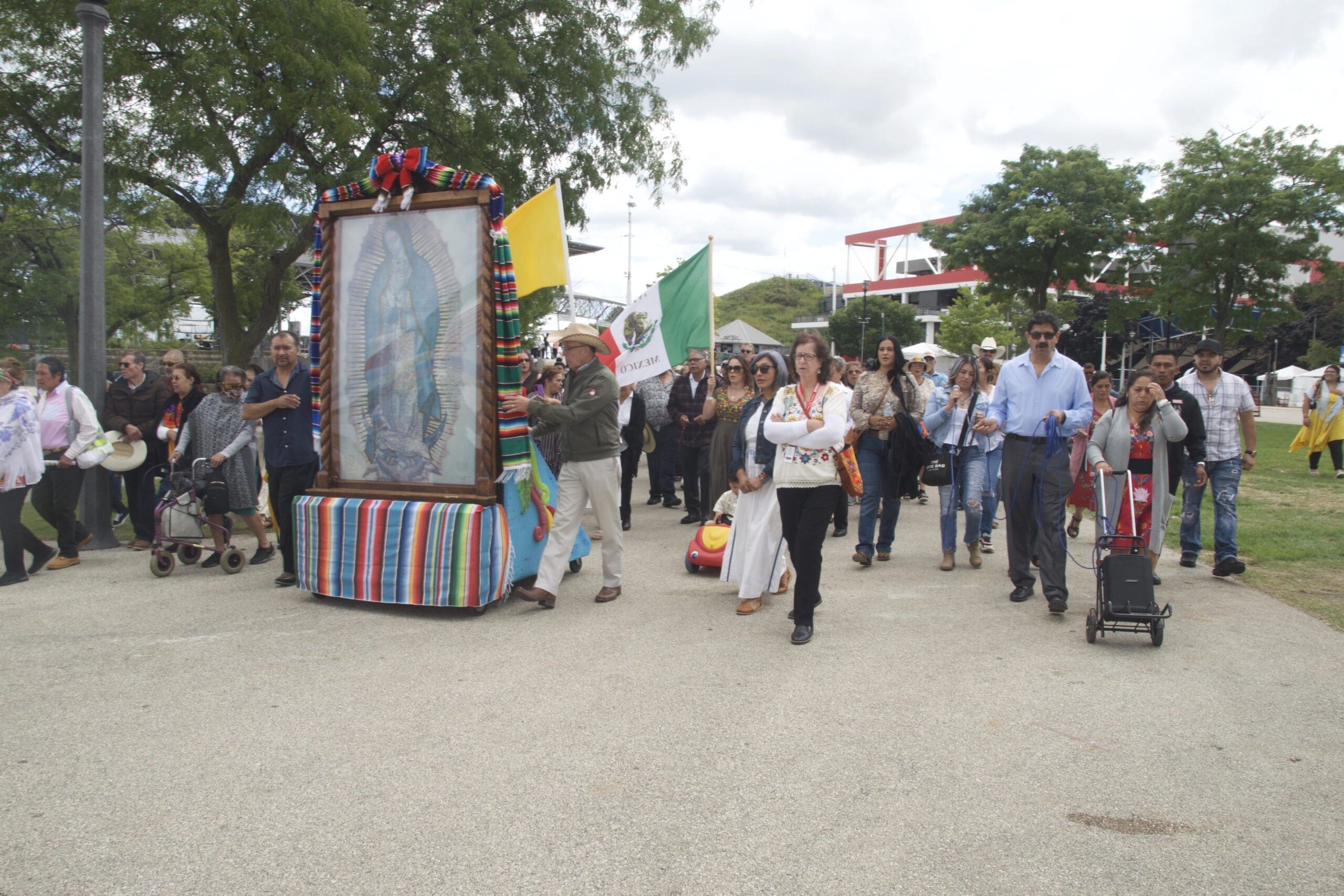
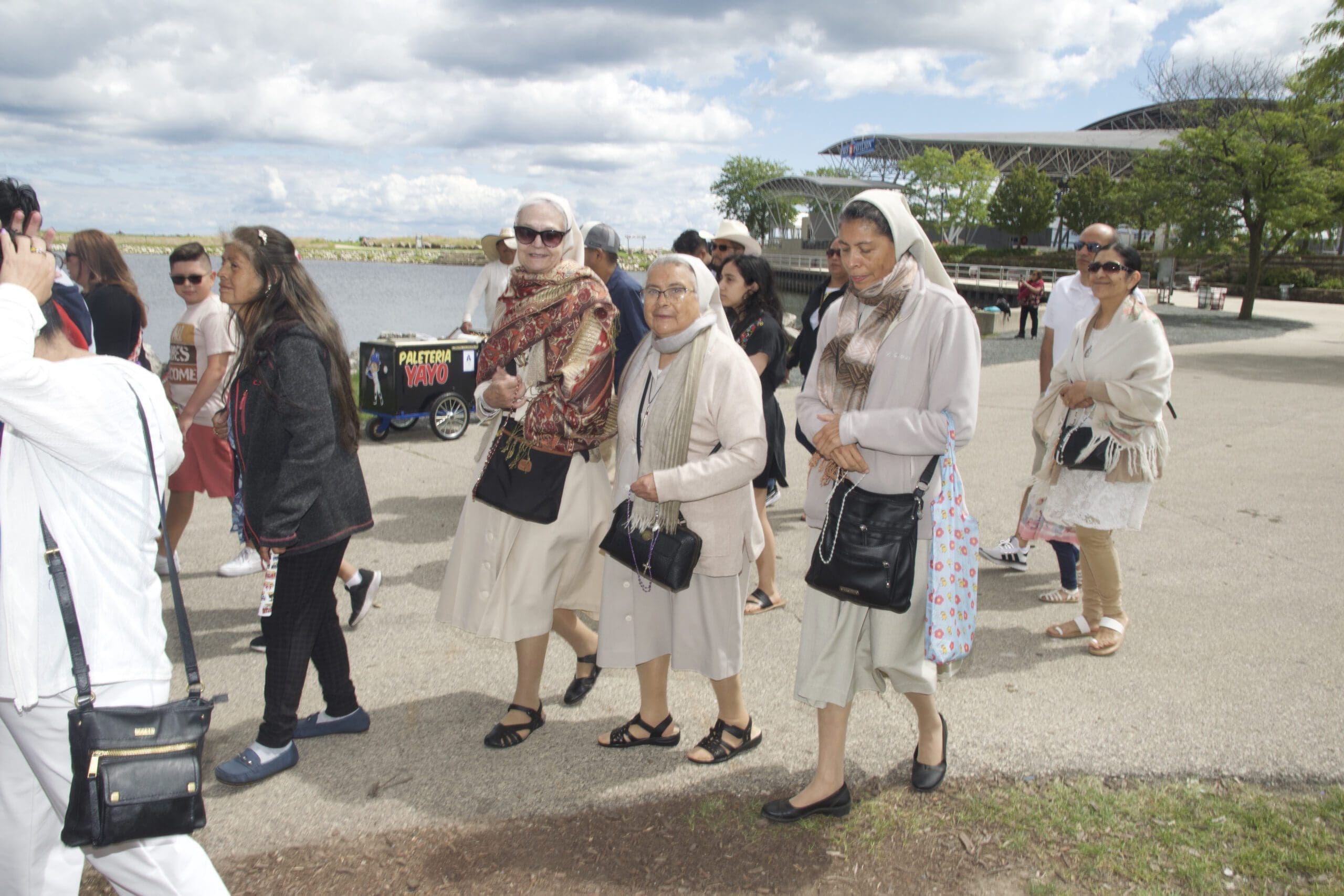
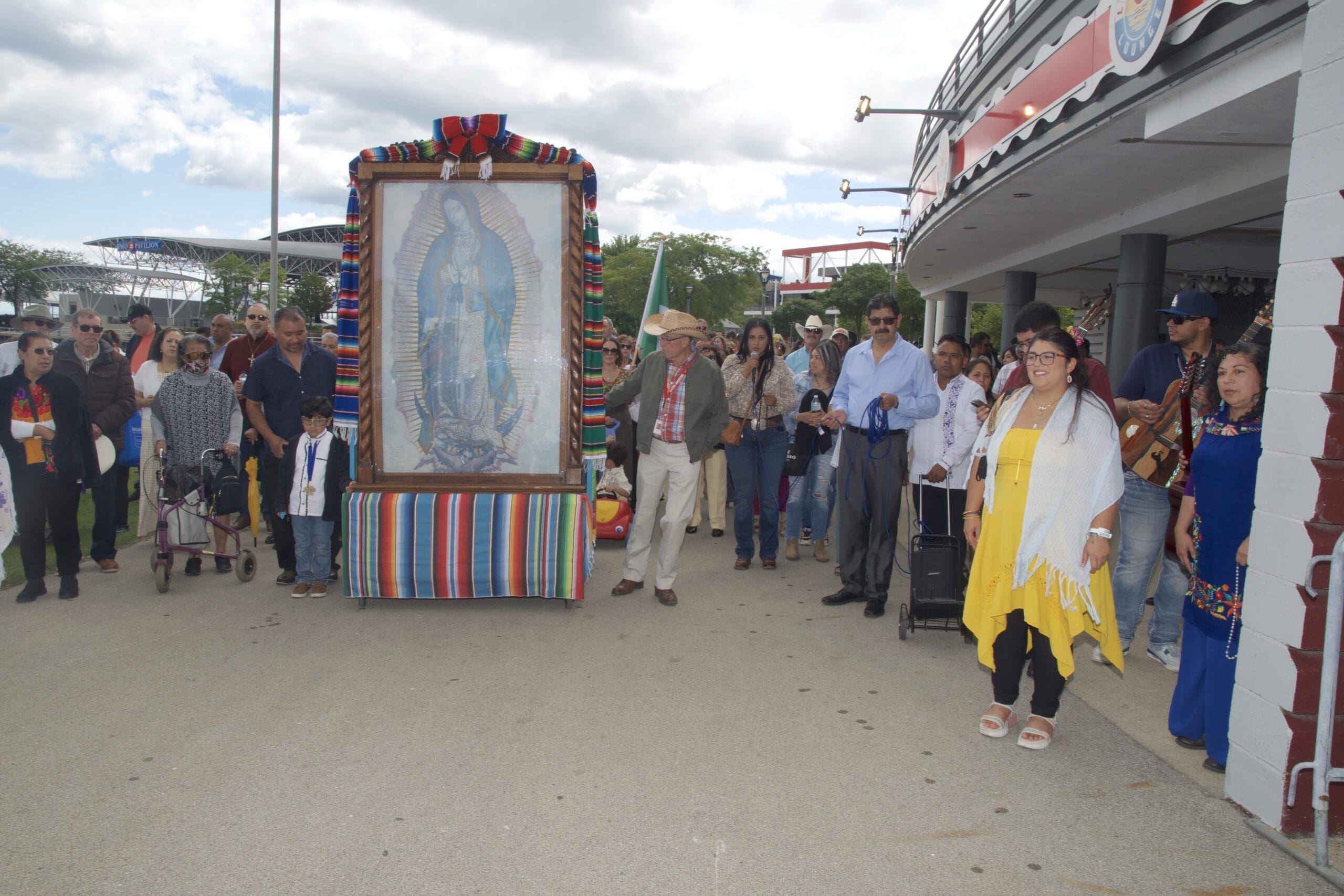
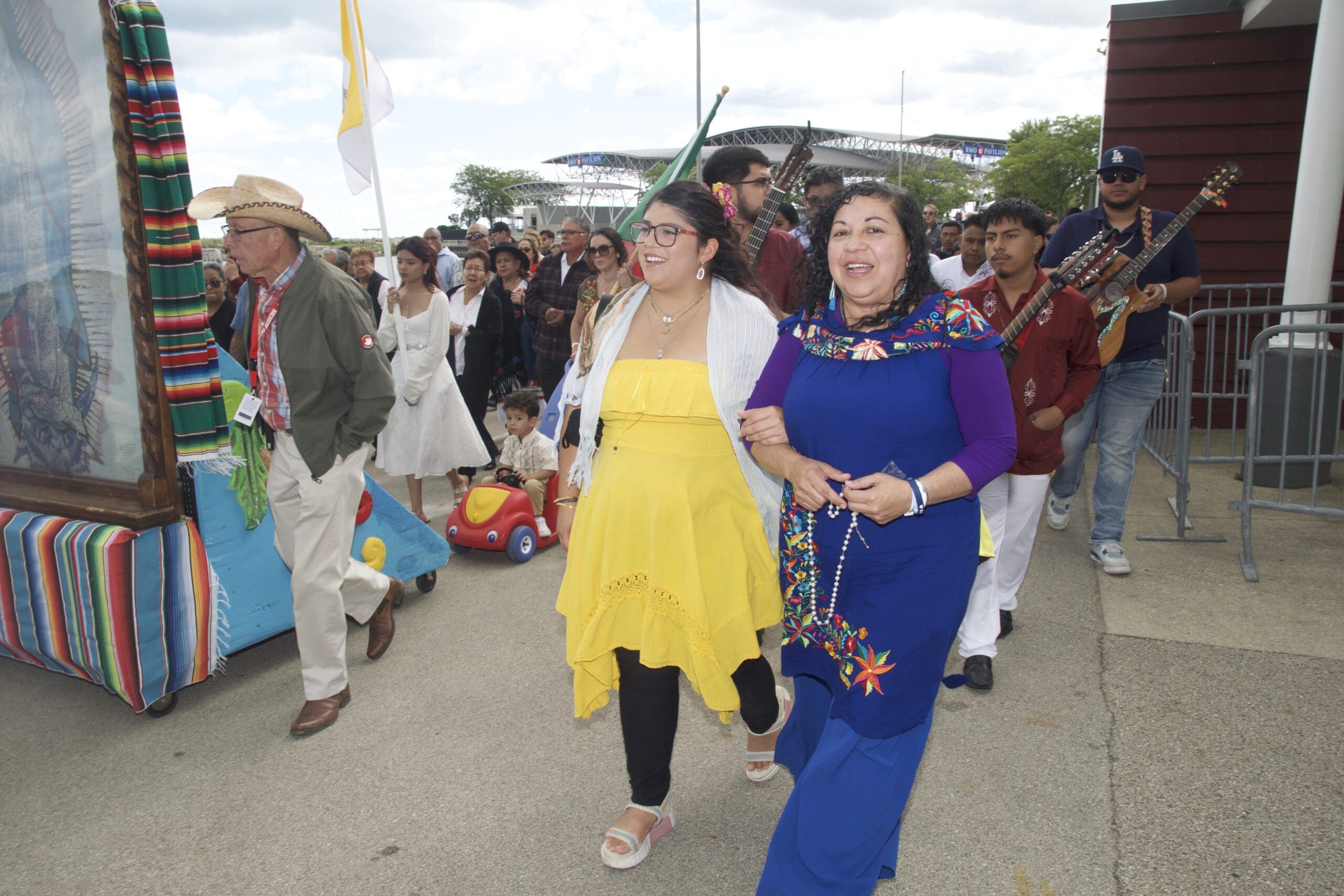
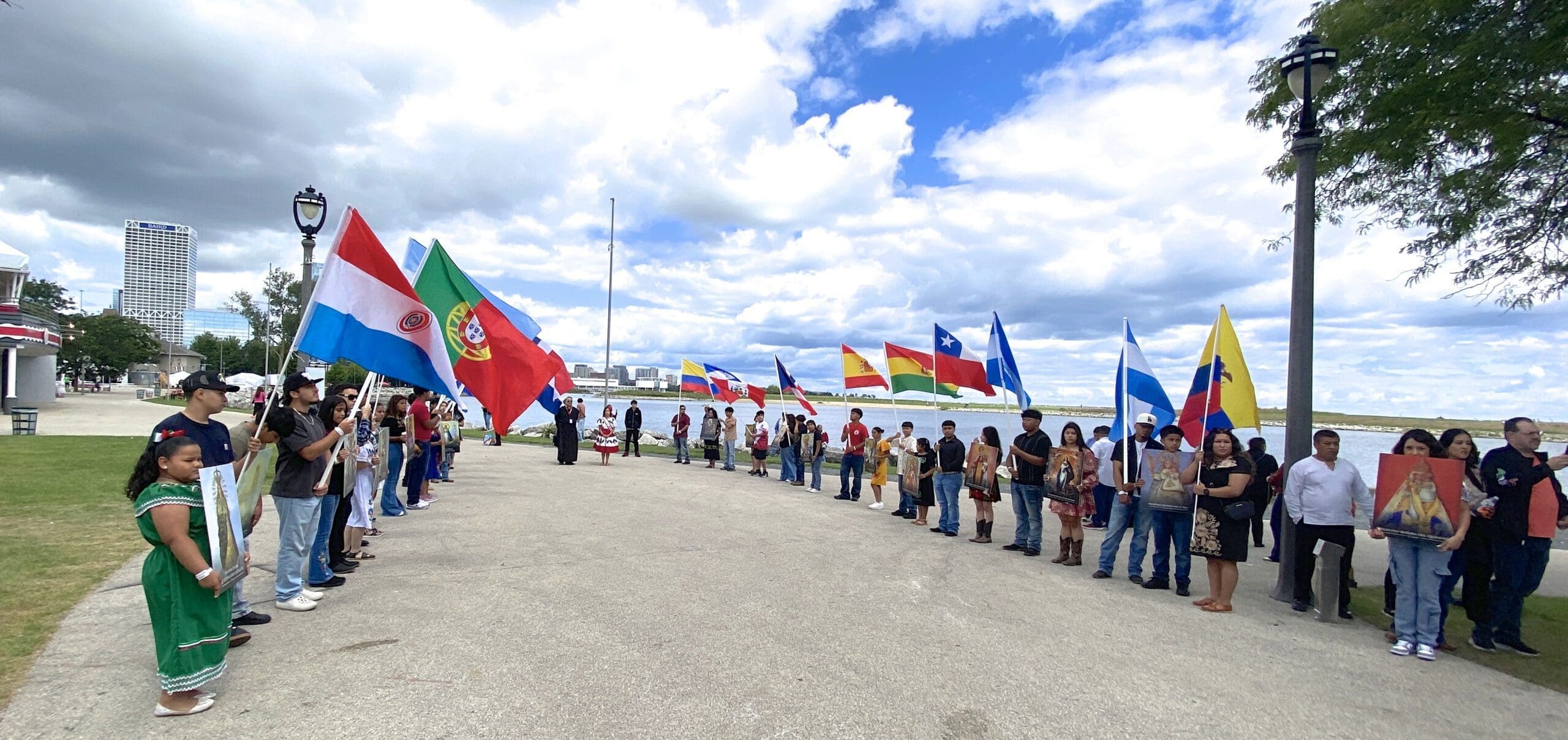
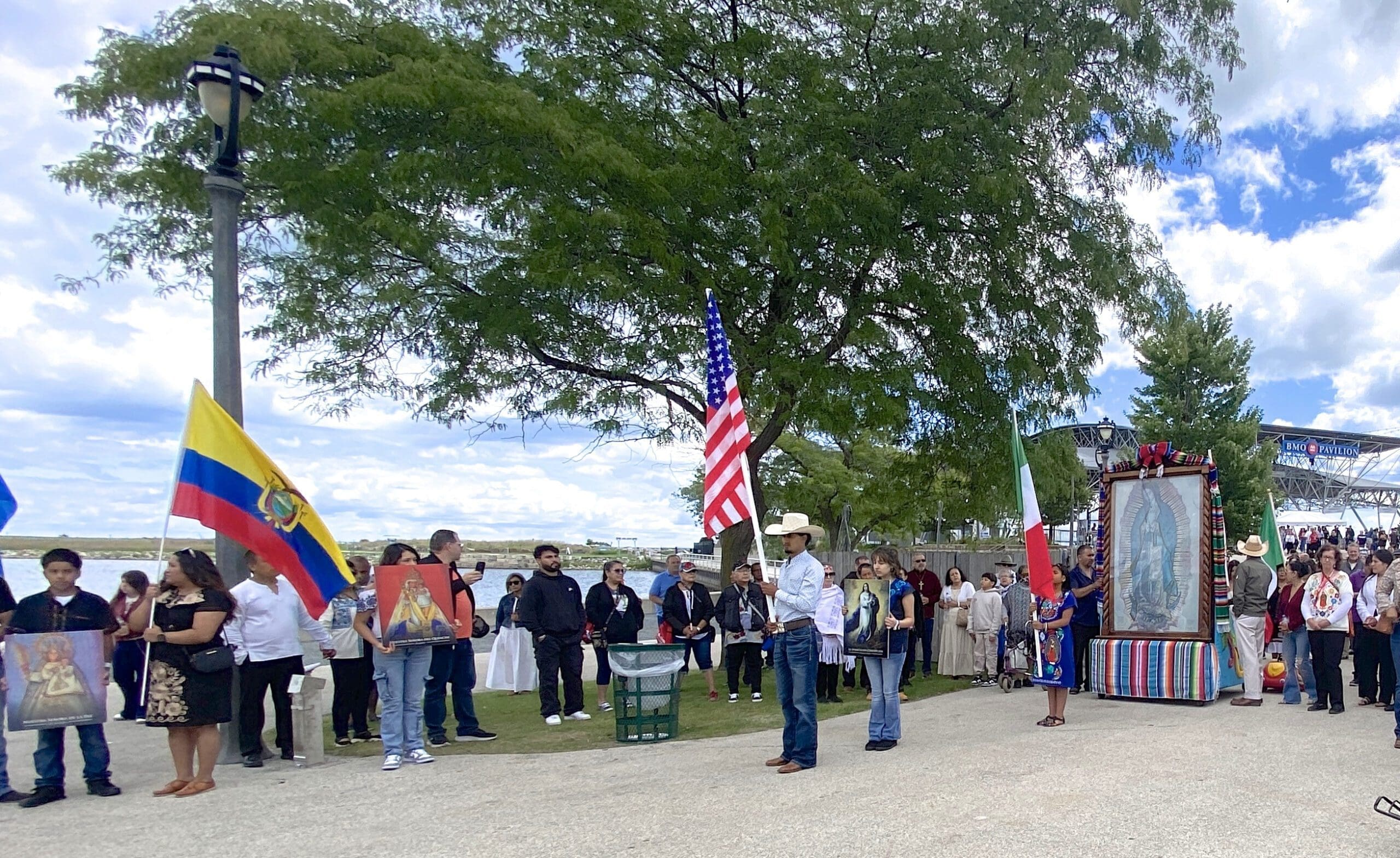
Immediately following the Mass, a lakefront procession took place with the image of Our Lady of Guadalupe.
Mass, sanctuary offer “vibrant” witness to faith
In a manner unique among local ethnic festivals of Milwaukee, Mexican Fiesta offers attendees a representation of the enduring faith of the Mexican people.
Several other festivals have Mass on the final day, but only Mexican Fiesta makes a sanctuary available all days of the festival where families and individuals can engage in prayer and receive the Sacrament of Reconciliation.
Eva Diaz of the Hispanic Ministry Office called the festival’s Mass and sanctuary “vibrant manifestations of the Catholic faith in the larger community” that provide opportunities for welcoming and evangelization.
“Visitors give testimony of attending Mass or receiving the Sacrament of Reconciliation for the first time in years,” she said. “Volunteers accompany visitors quietly in the sanctuary, helping them feel at home.”
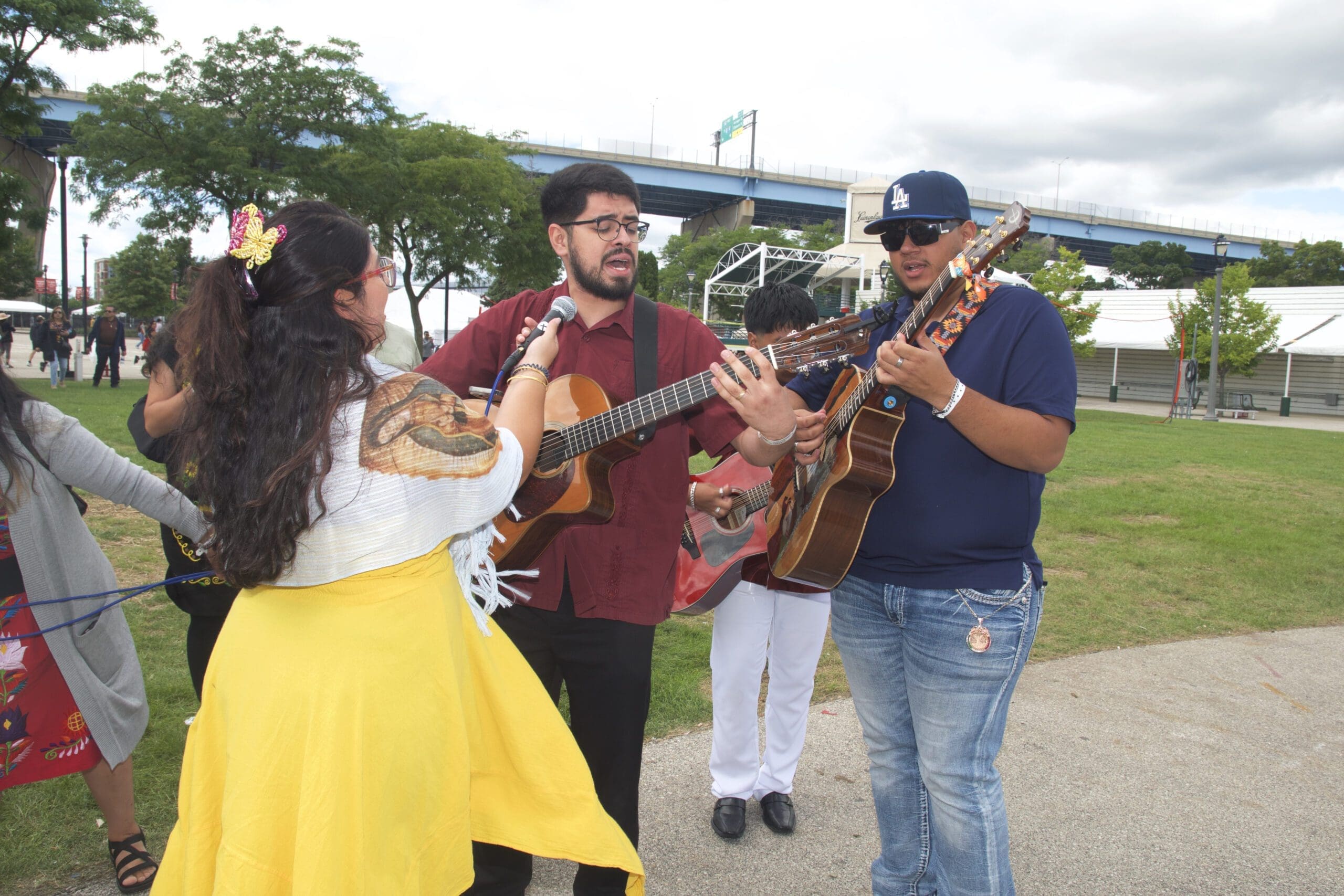
Also in the sanctuary, young adults from Iskali Ministry lead the Rosary as an additional opportunity for community prayer.
Planning for the Mexican Fiesta Mass, procession and sanctuary begins each May, when members of the Hispanic Ministry Office meet with planning committee members to begin preparations. “The staff and volunteers dedicate hours to cleaning and preparing the sanctuary space for two days before the formal opening of the festival,” said Diaz. The sanctuary is dedicated to Our Lady of Guadalupe, Patroness of the Americas, and was blessed by Bishop James T. Schuerman before it opened to the public.