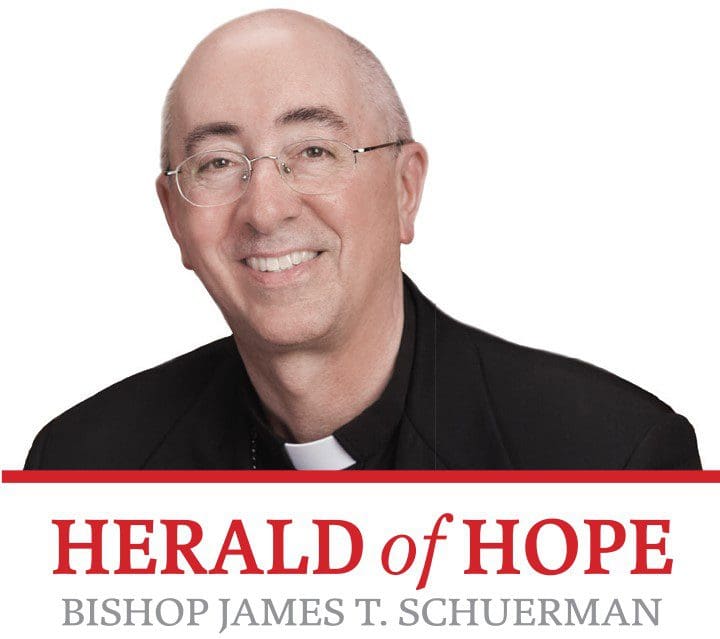
Herald of Hope
On Feb.1, the Archdiocese of Milwaukee’s 2026 Celebration of Consecrated Life was held in the St. Joseph Chapel of the School Sisters of St. Francis. The theme of the celebration was “Prophetic Witness: A Voice Cries Out in the Wilderness.” I was invited to give the homily at this service of prayer and song, and this article is based on that homily.
In the Sacred Scriptures, God called certain individuals to be prophets. Jeremiah responded to God’s call with some hesitation: “Ah, Lord God. I know not how to speak; I am too young. But the Lord answered me, ‘Say not, “I am too young.” To whomever I send you, you shall go; whatever I command you, you shall speak.’” (Jeremiah 1:6-7)
The Lord placed his words in the mouth of Jeremiah and set him over the nations to “root up and to tear down, to destroy and to demolish, to build and to plant.” (Jeremiah 1:10) These are words that signal the necessary changes to be made to prepare for the establishment of the will of God among us. As members of the Church, we are called to lives of prophetic witness, and the words spoken to the prophet are spoken to us as well.
To root up and tear down, of course, begins with us, in our interior. We must root up our indifference and tear down our unjust prejudices. We must destroy and demolish our tendency toward hatred and violence, to be able to build and to plant. We must cooperate with God’s grace to help plant the seeds of God’s word that stand over and against the world’s values and to build the structures that ensure just and fair treatment of others.
Jeremiah had the mission of speaking God’s words to a violent and fractured world, upholding human dignity in the face of oppressive forces carrying out actions that dehumanized the most vulnerable. Jeremiah said, “Thus says the Lord, ‘Do what is right. Rescue the victim from the hand of the oppressor. Do not wrong or oppress the resident alien, the orphan or the widow, and do not shed innocent blood in this place.’” (Jeremiah 22:3)
We, too, live in an age in which the vulnerable are demonized, scapegoated and treated with violence. We witness the indifference and mistreatment shown toward the poor, the marginalized, the immigrant, the disenfranchised.
Pope Leo XIV, in his Apostolic Exhortation, Dilexite, quotes Pope Francis’ Evangelii Gaudium, which states, “Our faith in Christ, who became poor, and was always close to the poor and the outcast, is the basis of our concern for the integral development of society’s most neglected members.”
Prophetic witness entails making our voices heard, as well as the hard work of making “straight in the wilderness a highway for our God,” (Isaiah 40:3) by standing up for our brothers and sisters who are vulnerable, poor, persecuted and oppressed. According to the prophet Isaiah, it is when we make straight the highway that the glory of God will be revealed. We clear the path, and our God takes over.
Addressing the unjust societal structures that need to be cleared away to make straight the path for God, Pope Leo writes in Dilexite, “All the members of the People of God have the duty to make their voices heard, albeit in different ways, in order to point out and denounce such structural issues, even at the cost of appearing foolish or naïve. Unjust structures need to be recognized and eradicated by the force of good, by changing mindsets … but also by developing effective policies for change.”
According to St. Luke’s Gospel, when Jesus began his public ministry, he read a passage from Isaiah and he identified himself as the Lord’s Servant, anointed by God “to bring glad tidings to the poor … to proclaim liberty to captives and recovery of sight to the blind, to let the oppressed go free.” (Luke 4:18) And to confirm that this was his mission, he said, “Today this passage is fulfilled in your hearing.” (Luke 4:21)
Pope Leo writes, “At the dawn of his public ministry, after announcing in the synagogue of Nazareth that the year of grace which would bring joy to the poor was fulfilled in him, he was driven out of town.” Jesus himself was subjected to the same exclusion that the poor and the outcast of society experience. Pope Leo writes, “He presented himself not only as a poor Messiah, but also as a Messiah of and for the poor.”
Our prophetic witness is based on the love that the Holy Spirit pours into our hearts. Pope Leo writes that Christian love “breaks down every barrier.” By its nature, “Christian love is prophetic: it works miracles and knows no limits. It makes what is apparently impossible happen.”
Pope Leo states in Dilexite that our prophetic witness, whether in our efforts to change unjust social structures or in our gestures of care and support toward the marginalized, is that which will enable the most vulnerable to experience the abundant love that God has for them.