My arms really, really hurt :-(
Bucket List Item #1: Learn to rock climb I have just finished my second week of rock climbing, putting in [...]

Bucket List Item #1: Learn to rock climb I have just finished my second week of rock climbing, putting in [...]

 Catholic Herald photo by Juan Carlos Medina Take Five with the archbishop is a new feature where MyFaith readers can ask Archbishop Jerome E. Listecki questions. If you have a question, submit it to ruscht@archmil.org with “Take Five”in the subject line, along with your name, age, city where you live, school and year or occupation, and a mug shot of yourself. You can also fill out a form, which can be found at www.chnonline.org, under the “Special Sections” tab and “MyFaith.” If your question is one of the five the archbishop answers in the next issue, you will receive a prize. We will announce winners and prizes online, and in the April 28 issue. Good luck!
1. If God knows what we’re going to do and say - our destiny from birth to death - how do we have the free will to make choices?
The question of our freedom to make choices is an interesting one and takes me back to various discussions in the philosophy of God classes in college. Some of those discussions were heated because various egos were involved. I got the sense that there might be more than one Supreme Being.
Freedom is an important question for people of faith because freedom reflects our dignity as persons to be involved in shaping our destiny. If we choose evil we commit sin and if we choose good we participate in virtue. Both actions shape who we are as persons. But what is important is that we are not predetermined.
There are some who view God as the great puppet master who is pulling the strings and forcing us to choose one way or another. Just because someone knows that something will happen doesn’t mean that the person is making them do something.
Sometimes, a weekend retreat is just what we need to stay sane, but money and time are limited. IPod applications [...]

When Brad Connors was 28 years old, doctors diagnosed him with Stage IV metastatic non-polyposis colorectal cancer, the most serious and commonly the most fatal of colon cancers. After undergoing treatment that included chemotherapy, he was pronounced in remission and went back to trying to live a somewhat normal life.
“I recovered from that, but one of the side effects that the doctors warned me was likely would be male sterility,” the now 33-year-old senior attorney for Sensient Technology explained in an interview with MyFaith. “So, it was sort of hanging over my head for about two years until I got married in 2007, at which point we could licitly be tested for fertility.”
According to Connors, “There was quite a lot of praying going on” with family and close friends while he and his wife, Katy, underwent fertility testing. After countless doctors appointments and numerous tests, it was finally confirmed that Connors was, in fact, sterile due to chemotherapy, and that his chances of ever having a child of his own was “at zero percent.”

 My drive to work used to take anywhere from an hour and 15 minutes to two and a half hours during blustery winter days. Now, it’s less than five from my new home, leaving me with more time to work, relax, sleep and with a change of pavement to hit on my runs.
Surprisingly, I miss the drive – sometimes, let’s not go overboard – because of the time I had to think, pray and even cry like I did on a rainy Nov. 29 night after learning about the death of a family friend. I had just hung up after the usual daily phone call with my oldest sister, Tanya. When she called back a minute later, I wasn’t prepared to learn that Carmen, the man our family met during our first stay at a Florida campground during our annual spring break trip and whom we’ve visited almost every year since I was about 15, had died a week earlier. He always introduced us to people as “his family” and served dinner when we visited – which was one time in the form of a shrimp boil spread on plastic across a picnic table.
My thoughts were broken with, “Dad was calling everyone to tell them – he just found out – he didn’t call you?”
I met her question with a quiet “No,” as I held back tears.
“Oh, maybe that’s why,” she added when I was quiet.
I told her I was going to focus on driving – it’s hard to drive when the “tears” are pouring inside and outside the car.

Growing up, I was well versed – as many of you were, I’m sure – with the many miracles associated with Our Lady’s appearances at Guadalupe, Lourdes and of course, Fatima. Although not always actively searching, I often kept watch for the next miracle to take place. If it could happen to some lowly shepherd children, my 7-year-old self reasoned, it could happen to me.
Well, obviously nothing as hugely miraculous took place in my hometown of West Allis. However, that doesn’t mean that a miracle didn’t take place in my life.
After reading Akarath Soukhaphon’s column on Page 13, I was reminded “what may appear insignificant to me may, in fact, be a miracle to others.” How true that is.
When I was about to enter my second year at Marquette University, my loan application for school was rejected. I was crushed, to say the least. Not only was I already in debt from my first year at Marquette, but now there was also a chance that it would all be for naught because of an unsightly debt-to-income ratio. What did I do? I prayed, and then prayed some more. I called Citibank every day to check on my progress as I again and again submitted information that could possibly help me get the money I needed for school.
One hot day in August (one week before school was to start, as a matter of fact!) I was at work when I noticed that my cell phone had turned itself off. I pressed the power button, set it down, and then picked my phone up again when I realized that the “message waiting” indictor was flashing. It was someone from the loan company, letting me know my application was approved and that she “hopes this is good news for me.”

We all might know a person who “leaks.” For some reason or another, droplets of water stream down their face at the snap of a finger. When I was younger, there was nothing that made me more uncomfortable than sharing space with a person in tears.
However, as I’ve grown and deepened my understanding of the human story and the trials of this journey on earth, I have become more welcoming of this flood of emotion. If you ask my family and friends, they will tell you how this watery emotional response has become more and more commonplace in my world. They will say, “She’s just a crier.”
Yes, I am becoming that person who “leaks.”
I cried during the offertory song this week, and yes, I even got teary eyed during the last episode of “Glee.” Sure, I know it is not right that Shel Silverstein’s poem “The Missing Piece” brings a tear to my eye just as much as Katy Perry’s “Firework,” but it just does. I get that lump in my throat after a really good run and when my boys pray their “Angel of God” prayer at night.

In the recently completed season of miracles, when we recalled the miracle of God’s incarnation and the many other times his presence is made known to us, it can be difficult to take the time to glorify God and see his working through so many people. Personally, I have had much to think about other than God in the past months.
As a child, it was easy to smile, to get excited about seeing family and the gifts they would bring when our family would gather for the holidays. Now, this once joyous time is muddled with tragedy.
In the last few weeks, our parish has lost two members from the Hmong community; my inbox is flooded with seemingly weekly death announcements; and news of sick loved ones is always a topic around the dinner table. How can one smile during these times?
Our daily lives, filled with a multitude of responsibilities, can often feel burdensome. As young people, I know it can be a balancing act – to keep our lives from falling apart while remembering God’s goodness. We all need a reason to smile this time of year.
That season could not have come at a better time. We needed that time to remind ourselves of our great hope in Christ Jesus. Though worry, sickness and death have come, we cannot be overcome by them, because Christ has come – and will come again – to carry our burdensome loads. Indeed, we ought to rejoice!
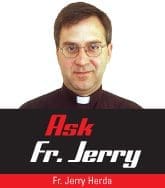
I know confession is an important part of being Catholic, but I just don’t feel comfortable going. I plan to go, and then I back out. Any suggestions?
You are right, confession is an important part of being Catholic. All human beings are sinners. We are faced with temptations and trials that test us, and too often we give in and sin. Other times we have allowed sin to become a habit in our lives: it could be telling a lie, losing our patience, stealing or cheating. Sin can also be an addictive behavior we have not dealt with and which we have allowed this sinful action to continue in our lives.
Sin is a part of every person’s life. A good examination of conscience will help reveal the areas of sin that are a part of your life. As Catholics we believe that God is willing to forgive us of our sins when we repent and seek his forgiveness. So that is where the sacrament of reconciliation (confession) comes in.
You are also right in that confession makes us uncomfortable; it is supposed to make us feel uncomfortable. That feeling of being uncomfortable tells us that we have done something wrong and we need to do something to change it. We need to confess our sin and seek forgiveness. Too many people have become comfortable with their sin and never change. So feeling uncomfortable before confession is a normal feeling.
While at the Washington Theological Union, I volunteered the summer of 1985 to serve in the Capitol Hill mailroom of [...]