
Life was Betty Boland’s great passion.
Three years after her death, it is now her greatest legacy.
Thanks to a $3 million endowment from the Richard L. Boland Love for Life Foundation — created by Betty Boland after the death of her husband in 1991 — permanent funding has been established for a leadership position overseeing Natural Family Planning programming in the Archdiocese of Milwaukee.
The Dick and Betty Boland Natural Family Planning Office will be led by Tori Franke, who has served as the archdiocesan NFP coordinator for several years.
“This endowment gives us stability,” said Franke, speaking at the annual NFP Summit, held on July 8 at the Cathedral of St. John the Evangelist in Milwaukee. “It provides a means where we’re now uniquely poised within the Archdiocese of Milwaukee to ask not just how does NFP survive here, but how can NFP thrive?”
Boland, who passed away in 2022 at the age of 86, was a devout Catholic and lifelong supporter of causes that promote the dignity of human life. She had a longstanding relationship with the Archdiocese of Milwaukee, funding initiatives like the Nazareth Project, which focused on marriage and family ministry. She was also instrumental in providing the funding to establish the Marquette Institute for Natural Family Planning (now renamed the Boland Institute for Natural Family Planning) at the Marquette University College of Nursing.
“It is extremely gratifying to know that Betty’s work continues exactly as she would have done so herself,” said John Herbers, a trustee on the board of the Richard L. Boland Foundation.
Herbers and his wife, Norma, knew Betty Boland for more than 30 years, and along with another of Boland’s longtime friends, Mary Bates, comprise the Board of Directors of the Richard L. Boland Love for Life Foundation. Upon her death in 2022, Betty Boland entrusted a considerable amount of her wealth to the foundation for the purpose of supporting those causes which she had always championed in life. Earlier this year, the board endowed the NFP office “in honor of both Betty and Dick Boland’s lifetime work in support of the Catholic Church’s teachings on the sanctity and dignity of human life.”
NFP refers to different methods of identifying the fertile and infertile periods of a woman’s cycle through the interpretation of various biological indicators. In “Humanae Vitae,” the 1968 papal encyclical that detailed the teaching of the Magisterium against artificial birth control, Pope Paul VI lauded these methods of observing and interpreting “wisely ordered laws of nature and the incidence of fertility” as a means of empowering couples to better understand their own role as “collaborators” in the creation of human life.
But couples don’t know what they don’t know and cannot practice what they do not understand. Promoting awareness of NFP, combatting public misconceptions surrounding it and increasing access to NFP support and education is a priority of the United States Conference of Catholic Bishops.
However, Franke is one of only five NFP coordinators nationwide who can undertake this ministry full-time as a paid employee of her diocese.
In his remarks at the NFP Summit, Archbishop Jeffrey S. Grob said that the Archdiocese of Milwaukee must “continue to embolden” its NFP outreach efforts, and he urged the faithful to “never take for granted … what we have.”
“Certainly, I will do everything in my power to support (those efforts), because I believe it is part and parcel of what it means to be Catholic and a Catholic family,” he said.
It’s something Betty Boland believed, too.
Born in 1935 in Belgium, Wisconsin, Boland trained as a nurse at what is now Marian University in Fond du Lac. According to her friend Judy Hinickle, she was alarmed by the increasing use of hormonal birth control, or “the Pill,” which was approved by the FDA in 1960 for contraceptive use.
Boland later studied NFP at St. Louis University and the Pope Paul VI Institute for Natural Family Planning in Omaha, Nebraska. Her desire to increase awareness of and access to the different methods of NFP “reflected her belief in empowering couples to embrace their fertility with dignity,” Hinickle said.
She recognized the teachings outlined in “Humanae Vitae” as “countercultural,” said Herbers, and so devoted the wealth she and her husband had accumulated to promoting them.
Boland’s early support for the Nazareth Project enabled the office to grow its work impacting marriage, family life and sanctity of life issues, which “set the stage for significant change in the Archdiocese of Milwaukee,” said Lydia LoCoco, who worked as the director of the Nazareth Project during its lifetime.
That impact is now evident in increased vocations and a thriving local church, LoCoco said at the NFP Summit.
“We stand as a leading witness to the importance of Natural Family Planning because Betty Boland allowed us to do that and helped us to grow,” said LoCoco, now director of the archdiocese Office of Evangelization and Catechesis.
Franke said she views NFP as a tool to support marriages and families, as a tool to assist couples in their discernment of God’s will in their daily lives and as a tool to cultivate generosity and communication and sacrificial love.
“These aren’t necessarily the things that people first think of when they think of NFP, but that’s really what its intention is about,” she said.
An aspect of practicing NFP that is becoming increasingly important, said Franke, has nothing to do with the spacing of births. Rather, it’s simple body literacy — supporting women in understanding fertility as a vital sign of health throughout their entire lives.
Because of the possibilities created by this endowment, said Franke, her office can now plan for long-term initiatives not only for married couples but for women who are called to single life and simply want to better understand their bodies and living a life incarnate.
“It opens up all-new possibilities for how we can support people,” she said.
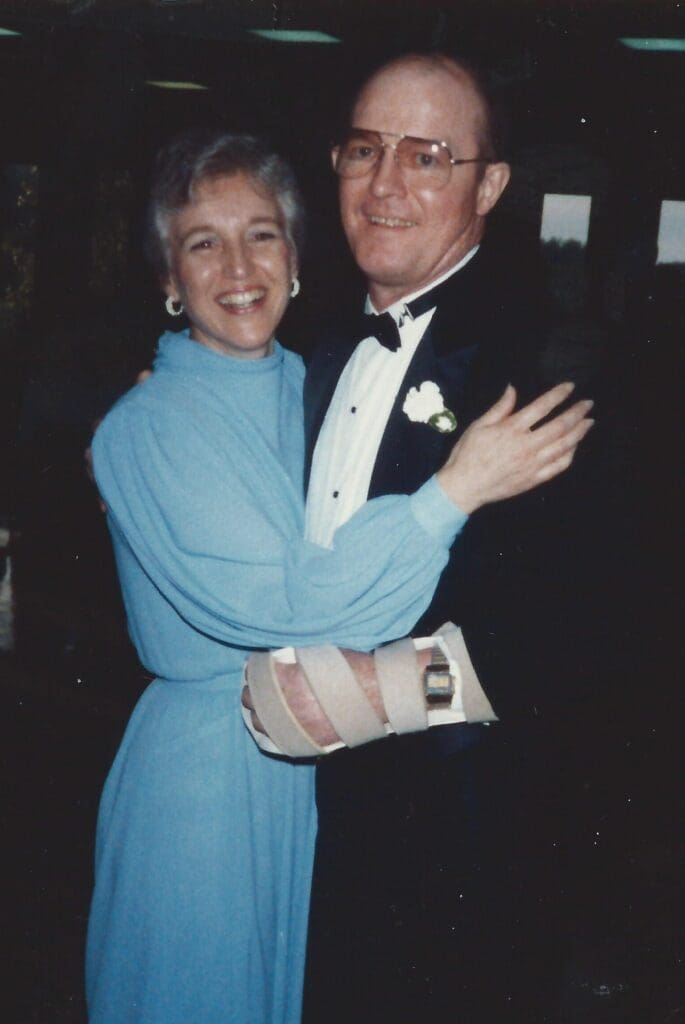
Betty and Dick Boland are the namesakes for the Archdiocese of Milwaukee National Family Planning Office following an endowment gift from a foundation established by Betty Boland after her husband’s death. (Submitted photo)
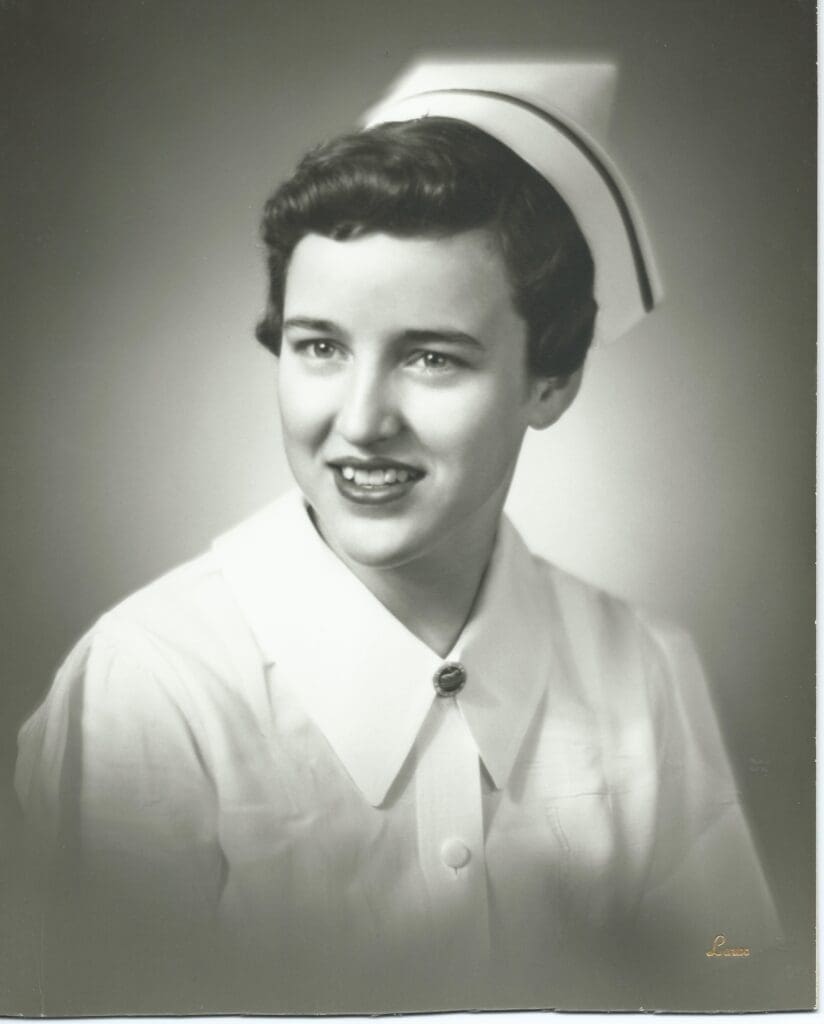
Betty Boland studied nursing at what is now Marian University, Fond du Lac. (Submitted photo)
